
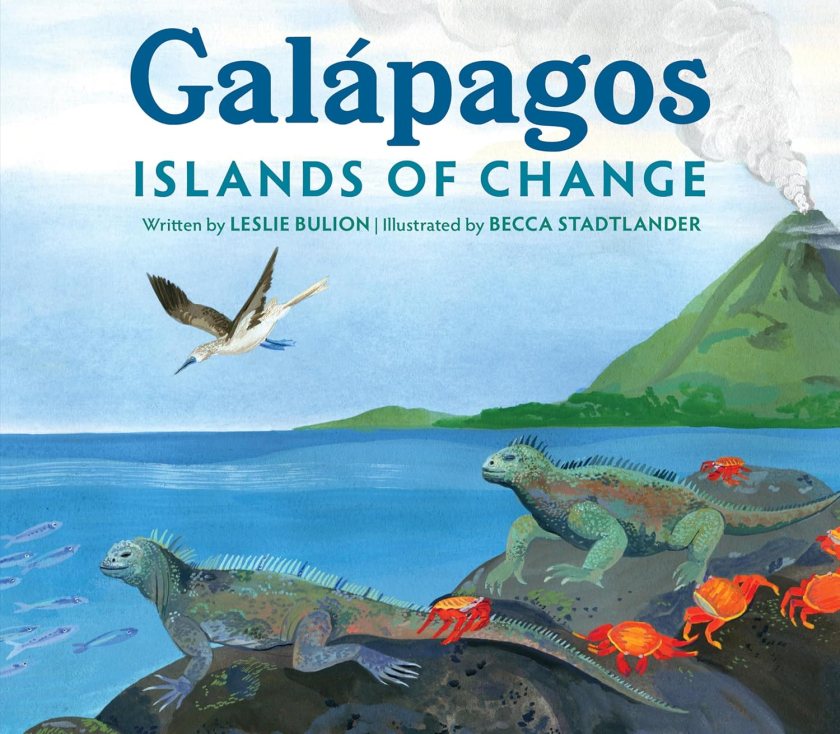
If you read my earlier post, When Truth is Stranger than Fiction, you likely noticed the featured image, a Blue-Footed Booby whose picture I snapped during my May 2023 Galápagos Island birthday cruise – a trip I’d been dreaming of since I was a young animal-obsessed girl. So you can imagine how excited I was to learn about Galápagos: Islands of Change (Peachtree, March 2023), a nonfiction blend of science and poetry that will encourage readers 3rd grade and above to dream about visiting these magical islands themselves. I was even more excited when Leslie Bulion, the wonderfully talented and gracious author, readily agreed to be interviewed for Writers’ Rumpus AND to offer a gorgeous hardcover copy of Galapagos to one lucky reader. Trust me, you won’t want to miss out on this amazing opportunity for your home or school library!! Whether or not you win, you’ll be thrilled to discover nine kid-friendly nonfiction books from Leslie, all of which blend clever poetry with compelling information about our natural world.
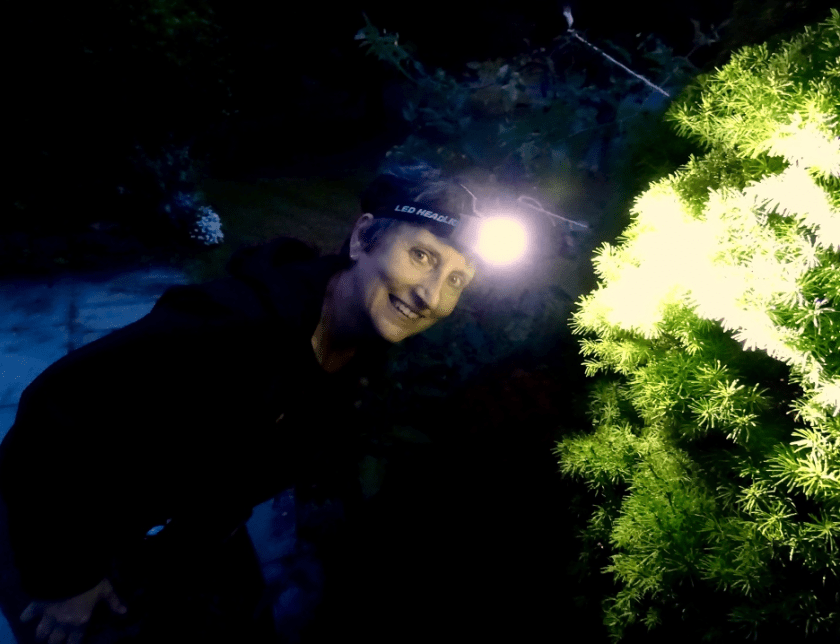
LAURA: Leslie, it’s my great honor to welcome you back to Writers’ Rumpus! You’re an amazingly gifted poet, scientist, social worker, adventurer, nature enthusiast, and a genuinely warm individual as well! What was your path to becoming a writer of nonfiction science books for children?

Hello, Writers’ Rumpus Readers! Thanks so very much for your kind words, Laura, and your shared enthusiasm for our amazing planet. I’m delighted to visit Writers’ Rumpus to chat about writing Galápagos and everything else!
My path to this moment has certainly been more of a web: a kid who peers under rocks, who also loves writing poems, who studies science in college and grad school, who meanwhile works with kids as a nature counselor at a summer camp and as an elementary school social worker, who begins writing stories for young readers and finds the insects I’m learning about (in a summer camp for adults!) to be tiny, elegant packages of adaptations that remind me of the brief, elegant language and ideas in a poem…and there we are…Hey There, Stink Bug (Charlesbridge 2006), illustrated by Leslie Evans.
I find the process of distilling my science study into a brief stanza or three helps hone my own understanding and helps me share a cool science story. I can hardly believe I’m currently working on my tenth collection!
LAURA: Can I just say WOW?!? Galápagos: Islands of Change is such a unique and captivating book. It starts with a gripping and detailed explanation of the creation of these volcanic islands. Then the poetry begins, augmented by short explanations in prose. It’s a spectacular one-two punch that really drives the information home in the most delightful way. As if that weren’t surprising enough, the glossaries describe everything, including the different poetic forms you employed. HOW did this book come about, both the inspiration and the decision to write it in this format?
LESLIE: The format for Galápagos is similar, though not exactly the same as the format I used in Serengeti: Plains of Grass. (Click here to access Leslie’s 2022 interview post with René Bartos.) Each “ecosystem” book takes readers on a journey through seasonal changes and food web dynamics in one of Earth’s unique and remarkable places. I included the prose introductions in both books to set the scene for readers’ visits.
In both books, the “informative tidbits” that accompany the poems are spare and designed not to interrupt the interconnected nature of the food web. BTW, that lovely description of the prose notes was coined by our BCCB Galápagos reviewer! Each of my science poetry books includes an array of what I hope will be engaging and interest-sparking back matter: glossary, poetry glossary, maps, size comparisons, suggestions for further reading, and information about organizations working with the stakeholders who steward vulnerable animals and places.

Used with permission from Peachtree Publishing Inc. All rights reserved.
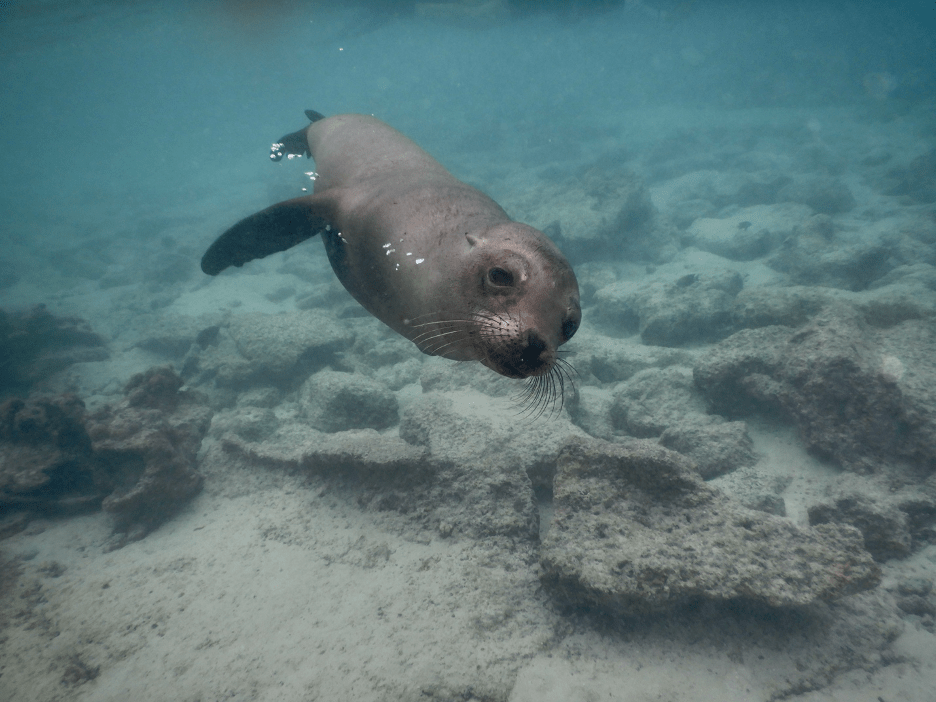
I’ve never met a single science-o-phile who hasn’t dreamed of visiting the island-archipelago, inspiration for the theory of evolution, and it took me 40 years to make the trip! Having so many up-close-and-personal experiences with animals of the Galápagos—sea lions tugging my flippers, inquisitive mockingbirds that wouldn’t keep their required two-meter distance—infused humor into these poems that could only have come from meeting them!
Becca Stadlander’s lush, gorgeous work completely captures the emotion of these immersive wildlife encounters in Galápagos: Islands of Change, as well as vastness of the plains and the reverent experience of viewing many magnificent animals at a distance in Serengeti: Plains of Grass. I’m honored to have worked with Becca!
LAURA: Becca’s beautiful illustrations are the perfect match to your wonderful “ecosystem” books. I’m also impressed with your “creature books”, and the delightfully lighthearted illustrator for many of these books is Robert Meganck – the perfect match for your lighthearted but incredibly informative poetry and prose. Admittedly, I’m terrified of spiders (Spi-ku), but found myself truly wowed by the always interesting, sometimes creepy creatures I learned about. My personal favorite of this collection, which I know kids will adore, is Superlative Birds, with captions such as “Longest Toes” (the Jacana) and “Smelliest”(the Hoatzin). How did you conceive of the topics (and clever poems) for this collection? How many of these books have you written, and do you have any more poetic creature books up your sleeve?

LESLIE: I’ve been a bird enthusiast since junior high, so after putting my oceanography degree to good use in At the Sea Floor Café: Odd Ocean Critter Poems illustrated by Leslie Evans (Peachtree 2011), poems about birds was a natural. I decided to use the “superlative” trope to explore attributes that define a bird: wings, feathers, eggs, beaks, etc., and set about finding birds to fit the—er—bill!
Thanks for asking about the poems themselves! My poetry form choice can be inspired by the country or language in a critter’s range (Jacana’s soledad), the shape of the animal (Emperor Penguin), movement in a kind of verse (Bee Hummingbird), a song (Arctic Tern), words that beg to be repeated, as in a refrain (“iridescent eggs” Tinamou)…all to say it’s rarely (but I won’t say never) random. The poetry glossaries in my books are meant to be how-to’s. Though following “rules” can feel daunting, form gives poets a rack upon which to hang our poet hat!
To prepare for each science writing adventure, I always include a hands-on research/learning experience. For Superlative Birds, I visited the Cornell Lab of Ornithology for a weeklong course called “Taking Flight.” I asked everyone I met which bird they thought was the “best.” The ornithologist instructor chose the chickadee, explaining that it was populous, personable, and could communicate with lots of other critters in its habitat. WOW! This endorsement earned the chickadee the book’s “spokesbird” designation, envisioned comic-engagingly by the inimitable Robert Meganck. Robert’s work is so creative and fun, and his problem-solving approach is a joy. Those spiders are fabulous, aren’t they?? We have four books together, including two we haven’t mentioned: the “ecosystems” precursor, Leaf Litter Critters (Peachtree 2018), and Amphibian Acrobats (Peachtree 2020). Best of all, we’re working on another science poetry collection that’s going to be full of humor and surprises! Stay tuned for March 2026!!
LAURA: Ooh- I can’t wait! Looking at your website, I was impressed to discover you’ve also written fictional (and realistic) middle grade novels. No matter what you write, all your books have garnered an impressive list of awards. Can you share your inspiration for these books and the secret to your creative success – especially the ability to write exceptional fiction and nonfiction?
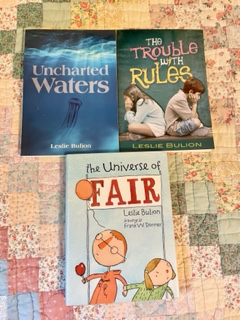
LESLIE: Thank you for the lovely shout-outs to my novels, Laura. Since I didn’t know anything about science poetry until I put those bugs and poems together, I began my kidlit writing journey with picture book manuscripts. I soon found my voice in middle grade. My novels (all published by Peachtree) are what I call “science-infused,” with bugs, sea critters, and even string theory (because I wanted to know what it was). Sure “write what you know” helps, but also write what you want to know about! The settings in my novels (eg: a coastal salt pond, a town agricultural fair) are essential characters in their own right. I draw from personal experiences and make them bigger, funnier, or “what-iffier.” Fictionalizing experiences helps me understand others better. Then, using my mighty pen, I revise outcomes to create the more understanding world I’d like to see.
LAURA: Leslie, your pen is mighty indeed! “Write what you want to know about” – I really love that twist. Congratulation on your well-deserved success and thank you for your thoughtful, inspirational responses to my questions. Can you share how you’ll be handling the giveaway of Galapagos: Islands of Change?
LESLIE: Thank you for all you do to support and celebrate reading, writing, and literacy, Laura!
Thanks for visiting with me, Writers’ Rumpus Readers!
I hope you will all have fun writing your own elegant packages of words—aka poems!
TO ENTER THE GIVEAWAY:
Please comment on this post! Your comment is your entry, and entries close at midnight on Monday, August 26th.
The winner of Galápagos will be selected at random! Good luck!
LAURA: This is my last question (I swear!): How can readers connect with you?
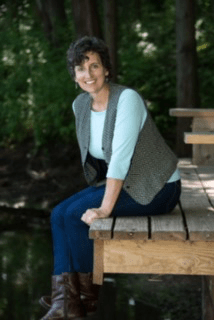
LESLIE: I’m always happy to hear from folks! Find me here:
www.lesliebulion.com
Leslie Bulion on Facebook
LeslieBulion on Instagram (psst—Nature lovers: I share my latest nature explorations here!)
 WRITERS' RUMPUS
Oh, lovely! It looks like a fabulous book, and I’ve just added it to my library list.
LikeLike
Thank you, Audrey!
I love your salamander sketch on brown!
LikeLiked by 1 person
I am looking forward to reading Leslie’s books! Thank you, Laura, for showcasing them so wonderfully.
LikeLike
Thank you for reading Laura’s interview with me, Adaela!
LikeLike
Thanks Laura and Leslie for the wonderful interview. What a gorgeous PB, including sweet descriptive poems and lovely illustrations. I very much appreciate the step away from cartoonish pictures to the more realistic representations that the Galapagos so deserves. Thank you for sharing this less-visited archipelago with young readers. Brilliant!
LikeLike
Thanks for reading, Kate! Becca’s illustrations truly do capture the spirit of the Galápagos!
LikeLike
Thank you, Rose! Your poem about the hummingbird brought tears to my eyes.
LikeLike
As a poet and nature lover, I love all of Leslie’s books. Consider me a wanna-be third-grader who can’t wait for GALAPAGOS: ISLANDS OF CHANGE to arrive in my mail!!
LikeLike
How kind, Patricia!! Congrats on your poetry, especially with Pomelo Books–they’re wonderful! Best of luck!!
LikeLike
Sounds beautiful! Congratulations, Leslie, on all of your stunning works.
LikeLike
Thank you so much, Hilary! Congratulations to you on your non-fiction series!
LikeLike
Thank you for this interview, and explanation of your journey writing books for kids. Your book looks gorgeous, drew me in right away as rhyme and the outdoors are two of my favorite things! Thank you Laura, and Leslie, and good luck with your book!
LikeLike
Thanks for your kind words, Katie! I love your use of rhyme in your work, too!
LikeLike
The Galapagos are so wonderful and unknown by so many! Thank you for the beautiful book.
LikeLike
Thank you, Robin! All best with your writing!
LikeLike
What a gorgeous cover! This looks like such an interesting book. I’ll be adding some of the others to my reading list, too. Congratulations to Leslie on all her accomplishments.
LikeLike
Becca’s artwork is stunning, isn’t it? Thanks for reading this interview and your interest in my books, and congrats on yours!
LikeLiked by 1 person
A belated thank you! 🙂
LikeLike
Thanks for this great interview. And congratulations, Leslie.
LikeLike