
The themes in picture books are intended to assist children in dealing with the world around them, and authors benefit in the same way. These three picture books Egils gave me for Christmas are illustrative examples.
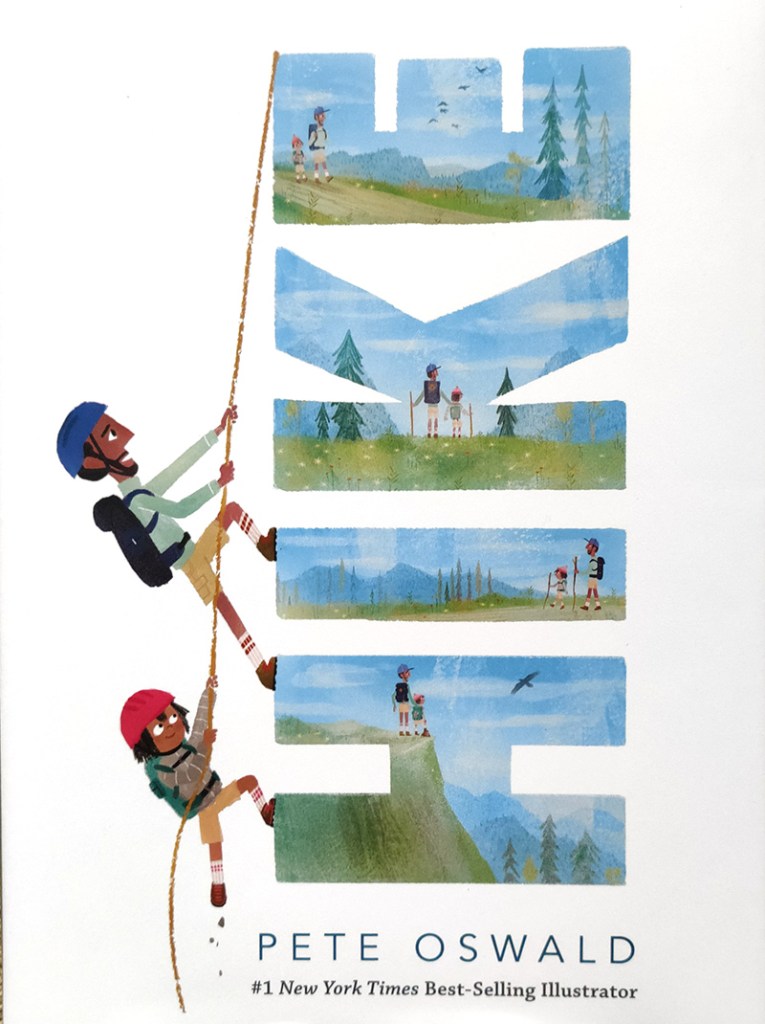
Hike by Pete Oswald, The Rough Patch by Brian Lies, and Zen Shorts by Jon Muth are beautifully illustrated treatises on finding solace in the natural world, resolving pain and anger after tragedy, and developing inner harmony in the face of perceived hardships. In our world, where difficulty and chaos sometimes loom, stories that address reasonable solutions are more vital than ever for all of us.
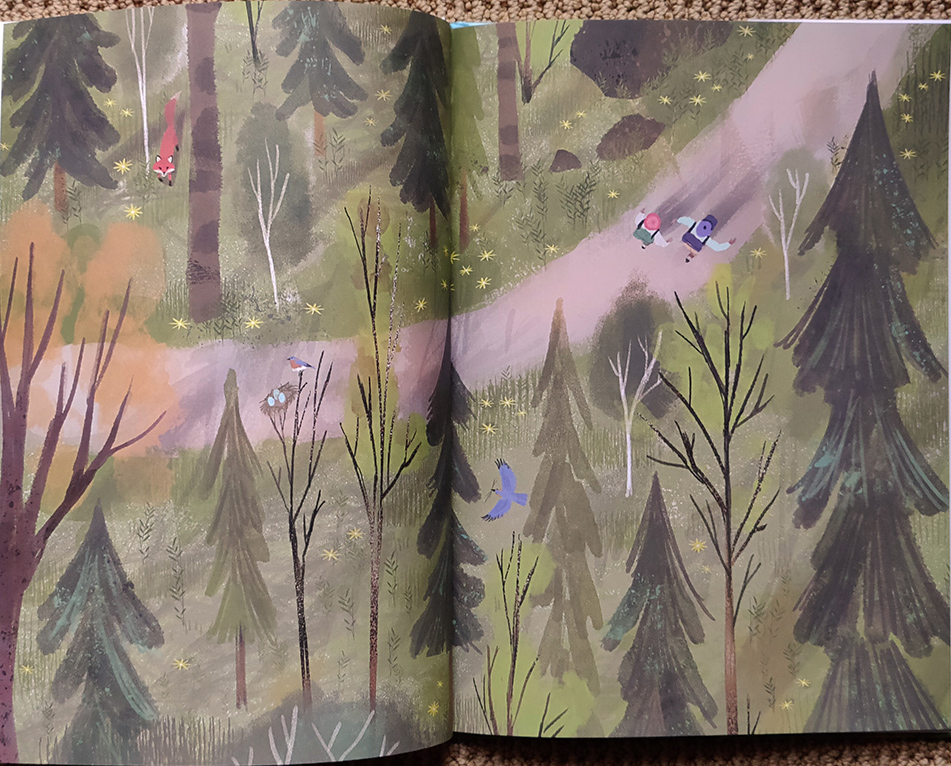
In Hike, a father and child gear up and head from the city suburbs into a mountainous forest. Along the way, they observe birds, butterflies, and bear tracks, taking notes and using equipment they brought. The nearly wordless story shows the two having a snowball fight and watching fish in a tarn before encountering an obstacle. At the foot of a waterfall, a log spans a stream they must cross. The child is worried, but Dad encourages, and fear is overcome. The intrepid explorers climb a rocky face to the mountaintop. They unpack a tree seedling they brought, plant it, and record the moment with a photograph. After retracing their journey, the story ends with a satisfying evening at home, cherishing the photographic record of their experiences outdoors. Pete Oswald lives in Los Angeles, California, and doubtless has taken his four sons into the wilds to experience the joys of and respect for the natural world that sustains us.
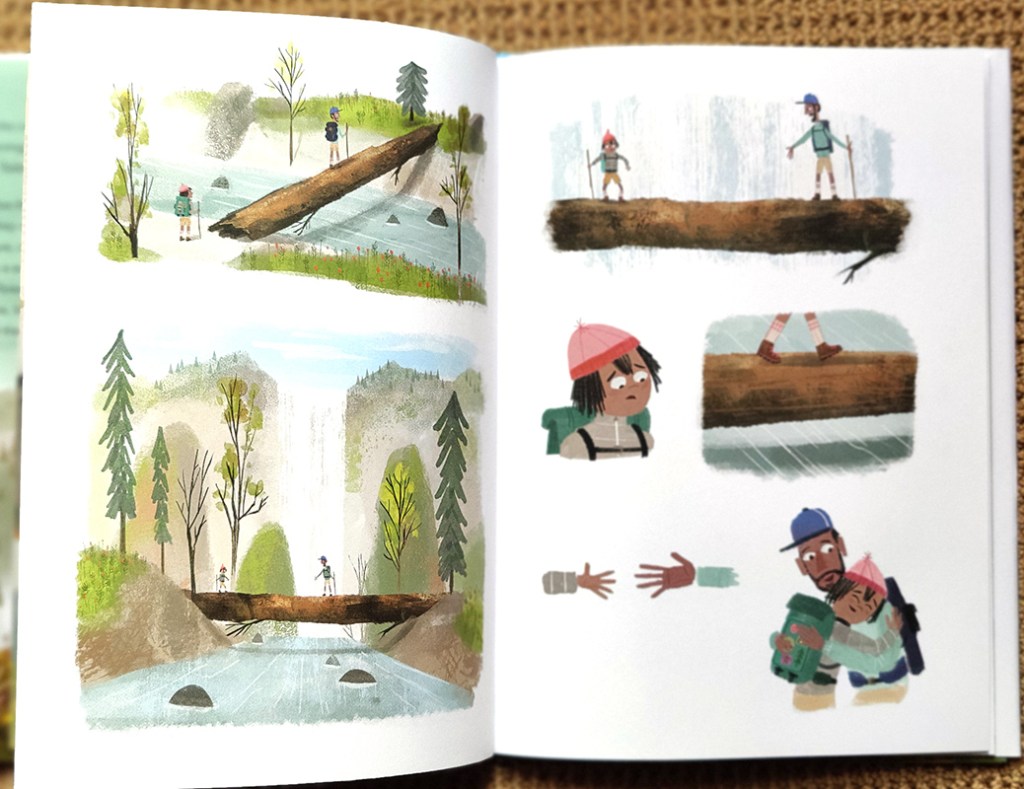
“There’s gentle humor throughout, and the loving relationship between this father and child enjoying the outdoors together is movingly emphasized. Oswald’s use of earth tones and textures reinforces the beauty of the natural world and the importance of sustaining it through simple family traditions like this one.”
—The Horn Book (starred review)

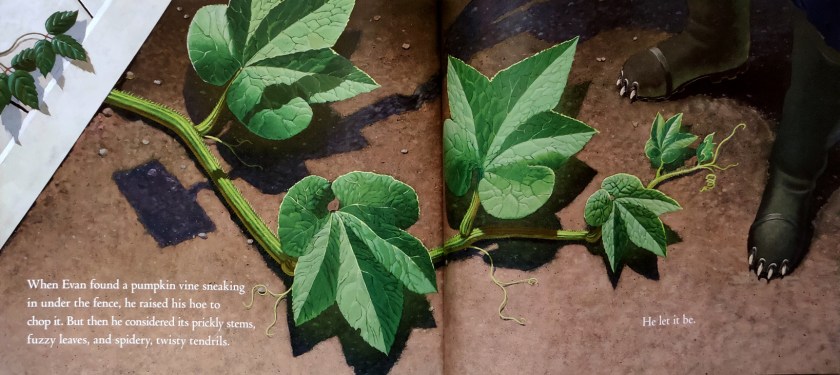
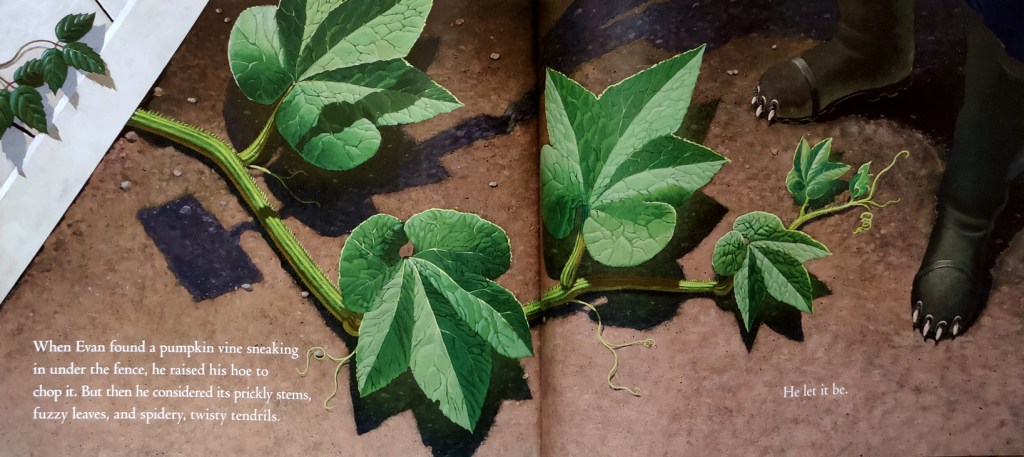
Dealing with tragedy is a challenge for kids and authors alike. In Brian Lies’ gorgeously painted The Rough Patch, Evan struggles to cope with losing his beloved dog. He and his dog share many joys, the most prominent of which is Evan’s beautiful garden, which appears in the artwork to resemble the author’s own (as shown on Facebook). The palette and, in particular, Lies’s use of light and shadow follow the story’s moods. White space effectively frames dramatic moments, adding visual power to avoid sentimentality, particularly on the spread where Evan mourns over the loss of his friend. The following double-page spread relies on shadows to convey Evan’s mood at the grave site.
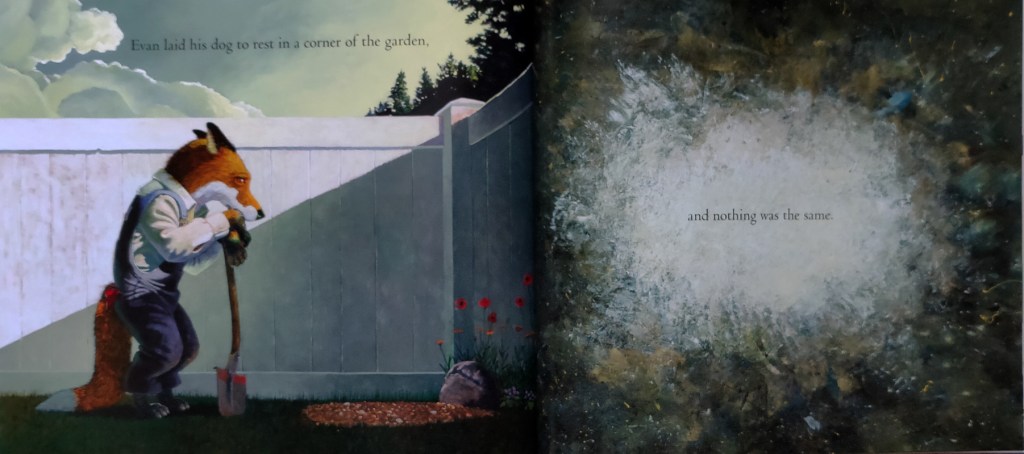
“But one day, the unthinkable happened.” Evan’s angry, despairing response to the death of his beloved friend might seem familiar to children and authors alike. So, how should one cope with personal tragedy? Evan’s response is to take it out on the garden, hacking away at it and encouraging spiky, thorny weeds to grow. Yet, his attachment to the garden is what turns the story arc toward a satisfying message of hope, and a new beginning – a puppy. When everything seems in ruins, leaning into your core beliefs will turn things around.
“…A remarkable first selection for all libraries and a helpful guide for children and adults who are going through their own rough patches. –Rachel Zuffa, Racine Public Library, WI
STARRED REVIEW, School Library Journal, May 2018
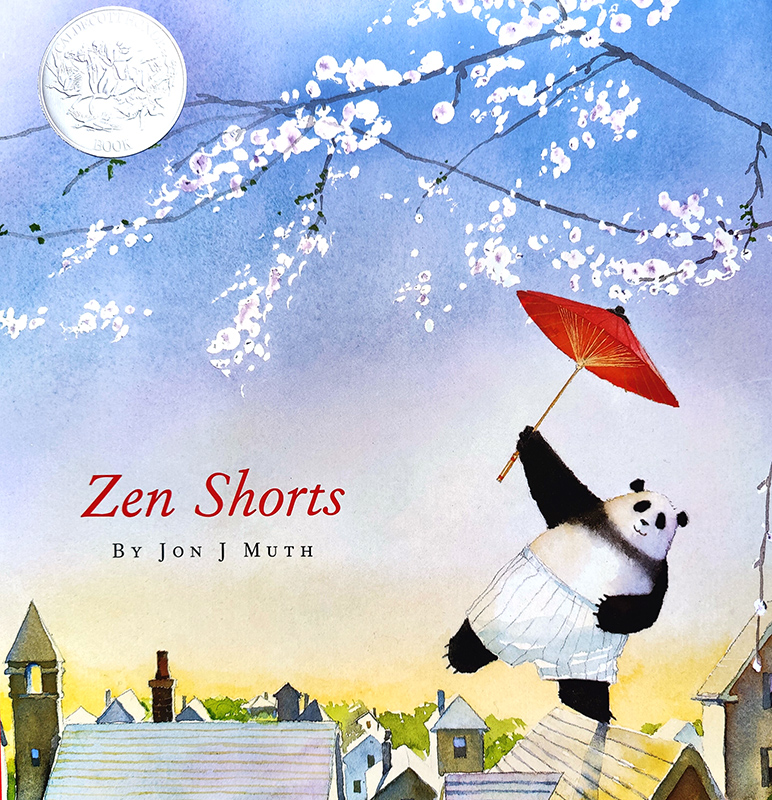
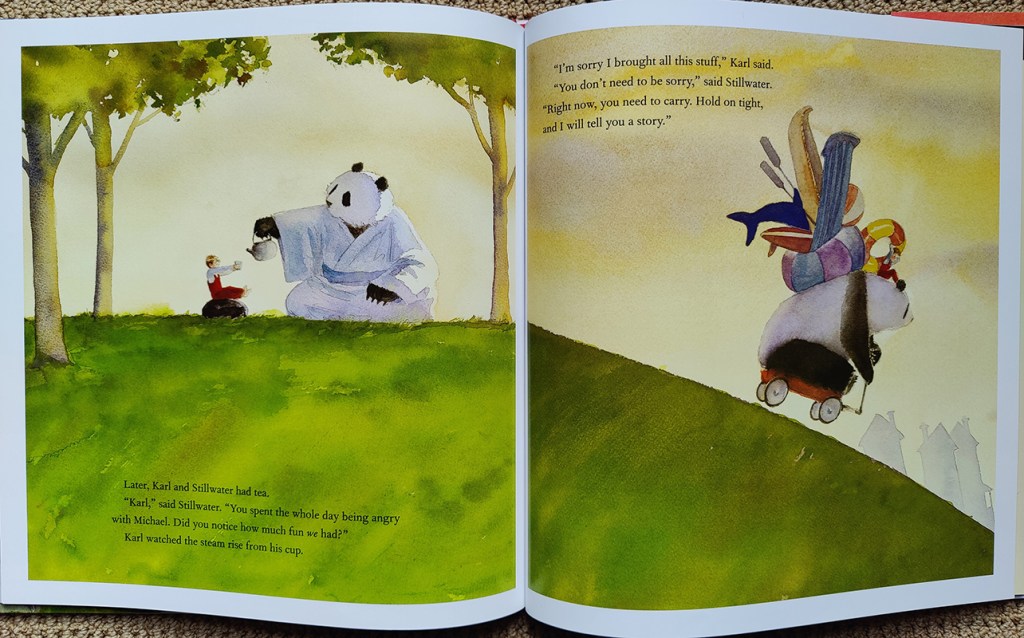
Three children, three stories, and a larger-than-life, wise panda named Stillwater. Jon J Muth’s Caldecott Honor-winning picture book Zen Shorts conveys wisdom as a way to ponder the meaning of generosity, the fears we hold, and how to let go of anger. How much of ourselves should we give? Is fear conquerable? Why let anger control us?
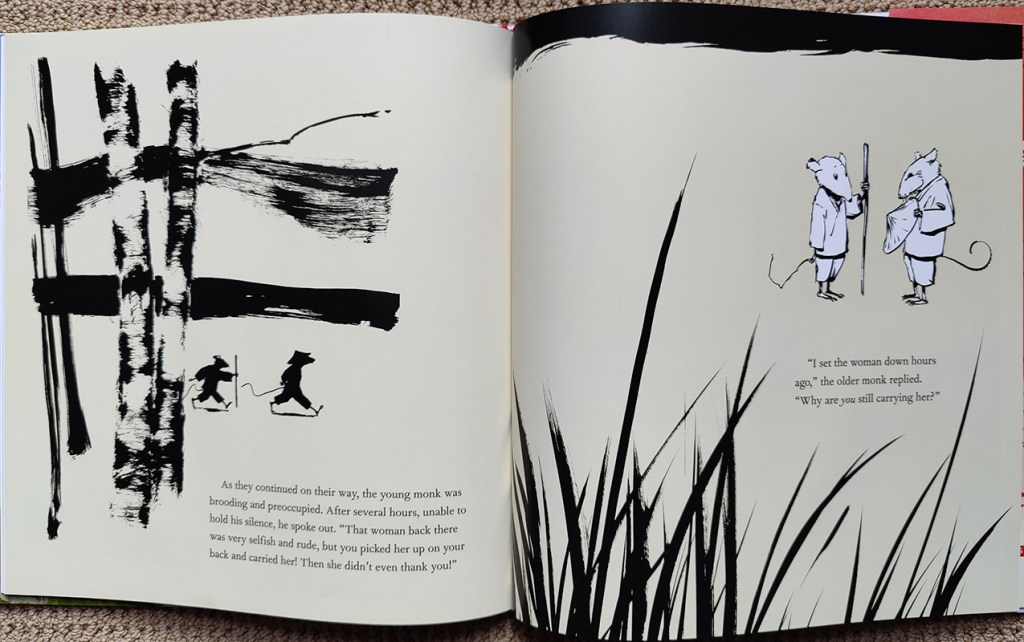
The Author’s Note explains: “Zen Shorts are short meditations – ideas to puzzle over – tools which hone our ability to act with intuition.”
While siblings Michael, Addie, and young Karl come to know their neighbor Stillwater, who speaks with a hint of “panda accent,” he tells them three stories based on Zen and Taoist thought that show the children other ways of thinking. The narrative is reinforced by confident watercolors for the spreads with the children and Stillwater, while the three tales are rendered in Japanese shodo-style brushwork in ink on solid backgrounds. Text and paintings work together to convey simple intimacy and thoughtful emotions.
“ Every word and image comes to make as perfect a picture book as can be.” – Kirkus reviews (starred review)
These three author/illustrators help themselves and their readers find effective ways to cope with life’s struggles.
 WRITERS' RUMPUS
I love all three of these books. Great post!
LikeLiked by 1 person
Joyce, thank you for sharing these beautiful, relatable books. Your blog post is a wonderful reminder to pause and remind us how impactful and essential picture books are for ALL. Pete Oswald has always been a favorite of mine.
LikeLike
Hello Gail. Thanks for agreeing that the books we right and read are as good for us as they are for our readers. Much wisdom is conveyed in each picture book.
LikeLike
Joyce, I never thought of HIKE as an SEL book before, but it makes total sense to me now. Thank you for sharing these. I need to read ZEN SHORTS! I’m completely intrigued.
LikeLike
Hillary, not only is Hike about two people sharing meaningful experiences which expands their love and connection, importantly it is the experience of the natural world that is the connection. We all need to be good stewards of natural ecosystems. And you will love Zen Shorts. When in China I watched a man practicing his calligraphy with a three foot long brush and a bucket of water. He wrote on the sidewalk a long row of characters and they gradually evaporated as he went.
LikeLike
Picture Books are not only for the little ones. Thank you, Joyce.
LikeLike
HI Marti! Good to hear from you and I hope your writing is going well. You are absolutely right. Picturebooks are wonderful tools of self expression for writers. And other adults can find picture books are balm for the soul. Thanks for appreciating.
LikeLike