

JAZ: Melissa, I am honored that you agreed to this interview. Whale Fall: Exploring an Ocean-floor Ecosystem is fascinating! Our readers are eager to learn about this expository non-fiction book.
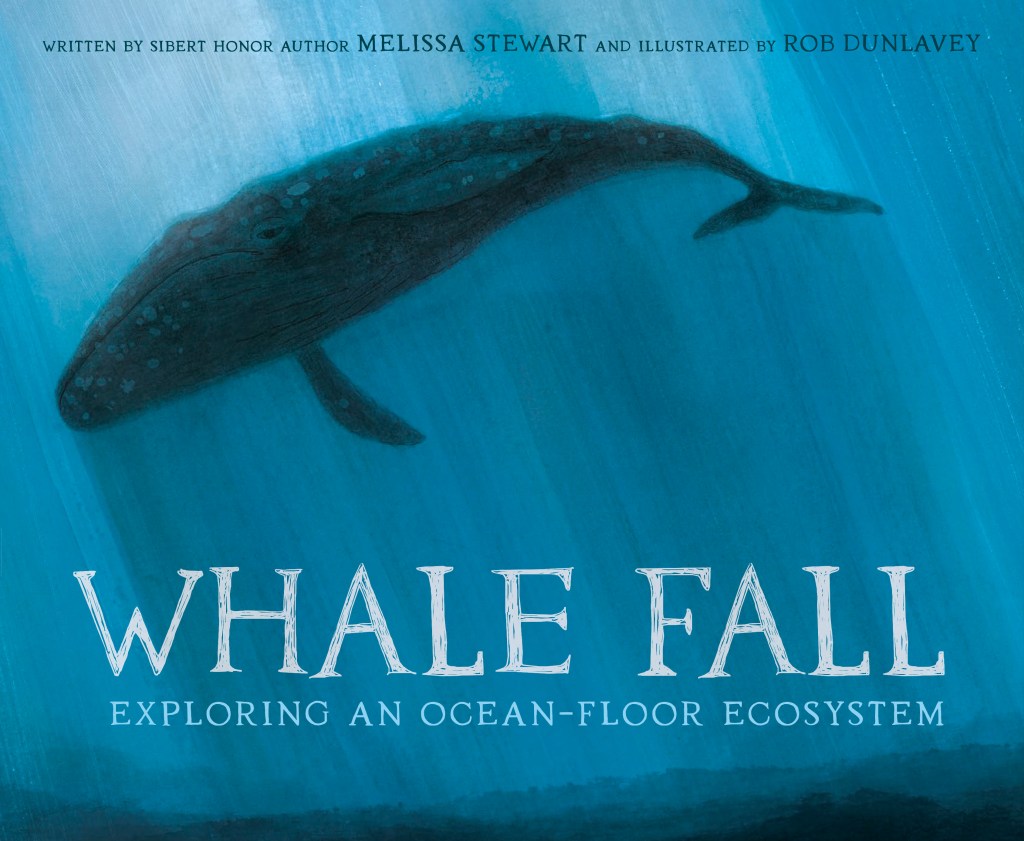
MS: Thanks for having me, Joyce. I’m excited that this book is now out in the world.
JAZ: The concept of a whale’s dead body nutritionally supporting hundreds of species for an incredible fifty years is startling. How did you find this fascinating topic?
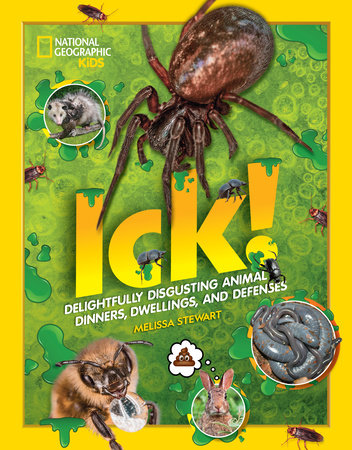
MS: The story behind this book traces back to 2019. While writing Ick! Delightfully, Disgusting Animals Dinners, Dwellings, and Defenses, I stumbled upon an article about zombie worms, aka bone-eating snot flower worms.
Of course, I included them in that book. First of all, what a fabulous name! But also—believe it or not—dozens of teeny tiny male zombie worms live inside each female. Wow!
Each section in Ick! was limited to about 400 words. But there was SO much more to say about these curious critters. I tacked the article to my Idea Board as a reminder that I hoped to learn more about them.
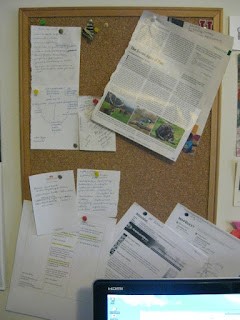
Sometimes notes and articles stay on my Idea Board for a long time, collecting dust. But when the COVID-19 pandemic struck in 2020, all my school visits were canceled and I had plenty of time for research.
As I began reading more about zombie worms and their environment, my mind was blown. I was completely captivated by the incredible collection of critters that live in, on, and around a whale fall. I knew I had to write a book about them.
JAZ: Was there something that particularly surprised you as you dug into this concept?
MS: Everything about whale falls surprised me. They’re such unique ecosystems with creatures that live nowhere else on Earth.
JAZ: Once you decided to do this book, what was your process in settling on the best way to share this information?
MS: Most of the time choosing a text structure is one of the hardest parts of writing expository literature, but in this case—it was built right in. Because a whale fall breaks down in distinct stages over time, I knew the book would have a chronological sequence structure from the start.
The biggest challenge with this book was text scaffolding—carefully assembling sentences like building blocks to construct an understanding of how the little-known creatures eke out an existence in the deep sea.
JAZ: Your book is firmly rooted in science, yet your descriptive text is vivid and lyrical. The first spread is a prime example. Was that conscious?
MS: Yes. For most books, I choose a single word that encapsulates the voice I’m trying to achieve. In this case, it was “reverence.” The circle of life is both beautiful and sad. I wanted readers to approach the description of what happens at a whale fall with deep respect for the whale. I wanted them to understand how the whale’s body is an important contribution to the ocean floor, which is otherwise a barren wasteland.
I purposely chose rich language to support this way of presenting the information. I used strong, precise verbs and literary devices like alliteration and opposition and imagery. I used a lot of introductory adverbial clauses to craft flow and pacing that compliments the lyrical language. The editor and art director chose an artist—Rob Dunlavey—whose style matches and reinforces the feeling of the text.

JAZ: Blob sculpins, sea pigs, zombie worms, and snubnose eelpouts are some of the unusual critters that live on and around a whale fall. It must have been fun choosing which weirdly named organisms to include!
MS: Yes, many of the creatures have notable names, but I also chose them to highlight food chains within the larger food web at each stage. For example, amphipods feed on the whale, and their vast numbers attract hungry deep-sea octopuses. I also wanted to include as many different ways of feeding on the whale as possible. For example, sleeper sharks eat chunks of blubber in the early stages of the whale fall, while sea cucumbers collect droplets of whale oil that have soaked into the sediment.
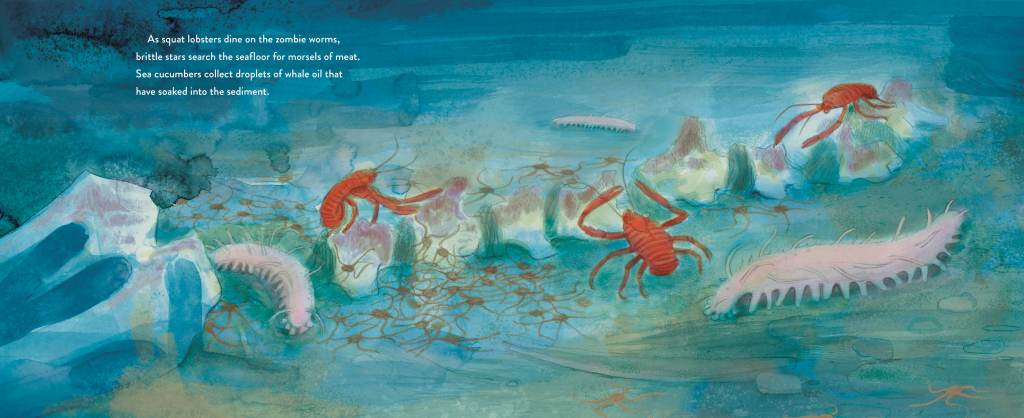
A kindergarten teacher emailed me to let me know her students had noticed that the animals at the beginning of the book are the largest and decrease in size over time. What a great observation! She asked the class why they thought the animals got smaller, and her question ignited a rich class conversation.
Notes like this make me so happy. Kids are so smart, and think deeply when they have the right guidance.
JAZ: Most have names that reflect the way the organism looks or behaves, but one, a limpet, was named after a scientist. How did that happen?
MS: It’s pretty common for a scientific name to include the name of the person who discovered it or the place where it was discovered. In this case, the limpet was named after the scientist who made some key discoveries about how whale fall communities function over time.
JAZ: How did you connect with Shannon Johnson, Senior Research Technician at the Monterey Bay Aquarium, who vetted the text and illustrations?
MS: Because we were in pandemic lockdown when I was writing this book, it was easy to reach out to the marine biologists who study whale falls. In a normal year, they would have been out at sea all summer long, but in 2020, their research trips were cancelled and they were sitting at home without much to do. Without the pandemic, it would have been much harder and taken much longer to write the book. Shannon played a critical role, and two of her colleagues also helped with specific questions she couldn’t answer.
JAZ: Rob Dunlavey’s watercolor and mixed media art perfectly complements your text. Did you have input on who would illustrate the book?
MS: No.
JAZ: In nonfiction, the art is typically vetted by the author for accuracy. Did you have an opportunity to work with Rob or review his art?
MS: Yes, both Shannon and I reviewed the art and offered feedback throughout the sketch stage. Some spreads went through four sets of sketches.
JAZ: There are three spreads of backmatter with extra stats and facts about many of the creatures in your book. Why did you include them?
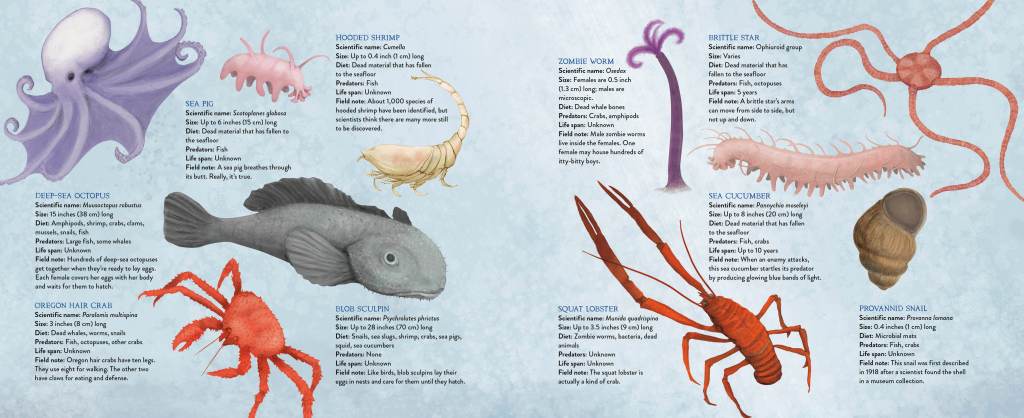
MS: Since we wanted the book to work well as a read aloud, we kept it as short as possible. I knew some kids would want more information about these unusual animals, so that went in the backmatter. While the art in the main text is sort of shadowy and impressionistic, the animals in the back matter are shown in a more realistic way.
JAZ: Have you had reactions from children yet?
MS: Yes, here are a few quotes from fourth graders:
“I recommend Whale Fall because it is a great learning experience for the mind and has a huge amount of animals no one in my class had ever heard of.” —Daniel G.
“I love the book Whale Fall because I love the ocean, and I love whales too! And I don’t even like reading that much, but the book was great and I learned a lot from it. The pictures are also amazing and interesting. It’s exceptional!”—Gabriel P.
“I think people should read Whale Fall because it teaches everything in a life cycle style. And I like to see how one thing makes a big change to the world around it.” —Hazel P.
“I applaud Rob Dunlavey for the details he put in the outstanding illustrations. It takes never-ending, spectacular patience, and a magnificent artistic hand.” —Isla D.
JAZ: Which of the 5 Kinds of Nonfiction is Whale Fall?
MS: Expository literature

JAZ: You’ve written more than 200 science books for children. What makes this one special?
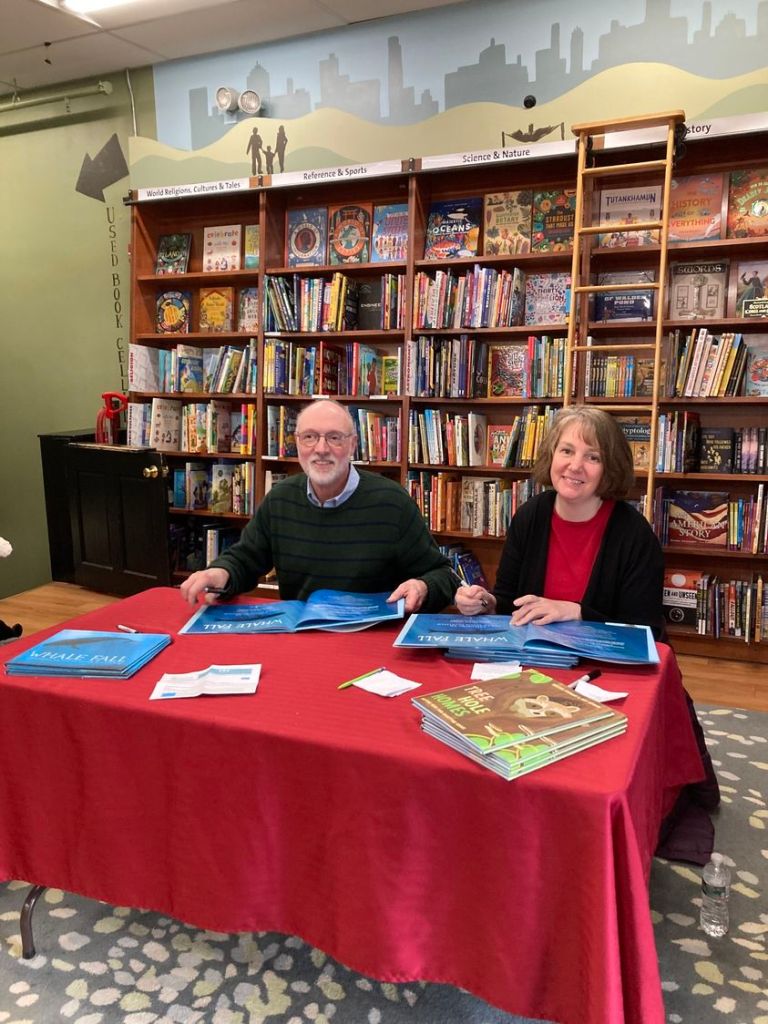
MS: Most of the time, I don’t meet the illustrator or communicate with them in any way. But Rob lives about 30 minutes from me, so we’ve done two book signings together. I’ve really enjoyed getting to know him and hearing about his creative process.
All visuals were provided by the author.
 WRITERS' RUMPUS
Melissa’s work just keeps getting better, so many wonderful books! This one looks amazing.
LikeLike
I can’t wait to get my hands on this book! So much intriguing info and such gorgeous artwork. Gets a big WOW! Thanks for bringing this book to our attention.
LikeLike
Hi Marty. Thanks for reading!
LikeLike
You always have great reads! Thanks.
LikeLike
Melissa, thanks so much for sharing the story of how this book came to be. Choosing a single word to sum up the voice of a book sounds like a powerful practice. Even with all the same research, this book would have gone in a completely different direction with a different word, for example, “ick” or “gross.”
LikeLike
Fangirling over here! I absolutely LOVE Melissa’s books. Thanks for this informative interview–I really enjoyed reading about the whole process here.
LikeLike
DrZatHome, I agree that Melissa’s books are the best. That’s why I thought you all might enjoy hearing from her. Thank you for reading!
LikeLike
Thank you so much, Melissa, for sharing how you write. Thank you, Joyce, for providing this interview.
LikeLike
Good to know that the information interests you. My goal, of course, is to share ideas that may be valuable for your work.
LikeLike
I have heard about this book, and enjoyed learning more about it! Melissa, what an exciting project this must have been for you and what a treat for kids to read.
LikeLike