
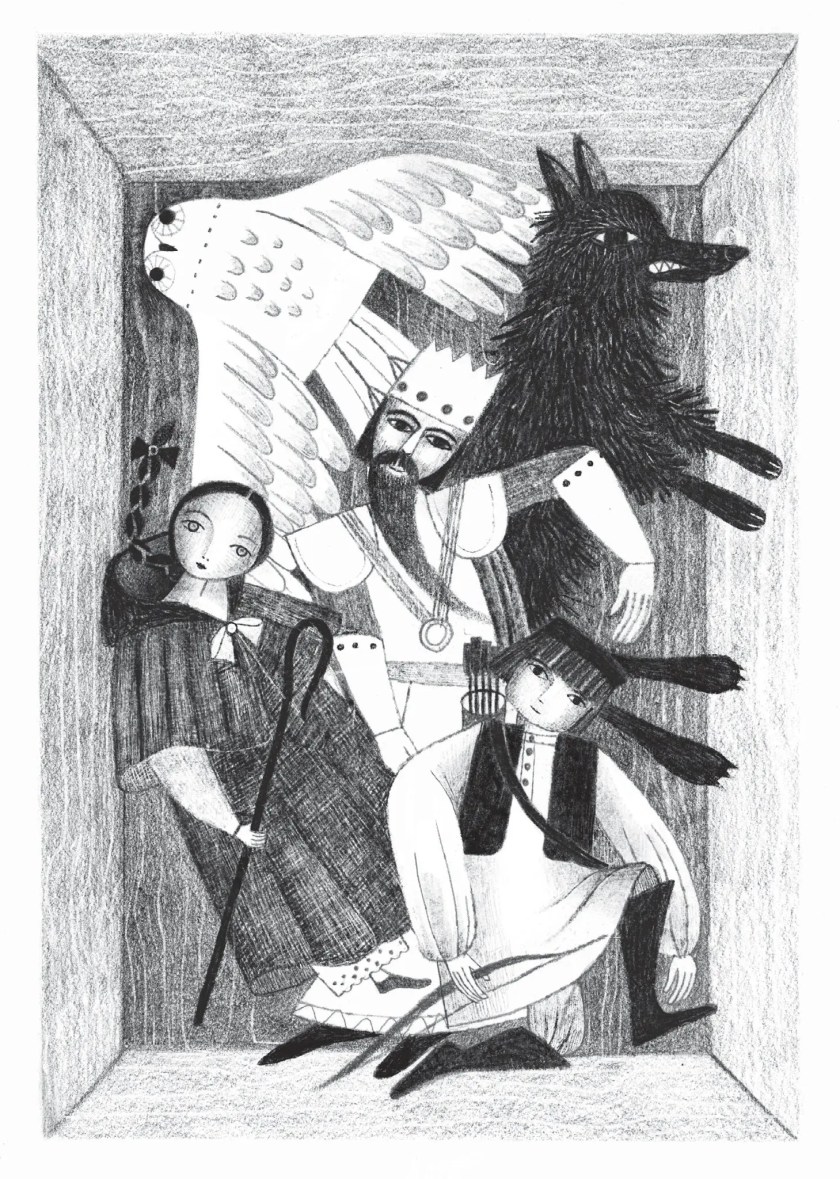
The heart of Kate DiCamillo’s newest book, The Puppets of Spelhorst, could be the wondrous, looping trajectory of the plot or the rich color of settings where events unfold. Her masterful storytelling amazes us with its subtle magic and its truths about the world’s cruelty and wonder. Yet surpassing those vital traits are the author’s gradual revelations of heart and soul in the characters, figures who draw us into their fascinating selves. Whether puppet or human, each thinks and breathes, wrapped in an existence both simple and complex. Each suffers travails and strives to fulfill their destiny, which compels the reader to love and believe in them.
And in their story.
A Review
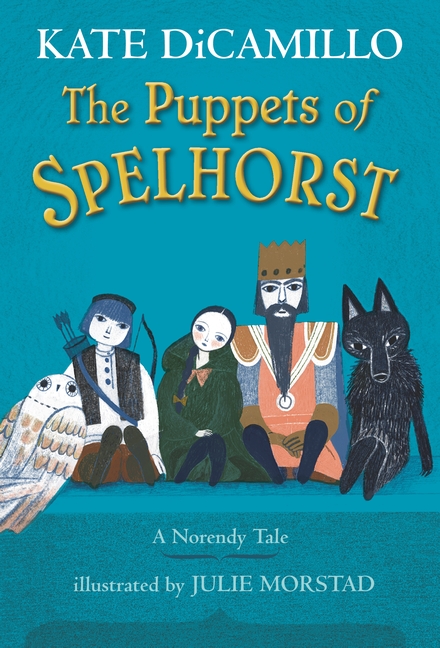
The tale begins with Spelhorst, a disgruntled old sea captain, who stumbles upon a grouping of five puppets in a shop window. He only wants the girl puppet with her green cape, shepherd’s crook, and, most importantly, her violet eyes, so like a girl whom he once loved. However, he cannot separate the puppets since the shopkeeper says they are all part of a story, so he is compelled to buy them all: a wolf and a boy and a girl and a king and an owl. Once home, he props up the girl puppet on his table and tosses the rest into his trunk labeled in gold with his name. The trunk indicates that he has been to faraway places and the gold lettering that he has done well. Yet he sadly addresses the girl puppet as Analise, his lost love. He writes a mysterious letter and then cries himself to sleep. During the night he dies.

What of the puppets in the trunk? They are jettisoned and given to the rag-and-bone man who sells them to the uncle of two young girls. The wolf and the boy and the girl and the king and the owl are meant to be together with shared roles in a story, and we see them clustered on the mantle of a refined vintage house, admired by the two young girls, Emma and Martha. However, life, both cruel and magical, intervenes and the puppets are separated. Deliciously wacky things happen. A hawk absconds with the boy, a fox drags the wolf down into his den, the maid mistakes the owl for a feather duster and discards him, the girl is tucked into the maid’s pocket, and the king alone remains on the mantel. Since the puppets are not capable of volition, their fates seem dire. How can this be when they are destined to be part of one story? Hope never dies. Deus ex machina events occur, re-uniting the cohort.
With the help of the maid Jane Twiddledum, Emma and Martha put on a puppet show that evening in which each of the puppet characters has a role. Songs have been sung, each character has dreamed, and all have wondered at the world. It seems that the destiny of the wolf, the boy, the girl, the king, and the owl has been fulfilled.
But that is not the whole story. A surprise ending fully brings all roles in this grand and satisfying tale together.
Seeing Character
Kate DiCamillo tells us what sets her stories apart – her way of “seeing” characters. Listen well to her here on her website and believe her. She says to look carefully around you, at the people who populate the world. Really see who they are, and what stories and dreams they carry within. Your characters, whether inanimate, animal, or human need an inner life, hopes, and emotions. And this author is a master of simple, yet full and believable characterizations.
- Each of the puppets is a passive protagonist since they have no volition. Things happen to them. Yet their inner lives are full, so we come to love them.
- Simple details make the characters vivid. Spelhorst could be an ordinary old sailor, but he cries himself to sleep like a baby, so he has powerful regrets. Even his name: Spelhorst is a clue to who he is. Horst in German can mean an aerie or eagle’s nest, something lofty, as was Spelhorst’s goal in sailing away. The wolf puppet constantly comments on the sharpness of her teeth and relishes the large shadow she casts during the play and the thought of her being a threat. Yet the wolf is not a male as one might expect. The King has a beard of real human hair and the owl’s wings are real feathers. Their personalities match their characters, but these details set them apart. We know that Martha is younger than Emma in part because she sucks her thumb, yet Martha, like the wolf, has an aggressive streak shown when she uses pliers to yank out two of the wolf’s teeth. Martha is not a pink princess. The girl puppet’s cape is green, not Red Riding Hood red. She is astonished by the moon and her perceptive eyes are violet. The maid, Jane Twiddledum (a familiar name from another story) is good at seeing the puppets as aware beings, and she sings beautifully. She uses her mother’s expression “If wishes were horses, beggars would ride.” She understands “the cruelty of the world,” yet still sings. She is pragmatic and will make her own way.
- The rag-and-bone man sings too, though for another reason. And he knows immediately the value of the finely made puppets in the trunk.
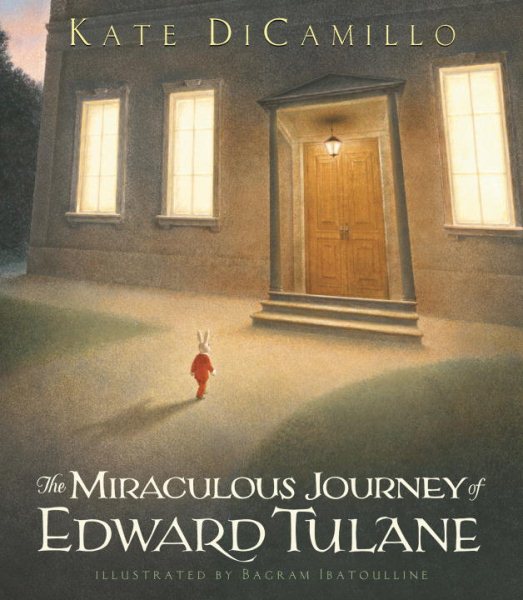
In other books written by Kate DiCamillo her treatment of character gleams in different ways. In The Miraculous Journey of Edward Tulane, a considerably darker story, Edward of the title is also a passive protagonist as a stuffed rabbit with a porcelain head, but his inner emotional arc is more drastic in response to the more dire injuries life throws at him.
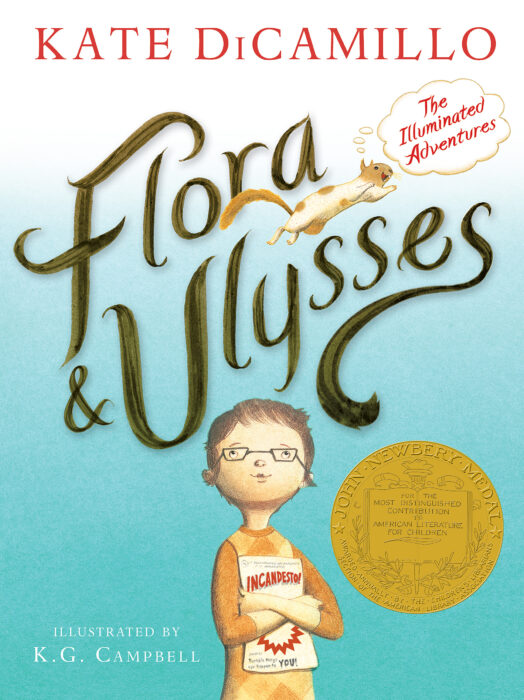
The characters in the Newbury Award winning Flora and Ulysses are real people (and squirrel) with problem-solving skills and a sense of adventure, but they are also comically drawn. Flora Belle Buckman is a bright but shy comic book lover struggling to understand to her parent’s recent divorce. When the squirrel is run over by a neighbor’s vacuum cleaner he develop’s superpowers, hence Flora names him Ulysses. One of Ulysses’s powers is that he creates poetry using a typewriter. Interesting character profile for a rodent.
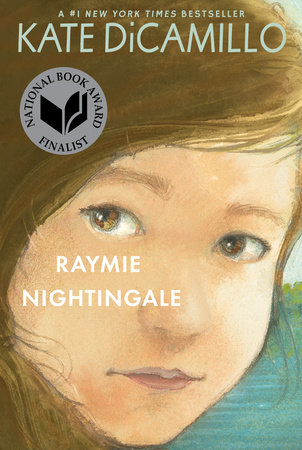
In Raymie Nightingale the three protagonists are wildly different realistic characters, each believable due to the difficulties that have shaped them. Ramie’s name isn’t actually Nightingale, and she scrunches her toes when nervous. Her father ran off with a dental hygienist. Louisiana Elefante is an orphan who has asthma and lives with her grandmother after her parents, trapeze artists, died when their ship sank. And Beverly Tapinski is a tough-seeming lock-picker who suffers physical abuse. These three bond in a way that enriches the trajectory of their characterizations.
In her words, here is Kate DiCamillo’s way of drawing character by seeing. Take her advice and be a better writer for it.
The Puppets of Spelhorst, by Kate DiCamillo illustrated by Julie Morstad
Candlewick Press, in stores October 10, 2023
 WRITERS' RUMPUS
The Puppets of Spelhorst sounds like yet another wonderful read from Kate, so thanks, I’m looking forward to it!
LikeLike
Love Katie DiCamillo’s work.
LikeLike
What an amazing adventure the reader goes on when meeting the characters of Kate DiCamillo’s books. I can’t wait to read Spelhorst. Thank you, Joyce, for letting us know about it.
LikeLike
Adaela, I believe that you will enjoy the book with its personable characters and inventive plot. Lots of surprising things happen to these puppets, and they take it all in stride.
LikeLike
Kate DiCamillos is an amazing author. I love all of her books that I have read. Thye are not just for children. Her advice is perfect. Thanks for sharing.
LikeLike
Seems to me that most children’s books are not just for children! All of the best ones show new perspectives on the world and share wonderful stories. We are never too old to appreciate such books! And Kate DiCamillo is at the top of the list of wonderful authors.
LikeLiked by 1 person
I have not had the pleasure of reading these yet and now I really, really want to. What a fantastic summary, Joyce, thank you.
LikeLike
Hello Hilary. Kate DiCamillo is a wonderful writer who crafts richly personable stories. She has experimented with many styles/genres, so there is a lot to explore. Her work is admirable.
LikeLike