
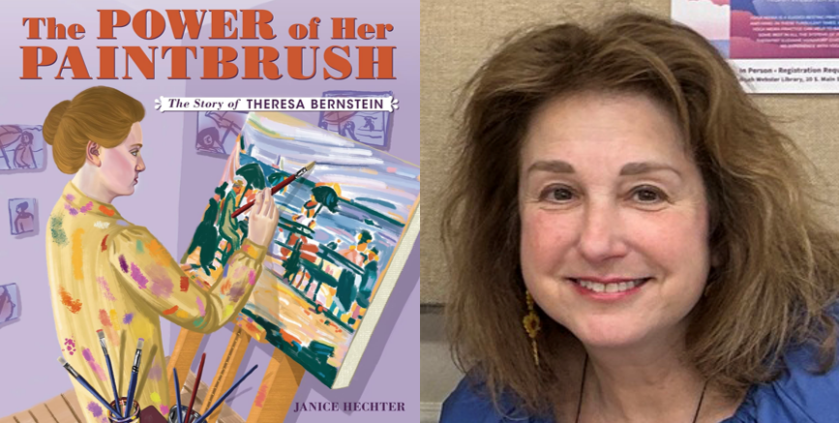
I’m thrilled to welcome back author-illustrator Janice Hechter to the Writers’ Rumpus blog. When we last spoke over the summer (you can check out that interview here if you missed it), we talked about her bold and thought-provoking picture book Where Are the Women?—a book that doesn’t shy away from asking big, important questions. Janice’s work, both as a writer and an artist, has always struck me as quietly radical. Her illustrations don’t chase trends or mimic the popularized “look” of the moment. Instead, they are intentional, expressive, and (refreshingly) unafraid to be different.
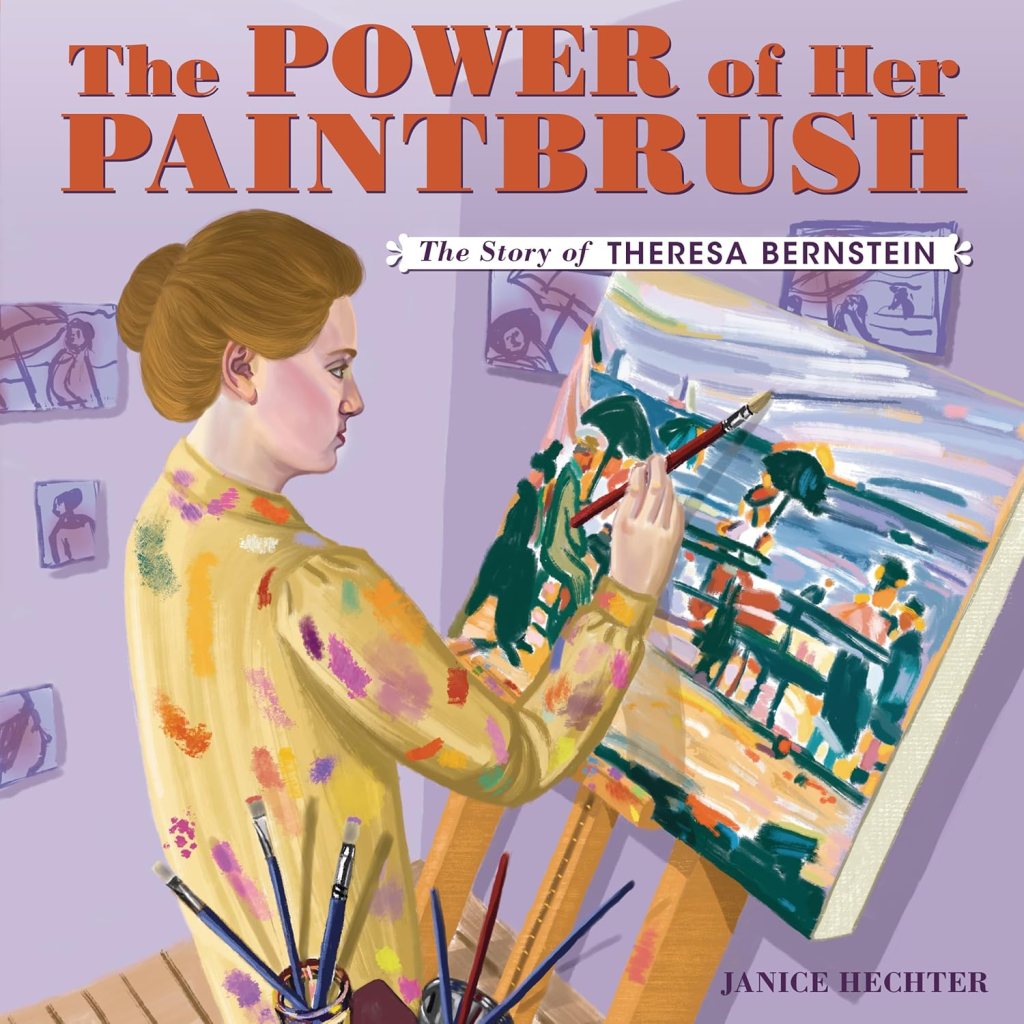
Her newest picture book from Kar-Ben Publishing, The Power of Her Paintbrush: The Story of Theresa Bernstein, feels like a natural continuation of that artistic philosophy. Theresa Bernstein was a prolific, determined, and deeply observant artist who painted what she saw—even when the art world didn’t want to see it. As I read Janice’s book, I couldn’t help but feel that she wasn’t just telling Theresa’s story; she was in conversation with her, as a fellow woman artist.
And I’m excited to dig into that with her today!
Hilary Elizabeth Margitich: Janice, it’s so nice to have you back on Writers’ Rumpus! I know you’ve been busy, so thank you for taking the time to stop by and catch up with me.
Janice Hechter: Thank you so much for this opportunity, Hilary. It’s great to be back.
HEM: We last spoke about Where Are the Women?, which centered on visibility—who gets seen, who gets remembered, and who gets left out. The Power of Her Paintbrush lives in that same space, but through a single, vivid female life.
What first drew you to Theresa Bernstein as a subject?
JH: When I was an art student in college, the only artists from history that we learned about were men. I remember visiting the art museums in Manhattan during my semester breaks and being in awe when I viewed famous artists’ work in person that I had previously only seen in books. I never questioned the lack of female representation at that time. I just took it as a given that only male artists from history received recognition.
This is something that has been on my mind in recent years. I wondered, did women artists exist in centuries past? Were they somehow just not as successful as their male counterparts? I even noticed the lack of female artists portrayed in picture book biographies, with the exception of only two women artists who have been the subject of picture books over and over again. I thought surely there were more than two women artists deserving to be the topic of a picture book. I recently noticed an advertisement featuring a series of twenty picture books about individual artists. Of those twenty artists, only one was a woman. That said it all!
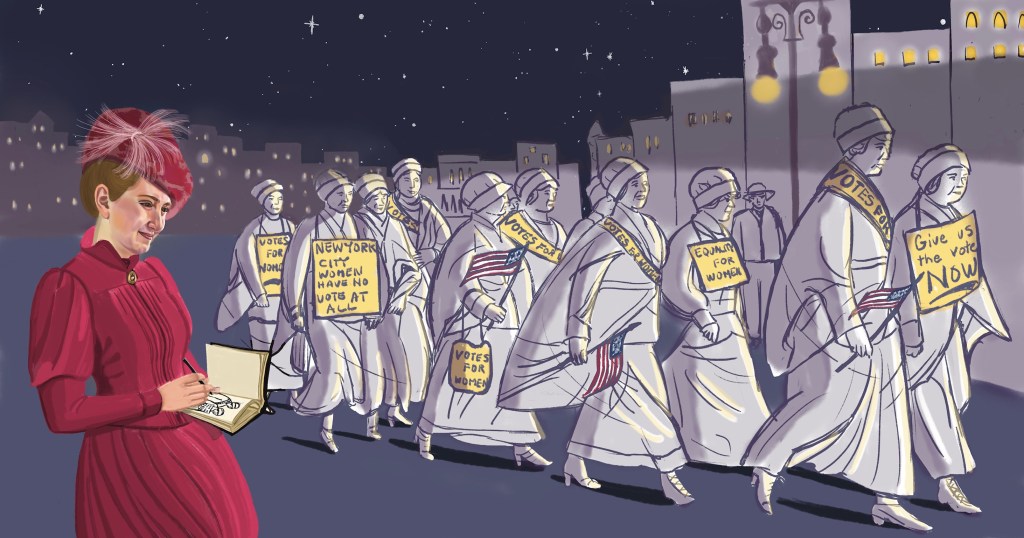
I started researching various women artists from history and discovered Theresa Bernstein’s paintings. I was immediately taken by Bernstein’s ability to capture the energy of a moment in time. Her paintings of gatherings of people exuded a vitality and excitement that pulled me in. I was especially drawn to Bernstein’s night scenes, in which brilliant flickers of light defined people mingling against backdrops of darkness.
And Theresa was one of the rare female artists who achieved great success in the early 20th century. At that time, she was actually more famous than many of the male artists that are held in acclaim today. She continued producing art throughout her very long life, but somehow she got left out of the history books. I wanted to write and illustrate this book to introduce a new generation to both her story and her art.
HEM: As I read the book, I kept thinking about how Theresa refused to adjust her vision to fit what the art world expected of her (or maybe didn’t expect of her)—whether that meant painting female subjects in a new light or even abbreviating her first name. She found ways to keep going without erasing herself or her talent. Do you see any parallels between Theresa’s experiences and your own path as an artist?
JH: Like Theresa, I have never painted or illustrated to trends. I think each artist’s work should express their own unique signature. There’s room in art for all different styles, and the variety keeps things interesting.
HEM: Definitely. Your illustrations are so unique and distinctly you. They don’t follow a cookie-cutter picture book illustration style. That is especially significant in a book about an artist who resisted conformity! How did you approach illustrating Theresa’s world while staying true to your own artistic voice?
JH: Thank you, Hilary. It’s important to me that my illustration style is unique.
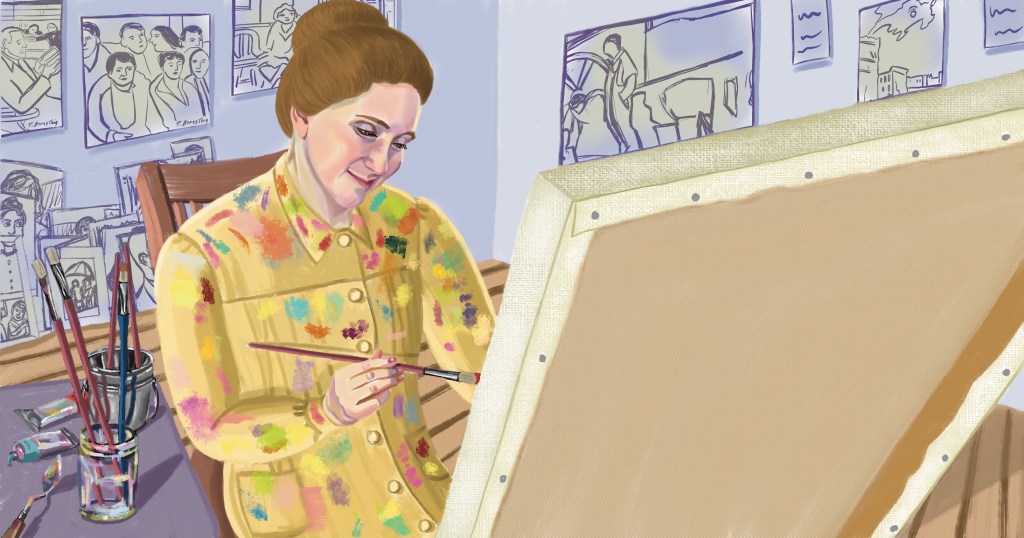
My illustrations are often defined as “painterly” and my style of painting is frequently described as “energetic”. “Bold colors, applied with equally bold brushstrokes . . .” was how an art critic once depicted my paintings in an Art New England review. Therefore, I didn’t have to stray from the way I naturally paint to illustrate a book about an artist with a vigorous brushstroke and style.
HEM: One of the moments that stands out vividly to me is Theresa continuing to paint—every day, everywhere—on whatever surface she can find! There’s such urgency and devotion there. What did researching her daily practice teach you about persistence, especially over a lifetime?
JH: From interviews I conducted with Theresa’s friends and family it was clear. Theresa had to paint, no matter what. It was instinctual. Her life revolved around art. Everything was about art. Even when she went on vacation, its purpose was to create art. She set up an easel and painted wherever she happened to be. Upon her return, she disassembled her canvases from their stretcher bars, rolled the canvases up, and transported them back home.
At the same time that I was researching Theresa Bernstein, I was persisting in my writing and illustrating, which anyone in this industry will tell you is no easy feat. Reading about Theresa’s determination inspired me to keep going with this book, as well as others, and not give up.
Theresa’s practice also taught me something else. Her paintings were always of places she had been, and many depicted scenes very close to where she lived. Sometimes she even set up her easel right in her back yard. She never had to go far to find subject matter. During the time period that I was working on this book, I was also looking for a subject to draw, but couldn’t leave the house to look for material due to the pandemic. I felt a little frustrated. But after reading about Theresa, I followed her example and focused my attention on what was right in front of me. I did a series of drawings which portrayed observations I had made within my house. And the one time I left the house to comb through wreckage at my late uncle’s apartment, it became my readily available subject to draw.
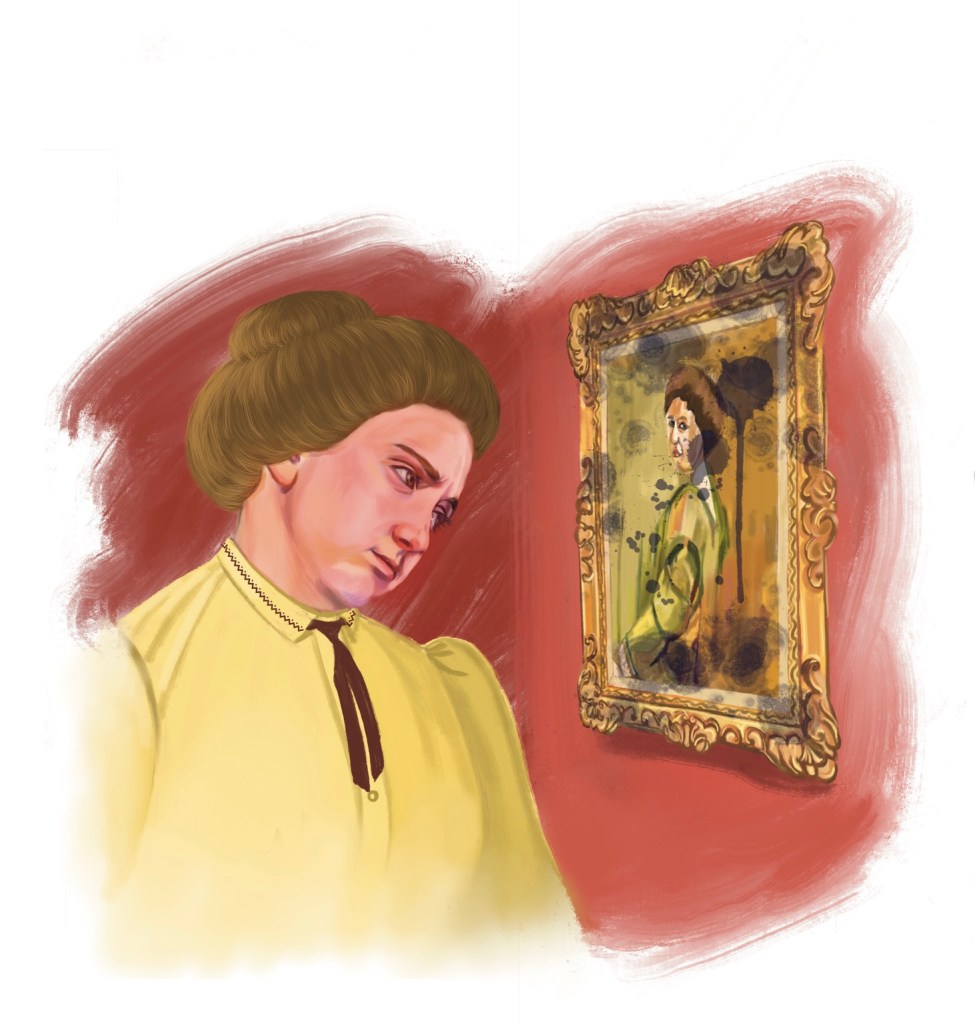
HEM: This book doesn’t shy away from showing the barriers Theresa faced: sexism, antisemitism, and the ways women artists were sidelined. How did you decide what to include for a young audience, and what conversations do you hope the book sparks?
JH: I included the scene where Theresa’s painting gets vandalized. I think many kids will be able to relate to this, even if they haven’t experienced that exact situation. A project they’ve put time and effort into might have gotten knocked over, or a paper they wrote might have disappeared after their computer crashed. Then the question becomes: do they start all over again from scratch, or do they throw up their hands and give up?
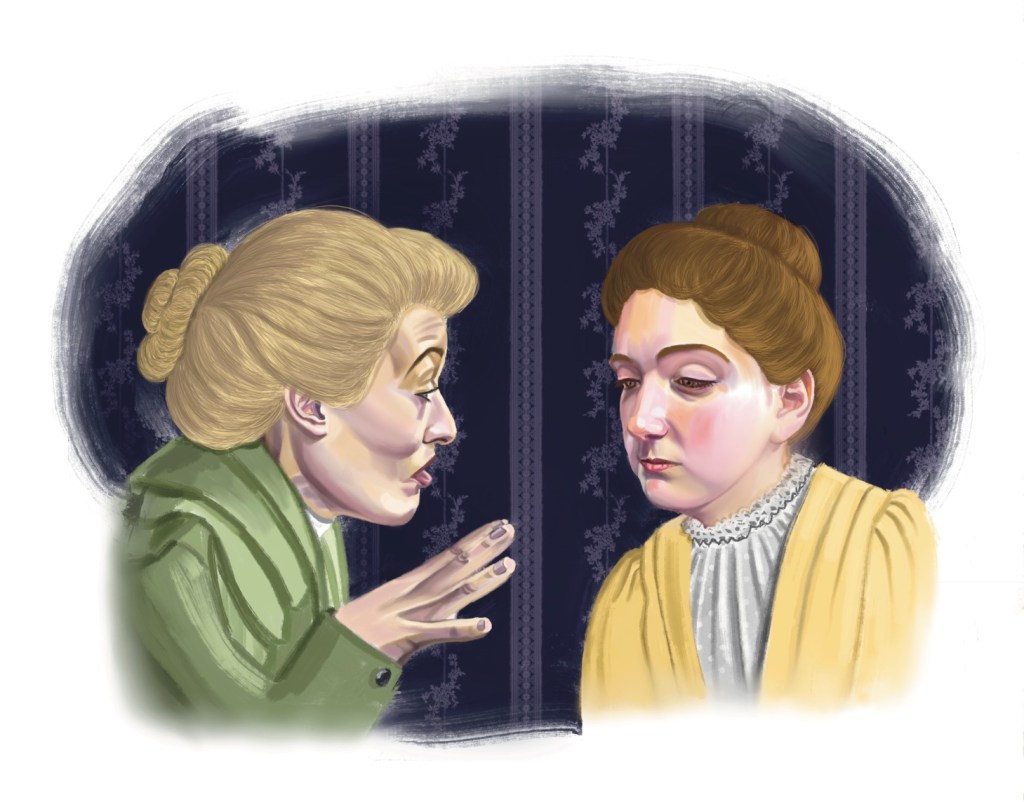
Another pivotal scene in the book is when Theresa seeks the help of an older, seasoned artist. Instead of offering encouragement and guidance on pursuing an art career, the artist advises Theresa to give up her art aspirations and study typing instead. Theresa responds to this “advice” in the best possible way: she enrolls in painting classes, rents an art studio, and continues pursuing her art goals. It’s inevitable that all children will eventually encounter a person who offers only discouragement. But it’s how they react to those jarring words that can mean the difference between success and defeat. My hope is that this incident will slip into each kid’s subconscious and propel them to not allow someone else’s negativity to dissuade them.
HEM: I think that’s such a powerful and important message!
And after spending so much time with Theresa Bernstein—her art, her struggles, her determination—what do you hope young readers (and maybe the adults reading alongside them) walk away carrying?
JH: A belief in themselves, despite any obstacles that may be thrown in their path. When Theresa is turned away from a series of inns, while on a painting trip, because she is Jewish, she refuses to turn back. She finds alternate accommodations and continues on her mission to paint magnificent seascapes.
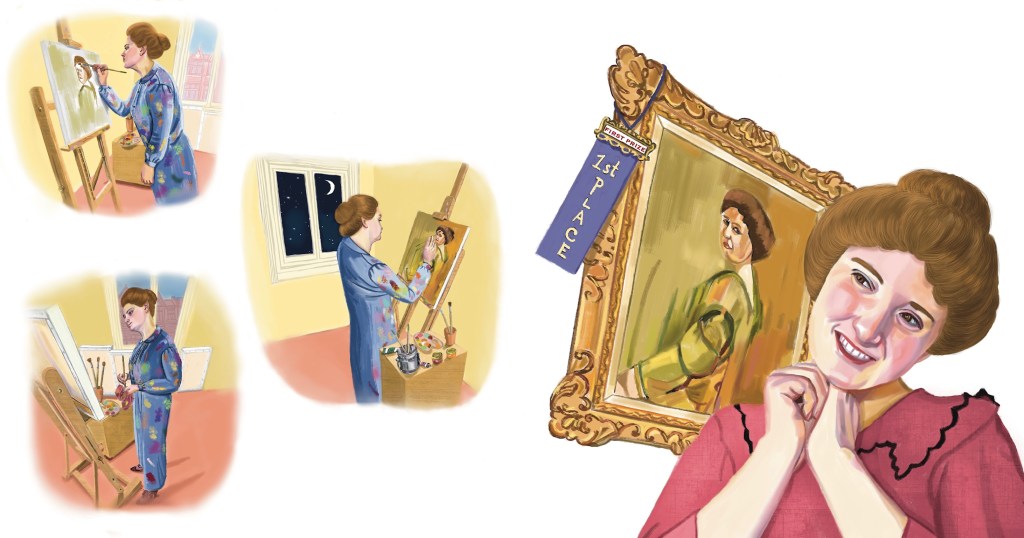
Also, I hope that people realize how much of a positive difference one person can make. In the story, the owner of an art store changes the trajectory of Theresa’s art career when he not only praises and purchases her artwork, but suggests that she enter her painting in a prestigious competition. Theresa’s painting gets accepted into the show and the wide exposure in major museums provides an invaluable boost to her art career.
HEM: Yes! That was such an enjoyable part of the story, that I loved. Okay, my last question: what’s currently energizing you creatively, and what’s next for you?
JH: I am excited to say that I recently finished another picture book biography which will soon go out on submission.
I would like to invite the readers of your blog to my upcoming book launch for The Power of Her Paintbrush on March 14, 2026, 2:00pm, at the Lincoln Glenn gallery, 17 East 67th Street, Suite 1A, New York, NY 10065. I will be there signing books, amidst a plethora of original Theresa Bernstein paintings hanging on gallery walls, for all to view and enjoy.
I will be also be signing books at 4:00pm on March 15, 2026 at Books of Wonder, 42 West 17th St. New York NY 10011.
HEM: Wow, that is all very exciting–I’m so happy for you, my friend! Thanks so much for joining me today on Writers’ Rumpus, Janice. It’s been a fascinating discussion.
The Power of Her Paintbrush: The Story of Theresa Bernstein is a reminder that making art—and claiming space—can be an act of quiet defiance. It’s also a testament to the artists who come before us and the artists who continue the work, even when the world isn’t quite ready.
You can learn more about Janice and her work through this powerful new book, which traces Theresa Bernstein’s life from early talent to lasting legacy, illustrated with the same courage and conviction that defined Theresa, herself.
Janice is generously offering an author-signed copy of her new book to one lucky reader! To enter, comment on this post! If you share this interview on social media, mention that in your comment and you’ll get another entry. Giveaway closes in one week. US and Canada only.

An award-winning children’s author-illustrator and fine artist, Janice Hechter has exhibited her paintings in various galleries and museums throughout the country. Where Are the Women?: The Girl Scouts’ Campaign for the First Statue of Women in Central Park, was published in 2025 by Red Chair Press. This book has won nine awards, including a Northern Lights Book Award, and was on the shortlist for the Goddard Riverside Youth Book Prize for Social Justice. KIRKUS Reviews describes it as, “An inspiring true story of female empowerment. Our Verdict: GET IT.” In 2021, Adventure Girl, written and illustrated by Janice, was published by Alazar Press. This book gained recognition in a New York Times article. Janice has also illustrated five other picture books, including SCBWI Crystal Kite Award finalist, The Great Elephant Escape, for Pelican Publishing. To view more of Janice’s illustrations and learn more about her, visit her website at www.janicehechter.com.


Hilary and Janice, this interview is incredibly inspiring. I absolutely cannot wait to get my hands on this book! Janice, I’m in awe of your ability to write and illustrate, and thank you for bringing Theresa’s story to young readers.
LikeLiked by 1 person
Thanks Laura, I think you will love it!
LikeLike
Great interview! Can’t wait to read this book. I just ordered it from the library. So happy for your success, Janice. And I shared this on bluesky and twitter.
LikeLiked by 1 person
Thank you for the kind words, Carol, and for sharing! 🙂
LikeLike
The Power of Her Paintbrush looks amazing. Janice’s paintings are gorgeous. I especially love the first two shared spreads with the edge of the canvas looking so real I want to grab it and start painting, and then the next with her dressed in red–all so beautiful. The story sounds wonderful, too, and I can’t wait to read it. Thanks so much for this inspiring interview and CONGRATULATIONS to Janice on her latest wonderful picture book!
LikeLiked by 1 person
Thank you, Marcia, it is a beautiful book in both pictures and words. And you might even win it in our giveaway, we’ll see! Thanks 🙂
LikeLike
This book looks fantastic! Congratulations!! I look forward to learning about this intriguing artist.
LikeLiked by 1 person
I’ve never heard of this talented artist before and I can’t wait to learn more about her. Thank you for introducing us to her. I shared this post on tumblr.
LikeLiked by 1 person
Glad you enjoyed, Danielle! And thank you for sharing!
LikeLike
I’m so excited to find this book! I want to study Janice’s structure and Theresa’s passion for my own inspiration!
LikeLiked by 1 person
Yay, glad it inspired you! And hello, my friend! Nice to see you on here 🙂
LikeLike
After reading this blog post I immediately googled Theresa and am very impressed with her art. Thank you for sharing her story.
LikeLiked by 1 person
Isn’t it something, Marie? So cool for Janice to be able to introduce her to today’s children 🙂
LikeLike