

I’m a nerdy but lovable nonfiction writer. More lovable than nerdy, ok? As such, I’m constantly on the lookout for a mind-blowing, heart-hugging real-life story, and a good “angle” from which to capture it. When I do find it, the next thing I need to think about is what age level to write the story for. First the story…then the angle…then, who would really want to read about this?
Some topics are limited to certain age groups for reasons you can probably imagine… Most of us don’t want to read books about murder and betrayal to young children (Candace Fleming’s stunning new book Death in the Jungle is very appropriately written for a young adult audience). Nor will teens be particularly enthralled to read about the history of ice cream, unless there are socially complex issues woven throughout it (like the aforementioned murder and mayhem…with extra sprinkles). But many real-world topics can be written for different age groups. And as I write my nonfiction manuscripts, I like to observe and take mental notes on how this is being done all around me.
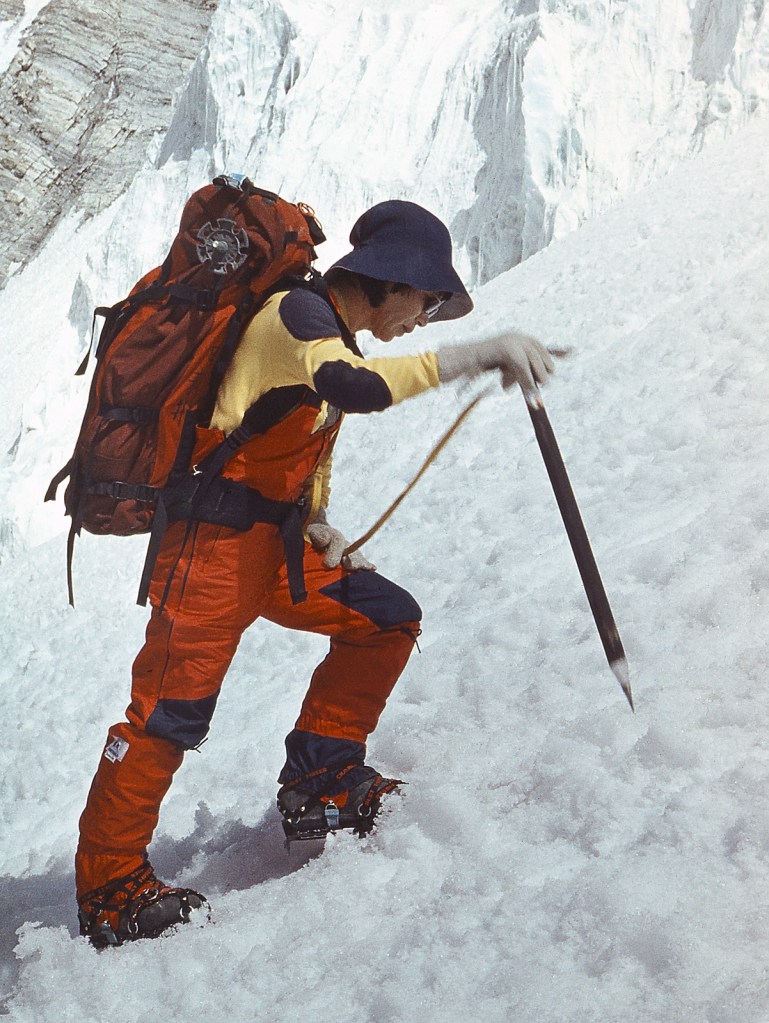
Scrolling through social media a few months ago, I came across a post by my favorite folks over at A Mighty Girl, highlighting the life and achievements of groundbreaking women’s mountain climber, Junko Tabei. They had rounded up several nonfiction children’s books about her, and I noticed…Each. Was. Written. For. A. Different. Age. Segment. WOOHOO! My mental wheels turning, it suddenly hit me that it would be fun and interesting to look at each of them, compare, contrast, and blog about it here so we could explore them together! Doesn’t that sound like fun?!? (It’s going to be fun.)
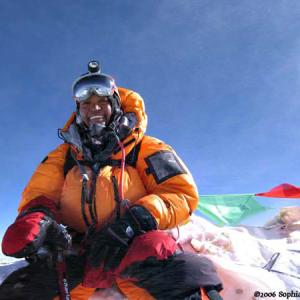
It doesn’t hurt that Junko Tabei and these books are right up my alley. A strong woman, doing strong things with her mind and body, and living her best life? Y-E-S. Junko climbed many mountains. All the tallest ones in the world, in fact. Mostly notably, she was the very first woman to make it to the top of Mount Everest in Nepal in 1975, roughly twenty years after Sir Edmund Hillary. What made this so incredible was that she lived during a time (the 1960s and 70s) and in a place (Japan) that did not encourage women to embark on these types of ventures. At all—the very opposite actually. But she followed her passion, not social convention, and there was just no stopping her. Not even an avalanche that buried her and the team of women she was leading just days before they were expected to reach the peak of Everest.
Junko went on the climb all Seven Summits of the world (these are THE highest mountains on each of the seven continents):
- Mount Everest (Asia) 29,032 ft
- Aconcagua (South America) 22,841 ft
- Denali aka Mount McKinley (North America) 20,320 ft
- Mount Kilimanjaro (Africa) 19,341 ft
- Mount Elbrus (Europe) 18,510 ft
- Mount Vinson (Antarctica) 16,050 ft
- Puncak Jaya aka Carstensz Pyramid (Oceania) 16,024 ft
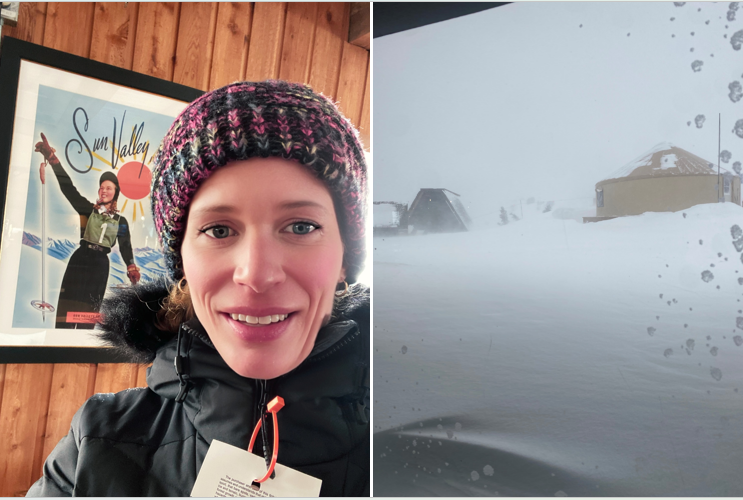
To put it in perspective for you, here’s a picture of me freezing my buns off at the top of Bald Mountain in Sun Valley, Idaho at 9,150 ft (about a third of the altitude of Everest). It’s my highest altitude ever reached…and I took a ski lift!
So, what do you say? Will you join me on an expedition to explore a fascinating nonfiction topic (the life and adventures of Junko Tabei) written several different ways, for different aged readers? Go grab your water, some snacks, sturdy hiking shoes, and some light, insulated layers…oh, and your writing supplies, too. You may want to jot down some notes as we trek along.
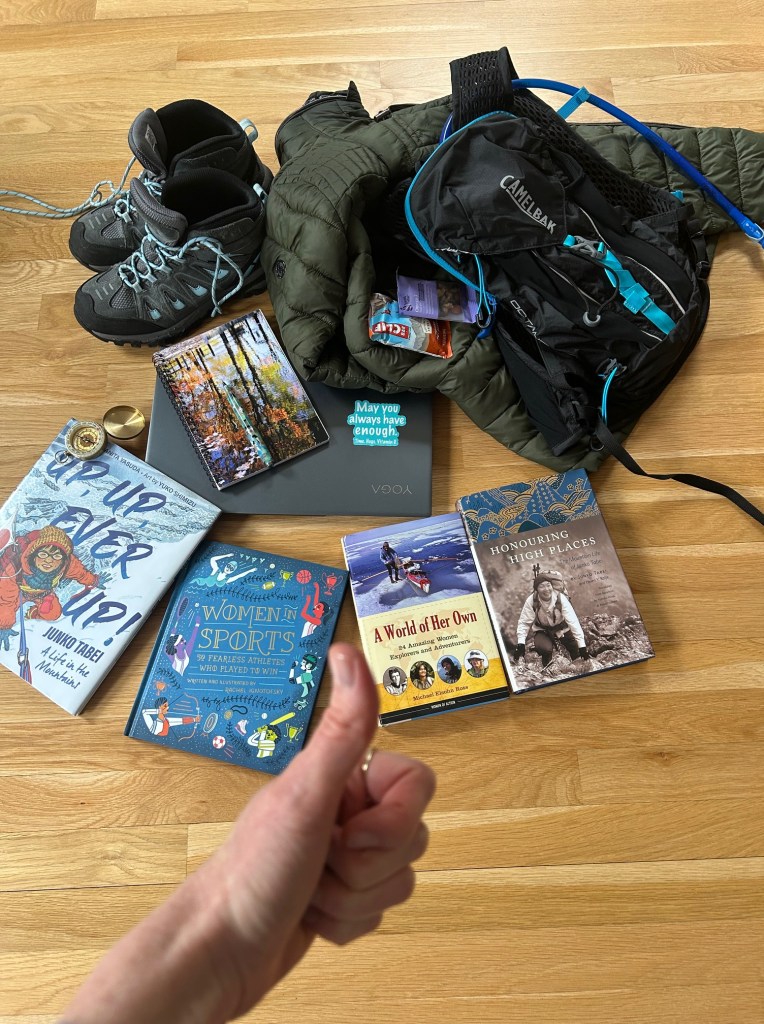
For Beginner Mountaineers (Grades K-3)
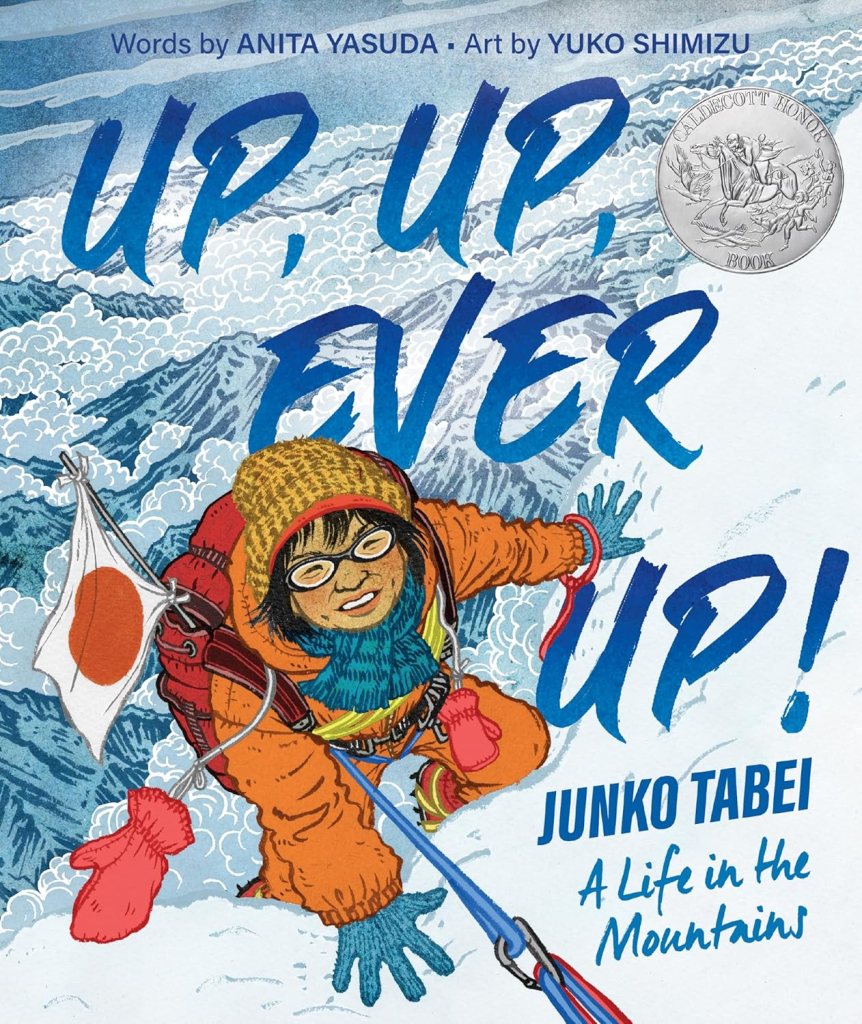
Up, Up, Ever Up! Junko Tabei: A Life in the Mountains is Anita Yasuda’s stunning debut picture book released this past fall with Clarion Books (HarperCollins). I’ve been a long-time fan of Anita’s work, and have been itching to read it ever since I saw it available for preorder. Since then, it’s garnered a whopping five starred reviews and numerous awards, including a Caldecott Honor medal!
Colorful, full-bleed illustrations by Yuko Shimizu are drawn in a Japanese graphic style that transport you to Japan and then Nepal. Lyrical, flowing language allows the reader to experience Junko’s majestic surroundings with all their senses: the cool grass, silvery domes, and icy peaks.
One of the keys to writing an engaging biography for this young age group is to distill the person’s life and experiences into scenes and sequences that will be both understandable and of interest to them.

Yasuda spends a good deal of time showing the reader what Junko felt and thought as a young girl growing up in Japan, and then how her dreams took shape as she grew into an adult. There’s also a nice environmental focus on how her climbing achievements influenced her later dedication to protecting fragile mountain ecosystems.
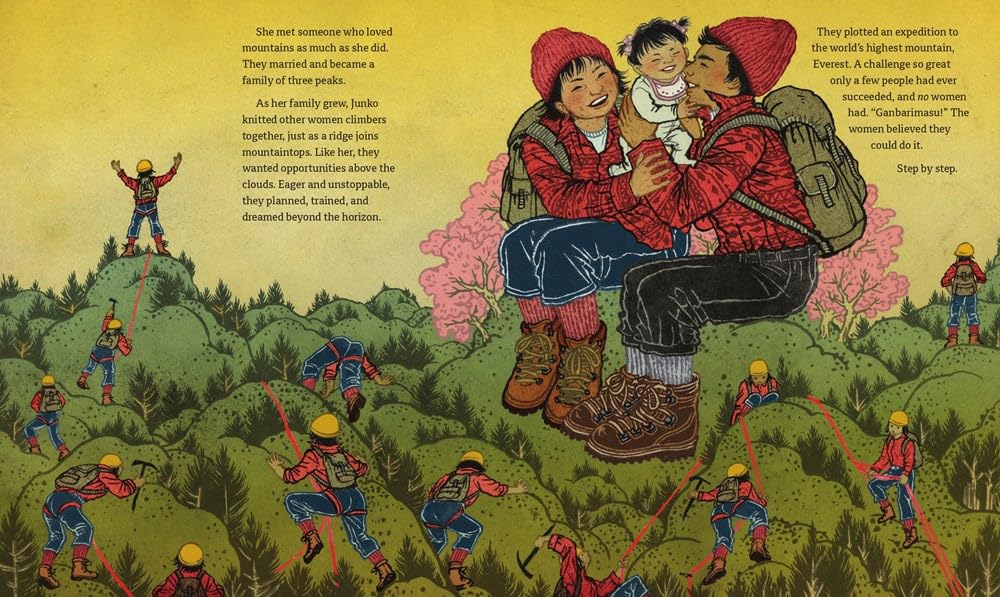
The overarching message in the book (without being didactic or obvious) is one of perseverance in the face of life’s obstacles. This is one that works particularly well in picture book biographies. Yasuda repeats the phrase “step-by-step” to convey this idea to the young reader. The other refrain she uses throughout is “Up, up, and ever up!”, which also makes the wonderful title. Since this is a book that an adult will be reading to a child, more intricate, aesthetic language is used to immerse children in a way that will stretch their minds. This includes some Japanese and Nepalese terminology.
This book is 984 words spread over 48 pages and includes carefully thought-out backmatter, including an Author’s Note, Timeline of Junko’s life, Glossary, and bibliography and source notes. On Yasuda’s website, you can also find a detailed teacher’s guide for incorporating into a classroom curriculum.
For Junior Mountaineers (Grades 4-8)
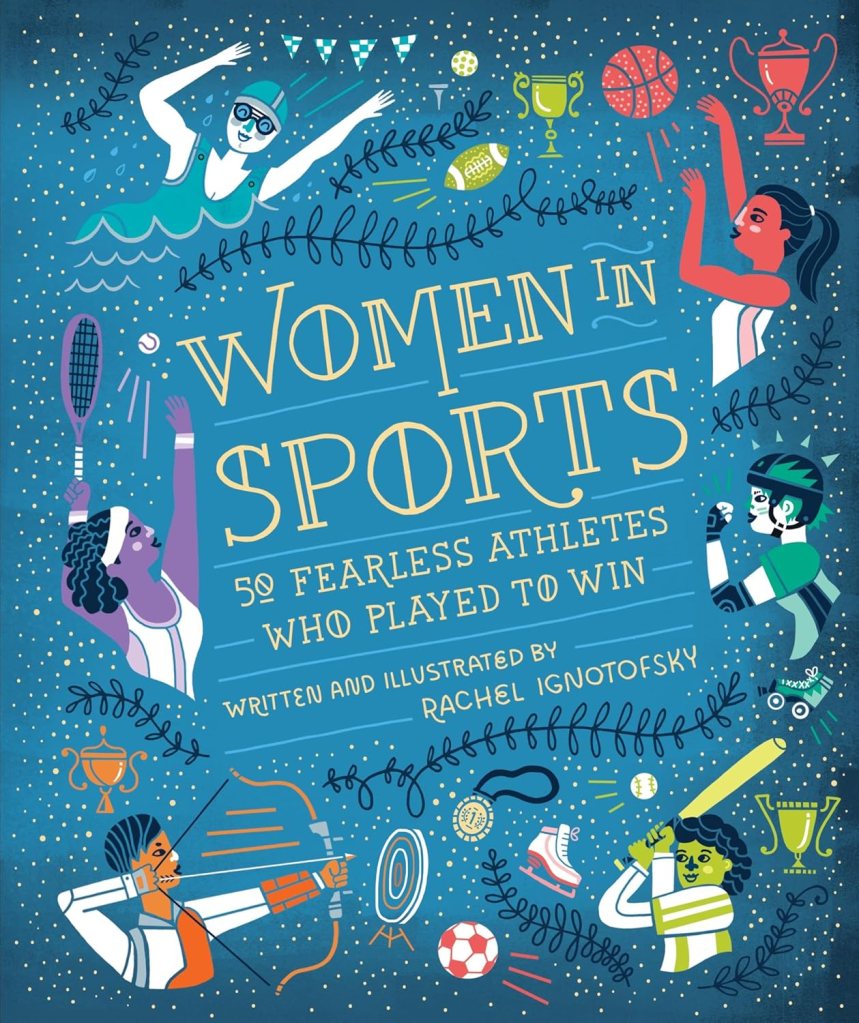
Women in Sports: 50 Fearless Athletes Who Played to Win is a visually tantalizing collective biography by NY Times bestselling author and illustrator Rachel Ignotofsky, released in 2017 by Ten Speed Press. It is part of “The Women Who Make History Collection”, which also includes Women in Science: 50 Fearless Pioneers Who Changed the World (2016) and Women in Art: 50 Fearless Creatives Who Inspired the World (2019).
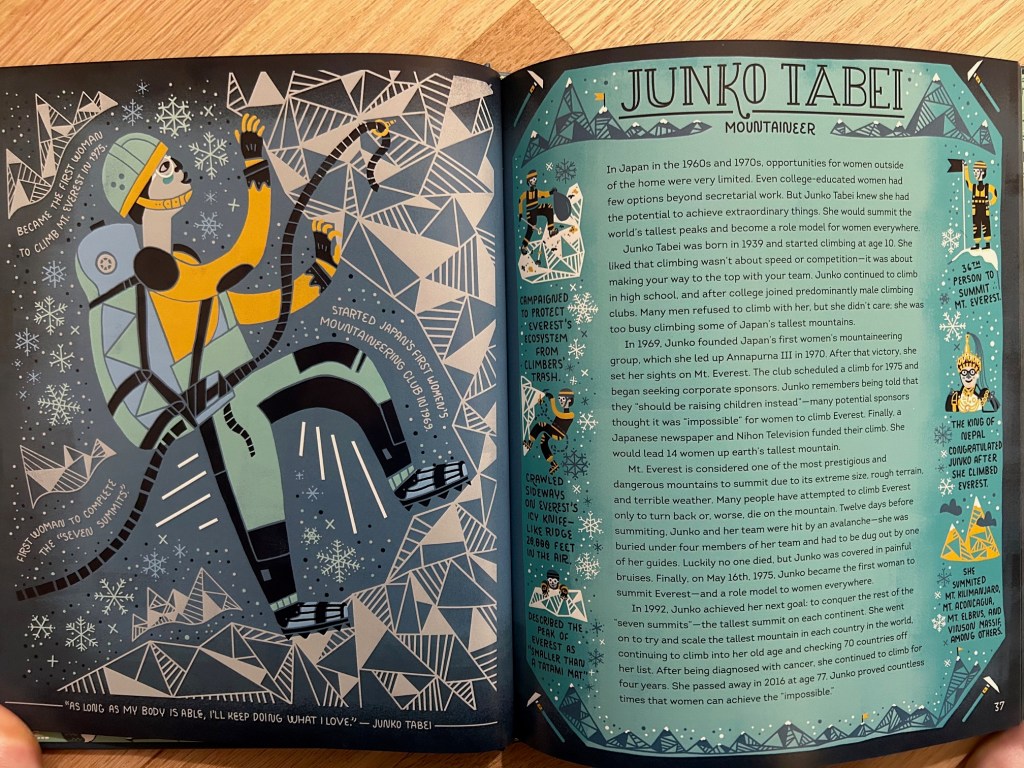
Ignotofsky has a playful, lively art style, which she combines with simple, straightforward and engaging text for tween and early teen readers. Since this is a compilation of stories, Junko is one of many women featured in the book, and she is allotted one beautifully illustrated page spread, packed with fascinating information about her.
This is expository writing, so fun and interesting facts are explained to kids in a matter-of-fact way. I particularly enjoyed the fast facts that look almost handwritten and flank the text and illustrations on each colorful page. Tweens and young teens are at the age where they’re becoming increasingly aware of social issues and their own influence on the world around them (both individual and collective). Ignotofsky takes an impassioned stance in her Introduction and Conclusion, teaching the reader about the struggle women have faced to prove themselves in the world of competitive sports, and the importance of challenging the status quo.
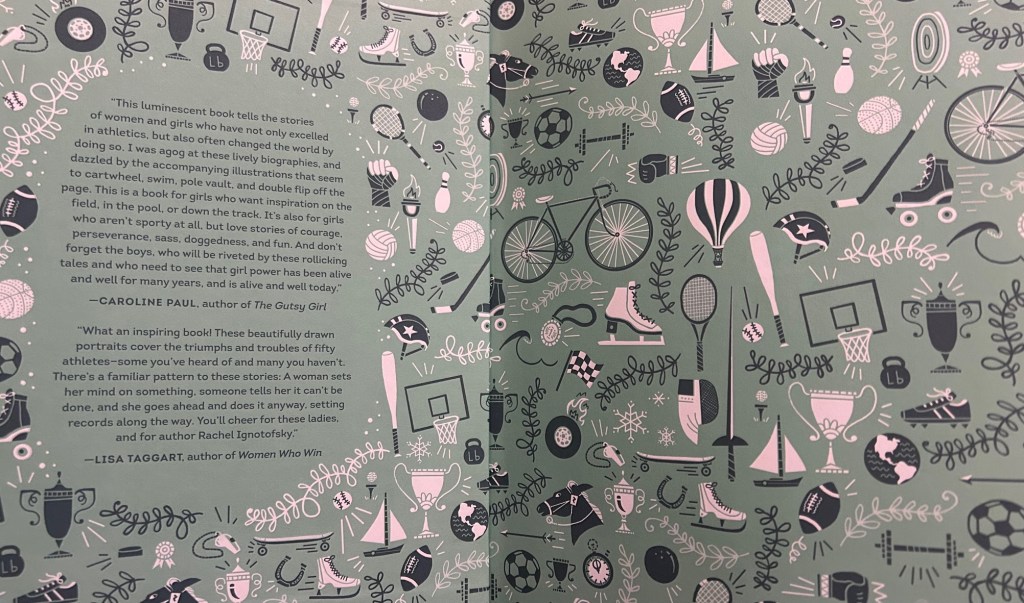
Ignotofsky’s trademark graphics extend through every area of the book, including the beautifully designed end papers and even the source notes in the back! There’s fun and educational front matter (Table of Contents, Introduction, and Timeline) and back matter (More Women in Sports, Conclusion, and Sources).
Women in Sports is 27,444 words spread over 128 pages for an older grade schooler, who is looking for much more length and content than they were just a few years ago. This book is marketed for grades 4-8 (a wide age span) and part of what makes it suitable for that is the simple, non-lyrical language that’s accessible for multiple reading levels and abilities. Also, it’s browsable format, which allows kids to select whatever and however many biographies they like and can consume in a sitting. Clever, huh?
For Teen Mountaineers (Grades 9-12)
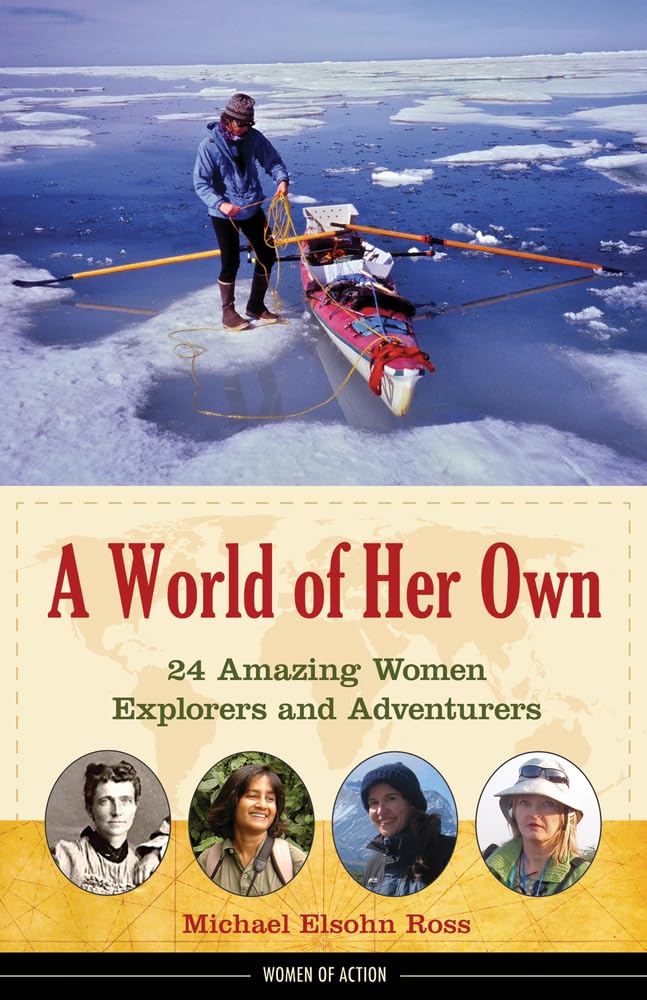
A World of Her Own: 24 Amazing Women Explorers and Adventurers by Michael Elsohn Ross is a book for teens on daring women explorers from all around the world. Ok, so this one does not actually include Junko. I’m not sure why and I wish she was, but…let’s just pretend she is in it, and discuss the fascinating young adult nonfiction book that it is! It’s part of the Women of Action series and was released by Chicago Review Press in 2014.
Ross is a naturalist, science educator, and award-winning nonfiction author of over forty books for children. He lives and works in Yosemite National Park, and you can read more about him and his work here.
This is a collective biography written for an older adolescent reader who is not afraid to sit and absorb a lengthier, meatier read. Like Ignotofsky’s middle grade book, this one is written in a clear, expository style in parts, but unlike it, also dips into a narrative scene-retelling style in other places. It alternates between summarizing and scene-sharing in a wonderfully seamless way that simply lets the reader drink in everything that Ross wants them to know about each woman. The bios are several pages long with black and white photos to accompany each, which are not as visually stimulating as the younger kids’ books but allow the rich text to shine and capture the reader’s full attention.
The book is browsable, like Ignotofsky’s, so the reader can select which women they’d like to read about, but Ross takes this a step further by dividing the stories into four sections: “Called by Mountains”, “Seeking Nature”, “Exploring the World’s Waters”, and “Long Treks”, each reflecting a different type of adventurer. This breaks up the length of the book into manageable, clear themes for a teen reading it.
Each woman’s story is socially complex and detailed for a young adult reader but still stays in the “clean”, family-friendly lane (this isn’t always the case with young adult books). Some advanced scientific concepts are included, as well as specific career milestones and long, sophisticated quotes from the women. A World of Her Own is 224 pages and around 60,000 words.
For Adult Mountaineers (no grades, just the school of life!)

Though it’s not a kids’ book, I would be remiss if I didn’t include Junko’s posthumous autobiography, Honouring High Places: The Mountain Life of Junko Tabei. Released in 2017, the year after she died from cancer, by Rocky Mountain Books, it is co-authored by Helen Y. Rolfe.
Though Rolfe never had the chance to meet Junko (Junko was very sick by the time she started writing it), she was able to use detailed excerpts from several of her already-published books (written in Japanese) with the help of translators Yumiko Hiraki and Rieko Holtved. In her Author’s Note, Rolfe admits that the most challenging part of the whole project was making sure she captured the authentic voice of Junko. Thankfully, Hiraki was a close friend of the late explorer and was able to provide excellent guidance on that during the writing process.
This book is written in memoir format, a collection of personal stories and reflections. As you can imagine, it’s detailed and intense, delving into all facets of her life that she deemed important, including her illness. It captures her full complexity and vulnerabilities in way that resonates deeply with an adult reader—that there are no “right” answers, that everyone has an impending mortality to face…things like that.
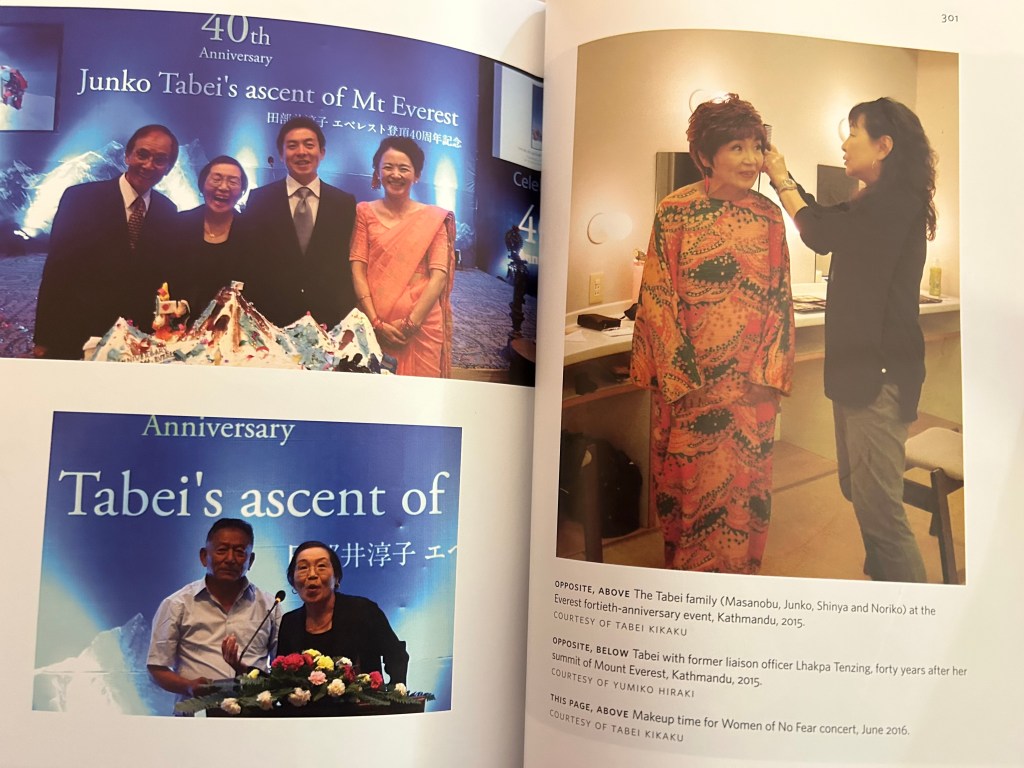
At 375 pages, it is the longest of the books we’ve looked at and includes several back and front matter notes written by close friends and family. Fifteen chapters are written largely in a diary/journal sort format with corresponding dates, adding to its firsthand authenticity. As is seen often in adult memoirs, there is a large center section of full-color photos of all sorts. The back matter also includes a Life Chronology, Glossary, and References.
Hey…look at us! We’ve reached the summit of our understanding of leveled nonfiction writing! But I hear there are always bigger mountains of understanding on the horizon. Maybe we can scale and explore those together, too. Another day. Are you in?!
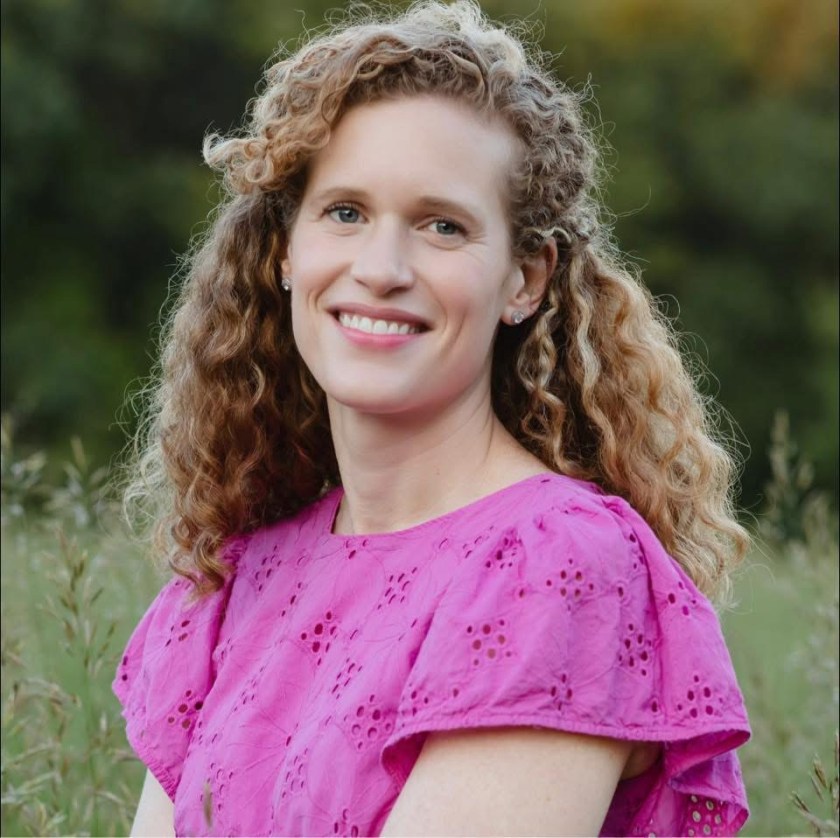
Hilary Margitich writes with gusto on topics that are fascinating and important to today’s kids. She is an author of the “History of Holidays and Festivals” series (ABDO Publishing, 2024) and “The World of Money” series (The Child’s World, 2025). She holds her Graduate Certificate in Children’s Literature from Penn State, and an MBA and Masters in Labor Relations from Cornell.
Hilary loves reading hundreds of children’s books as a CYBILS Awards judge, and is represented by Marisa Cleveland of The Seymour Agency. She lives in the Boston area with her husband, three sons, and a dog and cat who are roughly the same size.
 WRITERS' RUMPUS
Thank you for sharing!
LikeLike
Thanks for this interesting analysis of how a topic can be approached for different ages. I enjoyed your compare/contrast.
LikeLiked by 1 person
Thank you so much, Claire! So happy you enjoyed.
LikeLike
Great post filled with interesting information and books. Thanks, Hilary!
LikeLiked by 1 person
Thanks so much, Cathy, glad you enjoyed! 🙂
LikeLike
The illustrations for Anita Yasuda’s PB are magical. The topic of how writing about the same topic can be changed up for different audiences is fascinating. For instance, as Laura Ingalls Wilder’s books progressed through her childhood, the age of the reader also progressed. I read a biography of her for adults by Caroline Fraser, Prairie Fires, that delved into the more complex life she led, such as the American Indians in her location and the mental illnesses of some people around her. Thank you, Hilary!
LikeLiked by 1 person
I agree that it’s a fascinating thing to look at, Adaela. That adult biography of Laura Ingalls sounds like a very interesting read. I may have to check it out!
LikeLike
Very interesting and fun to compare these books for different age levels. In particular, I love the gorgeous illustrations in the picture book, Up, Up, Ever Up. What an amazing woman she was!
LikeLiked by 1 person
Yes, the illustrations are amazing, and so is Anita’s text! They complement one another beautifully.
LikeLike
Thank you, Hilary.
LikeLiked by 1 person
Of course, Marti! Thanks for reading 🙂
LikeLike