
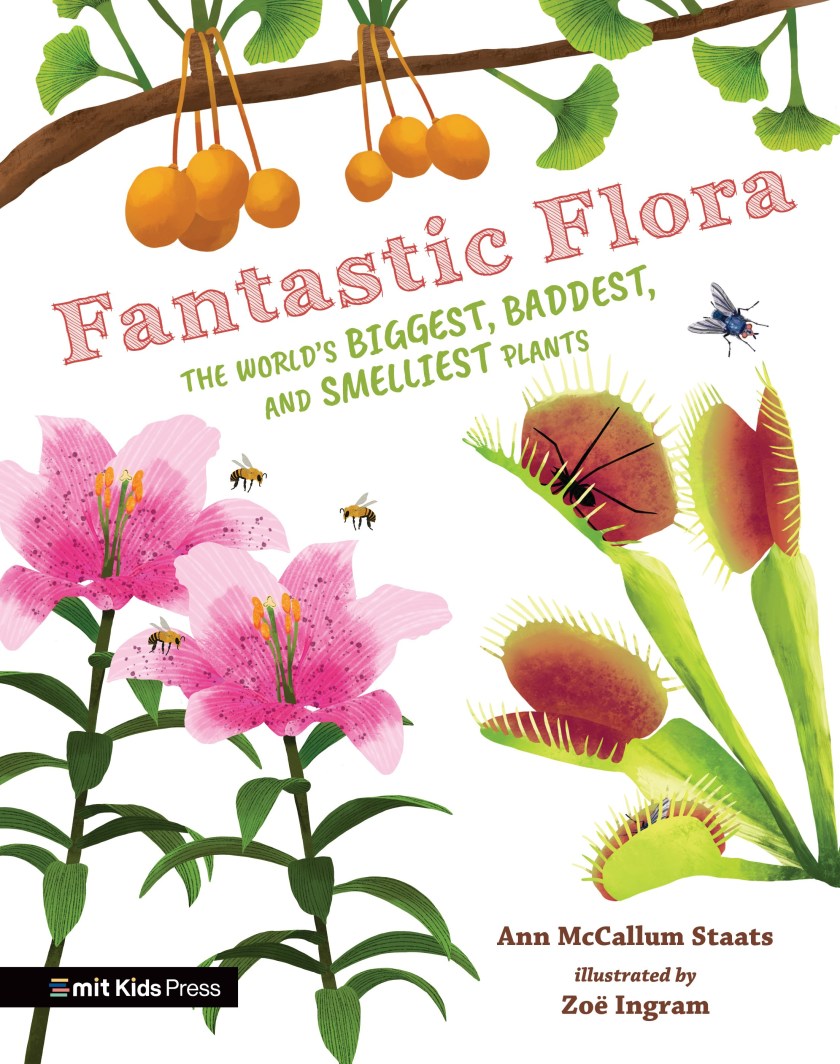
Guest Post by Ann McCallum Staats
The book is written. The press release is out and it’s countdown time until it’s released. Now, what can an author do to connect to busy educators who endeavor to cram many more hours into each limited day? Many authors will create an educator’s guide, an accessible, go-to, downloadable document that will make it easy—and fun—for educators to incorporate the book into their classrooms.
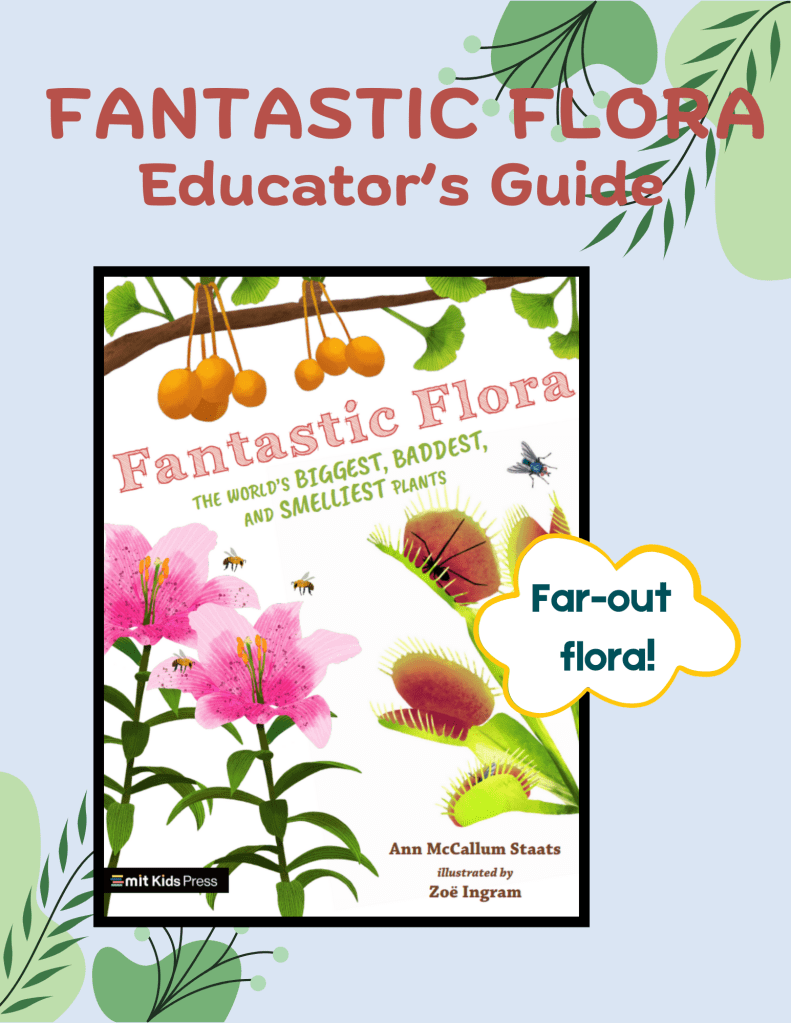
More than just coloring pages, the best educators’ guides provide engaging, easy to implement activities that entice young learners, provide curriculum connections, and make a relevant, lasting impact. Of course, I have nothing against coloring pages, I promise! Having one or two coloring page options in the guide is wonderful. But in a world of, I’m going to guess, millions of coloring template choices, an educator’s guide is going to be more effective if it provides more than than just that.
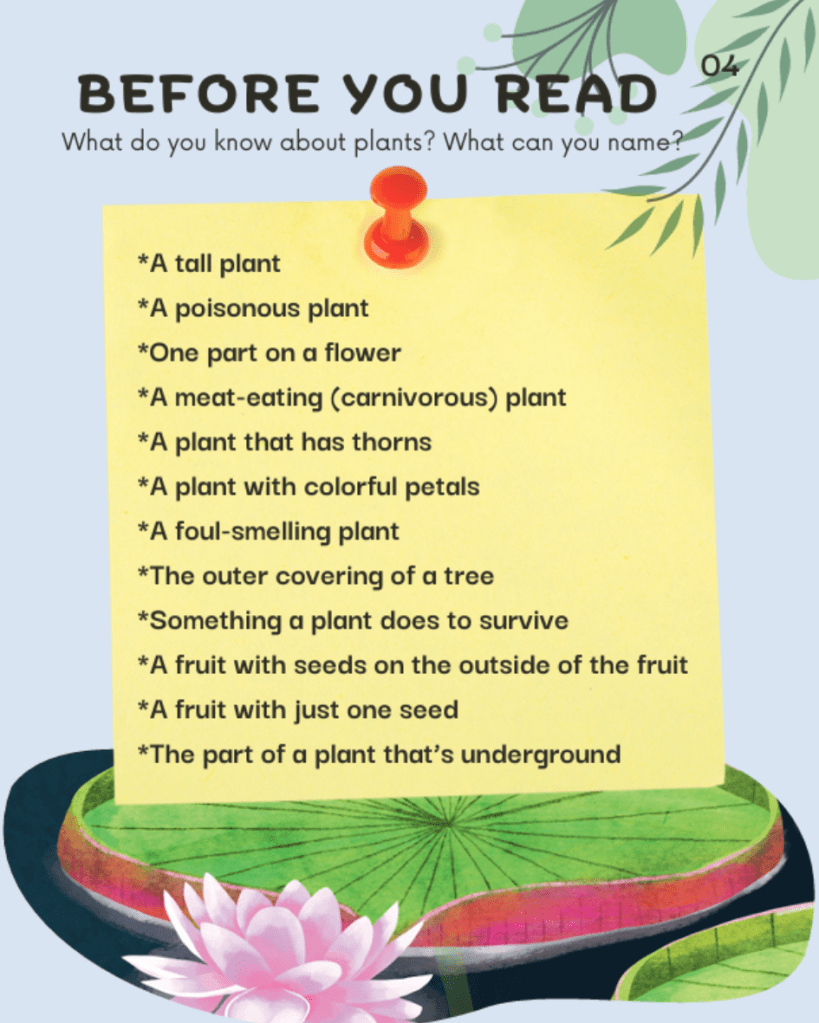
So, where to start? Both an author and an educator work to draw students in. An educator’s guide needs to begin where kids are at. I always include a ‘Before you Read’ section. In my guide for Fantastic Flora: the World’s Biggest, Baddest, and Smelliest Plants, I provide a list for students to demonstrate what they already know about plants. Can they name a plant with thorns? Can they name something a plant does to survive? The list gets learners thinking and initiates curiosity for the topic. Now, what’s next to encourage readers to dig deeper? (See what I did there?)
It’s time to create engaging activities, two or three, or if you’re ambitious (and having fun) even more. These might include snippets from the book to entice and encourage. For instance, an extremophile is a plant found in a difficult environment such as a dry desert or a very cold climate—does this lead to certain death … or savvy survival techniques? Is there a way to make a connection to human innovation? In other words, how do humans, like plants, find ways to guard against sub-optimal conditions like intense rain or too much sun? Next, perhaps add in a little healthy competition in the form of a game. Team trivia anyone? Match up games? Another great way to engage is through an appeal to the emotions. How dare those enemy insects come along to take a bite out of a perfectly healthy plant! What would you do? What do plants do? Check out the strategies various plants put in place.
For sure, incorporating questions and fascinating facts is a sure bet to spark interaction and thinking skills. But keep in mind that rote, low-level questioning is a quick way to induce a yawn. Instead, I try to come at it from a more exciting angle. One way is with the ‘two truths and a lie’ activity where readers need to discern which of three statements is untrue. Or, in my Be-Leaf it or Not activity cards, I point out a fact and then ask a question. For example, “If you’re looking for a place to sit, try the Bolivian water lily. It can support a human.” (The fact.) But how can it stay afloat? (The tell-me-more question.)

What else? How about a field trip, either in-person or, easier, to one of the many options online? Museums, parks, and other venues often have virtual tours. The book should also be a springboard to other similar books and topics. Also, what tie-in does the book provide for various subject areas like math, science, or history?
I love to incorporate a little creativity in my guide suggestions. Here’s one: Provide a list of topics such as the oldest plant species in Australia, a tree with unusual bark, or a plant that smells awful. The task will be to create a wanted poster. There it is—research and creative fun all in one. Along those lines, take what you have (which in my case is cool plants with cool survival strategies), and tap into imagination. How about, after doing research and finding out that the sandbox tree includes exploding seeds and a thorny trunk, using these features to create a fantasy plant superhero (or super villain)?
Finally, I always think of the care I take in writing each of my books. I endeavor to reach my readers by igniting passion and curiosity. The same care—and joy—can be found in creating an educator’s guide that illuminates the topic and provides easy-peasy, relevant ways for educators to bring the book into the classroom. Making an educator’s guide that pops can be fun!

A former educator with a master’s degree in education, Ann is the award-winning author of over a dozen books. Her latest is Fantastic Flora: The World’s Biggest, Baddest, and Smelliest Plants (Available from Bookshop.org, Barnes & Noble, Amazon and others). Upcoming books include the picture books A Quilt of Stars, co-written with astronaut Karen Nyberg and Whirl and Flow: Wind Moves our World. Formerly from rural British Columbia, Canada, Ann now lives in a not so rural suburb in Virginia. When not writing, Ann loves to travel, walk through leaves, and connect with audiences. To learn more, check out her website: https://annmccallumbooks.com/
 WRITERS' RUMPUS
Being a former educator, you’re spot on with your advice. Ann, thanks for sharing such an insightful post.
LikeLike
What fantastic suggestions for engaging activities! And they sneak thinking skills in, too. 🙂
LikeLike
Wonderful ideas! You’ve got me thinking about some key questions for ways to share books. Thanks!
LikeLike
Great post! Lots of helpful information. Thank you for sharing.
LikeLike
Lots of great ideas!
LikeLike
Such a helpful guide to this important topic, thank you Ann!
LikeLike
What a great cover and thanks for sharing tips on making extra materials pop!
LikeLike
Nice work – really useful, not just a time filler.
LikeLike
Really well done and inviting book and accompanying educators guide.
LikeLike