
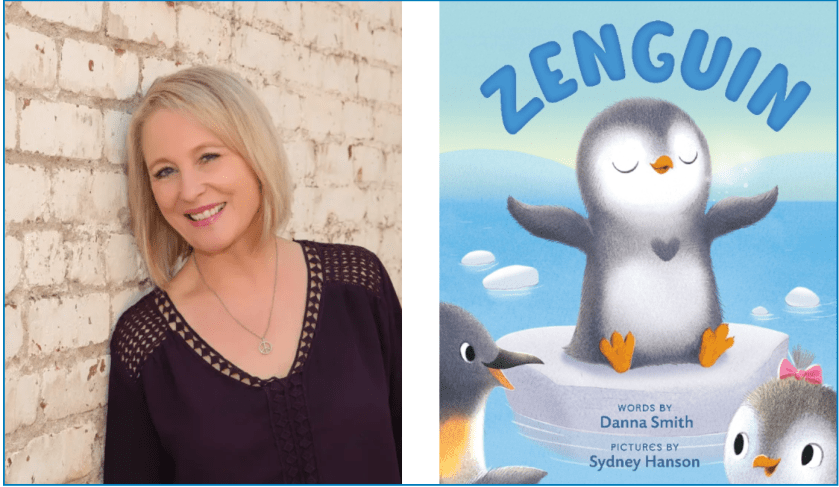
Guest Post by Danna Smith
What are SEL Picture Books?
An SEL picture book teaches children about emotions, life skills, and empathy. Creating one can be a rewarding experience. But how do you go about such an important task? Here’s how I developed my SEL picture book, Zenguin, illustrated by Sydney Hanson, and soon to be released by Workman Kids on January 6, 2026.

Crafting an SEL picture book is a unique and intentional process that blends the art of storytelling with the science of social and emotional learning. Each page should gently and thoughtfully guide children through complex feelings, helping them to see themselves reflected in the character’s struggles and successes. With every word you choose, you have an opportunity to validate children’s emotions, introduce constructive ways to cope, and foster compassion.
Let’s walk through five essential steps involved in writing an SEL picture book that connects:
Step #1: Choose Your Theme
Before starting, you need to nail down one concept you want to address. Think about the challenges children face. Explore the experiences you have had or perhaps a struggle your children have faced. Here’s a list to get you started:
- Managing Anger
- Coping with Sadness or Disappointment
- Overcoming Shyness/Anxiety
- Learning to Share
- Developing Empathy
- Building Self-Esteem
- Dealing with Bullying
- Problem-Solving Conflicts
– For example, I love a good play on words and often start a story with a fun title, as I did with my books Peek-A-Boo Haiku, Swallow the Leader, and Pirate Nap. So, when I played with the word “penguin,” Zenguin came to mind. I thought it was a perfect opportunity to create a book centered around the theme of anxiety, which is something I understand and struggle with.
Step #2: Craft Characters Kids Connect With
Your characters are the core of your story. For children’s books, these characters need to be relatable so that young readers can see themselves in them, whether they are human or animals. When you create an endearing character, children will naturally cheer for them. And in turn, they will learn valuable skills.
Consider your target audience carefully. If your main character is human, they should be around the same age as your readers. And remember, the language you use should always be appropriate for the age group of your readers.
- The Protagonist: Your main character should reflect your SEL theme. For example, if the theme is anger management, you could choose a tiger or a dinosaur that often loses its temper, roaring at those around it.
– For example, in Zenguin, the protagonist is a penguin who lives in a chaotic, noisy colony but yearns for peace. He’s stressed out, yet his character remains engaging and relatable to readers. He is such a lovable little character, you want to root for him and tell him everything will be okay.
- Supporting Characters: These characters assist the protagonist in their development or present challenges for the protagonist to overcome. They might be mentors, playful friends who are adding a moment of joy, or someone who pushes them out of their comfort zone. Supporting characters enrich the story by providing contrasting perspectives.
– For example, in Zenguin, there are several supporting characters, including his Antarctic friends, Seal, Blue Whale, and Gull, who assist him in achieving his goal of becoming zen. His little sister, Pip (Oh, how I love Pip!), is a supporting character who challenges him but also provides opportunities for Zenguin’s growth as he learns coping skills that he can share with her.

© Zenguin by Danna Smith, illustrated by Sydney Hanson, Published Workman Kids, 2026
- Character Tips: When developing your characters, dig into their personalities, strengths, and weaknesses. Don’t be afraid to let their unique traits shine! Even in social-emotional learning books, a touch of humor can be a great asset. When used thoughtfully and carefully, humor can add depth and prevent the story from becoming too heavy. Consider where you can subtly inject some levity, either in the writing itself, in your illustrations, or in your illustration notes.
– For example, in Zenguin, I incorporated the idea of humor by including an illustration note that suggested Zenguin stick his head in the snow to escape the colony’s incessant squawking. This action resonates with the common desire to withdraw from overwhelming situations at times. Sydney Hanson’s execution of this idea is brilliant because readers can still see Zenguin’s facial expression.
Step #3: Craft a Simple, Engaging Plot
SEL Picture book plots are typically straightforward. They begin with a clear problem, followed by a series of attempts to resolve it (which may not always succeed). The story ends with a resolution in which the character learns and grows. Here’s the breakdown:
- The Problem: Introduce your character and the SEL problem they are facing upfront.
- The Journey: Show your character struggling to navigate the problem. Perhaps they have made some missteps along the way, which could reveal negative ways of handling the situation.
- The Learning Moment: This is where the lesson is introduced, either through a helpful character or a moment of self-awareness.
- The Resolution: Show the character applying what they’ve learned and the positive outcome of their efforts.
– For Example, Zenguin wants to feel calm but doesn’t know how. He asks his friends for help, learns from them, and ultimately successfully applies the new skills he has acquired.

© Zenguin by Danna Smith, illustrated by Sydney Hanson, Published Workman Kids, 2026
Step #4: Gently Weave in the SEL Lesson
- Show Don’t Tell: This principle is often mentioned in children’s book creation, and for good reason! Rather than stating, “It’s important to share,” demonstrate your character experiencing the benefits of sharing by showing through your story and artwork how it positively affects them or others.
- Use Your Words: Use language that validates feelings and encourages understanding.
- Be Organic: The lesson should emerge organically from the story and never feel preachy or like a lecture.
– For example, in Zenguin, he presents his problem to his friends. He asks Blue Whale, “How do you look so calm?” Blue Whale shows Zenguin how by demonstrating big showery breathing techniques. The language used to explain is peaceful and calming: “I close my eyes, take a deep breath, and blow it out in a big exhale.” The lesson quietly unfolds as Zenguin tries technique after technique and realizes he has succeeded, and then pays it forward: “This is how we feel zen.” Sydney Hanson took this a step further by illustrating the story in a beautiful palette of calming blues, whites, and greens.
Step #5: Keep Language Simple and Age-Appropriate
- Avoid long, complex sentences.
- Use words that young children can understand.
- Use rhyme only if it enhances the story’s clarity. While rhyming can be enjoyable, it might distract from the SEL experience and seem too cheerful for the topic. Trust your instincts.
- Aim for a typical picture book word count, usually between 200 and 800 words. SEL picture books often include informational backmatter that you may want to include. Remember, the word count applies only to the story text.

Whether you are just staring out or already deep in the creative process, remember that every SEL picture book you write has the potential to make a lasting difference in a child’s life. As you refine your manuscript, return to the core message of your story. Ask yourself: Does it feel genuine? Does it invite young readers to see themselves and their emotions on the page? Is there a hopeful ending? Trust your instincts and embrace your creative journey. You’ve got this!
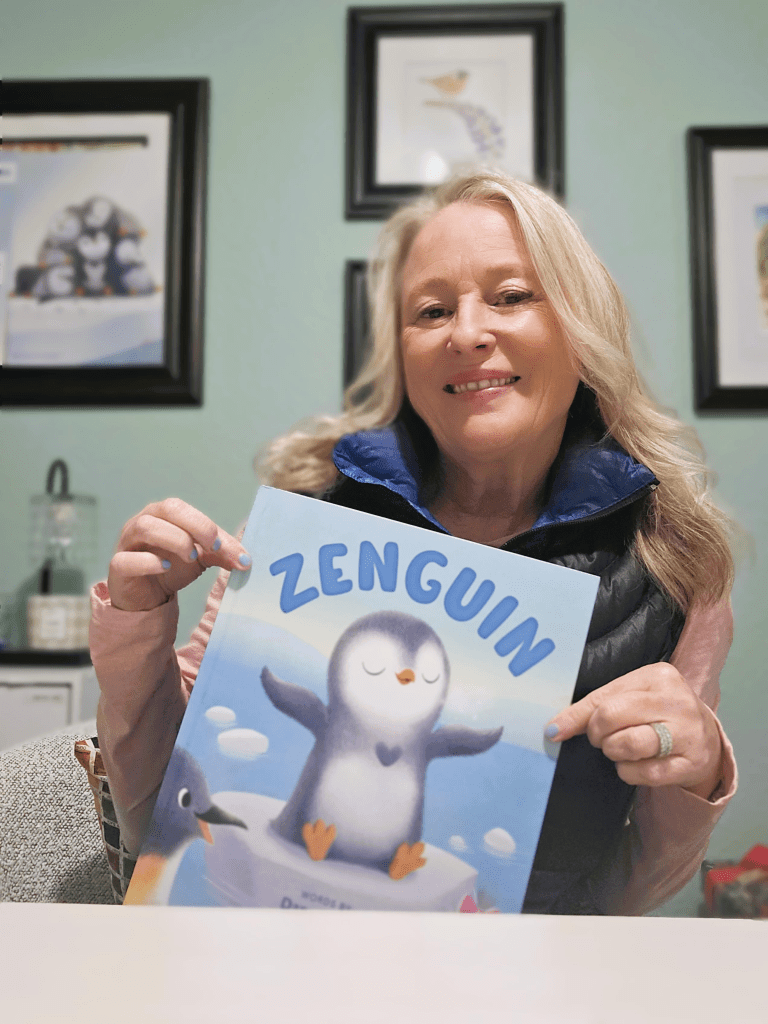
When Danna was a child, her favorite “toy” was a pencil. Today, she is a poet and award-winning author of over twenty-five books for children. When she isn’t writing, she’s reading, painting, or exploring the trails around her home in Northern California. You can learn more about Danna, her books, and poetry at www.dannasmithbooks.com and www.poetrypop.com
You are invited to follow the blog tour and learn more about Zenguin’s journey. All the posts and interview questions will be different, so there is lots to learn. Stay tuned for a giveaway on the last stop with the www.literallylynnemarie.com/blog on January 27th!

 WRITERS' RUMPUS
Nice tips, Danna! And Zenguin is ADORABLE, what cute characters. 🐧
LikeLike
This looks so cute! Zenguin is instantly relatable. Congratulations, Danna! I can’t wait to read this one.
LikeLike
Danna, I’m honored that Writers’ Rumpus is the first stop in your blog tour! Zenguin is an adorable (and very giftable) book, and I appreciate your tips for writing SEL books.
LikeLike