
Dr. Mel Rosenberg and I are perhaps the only two former biology professors turned children’s book authors out there! Or at least, Mel is the only other one I know 😊. In addition to being a high-caliber scientist, with impressive peer-reviewed science publications and even a Ted Talk (https://www.ted.com/talks/mel_rosenberg_what_causes_bad_breath) on his research focus, the cause and treatment of bad breath, Mel is also a warm, personable, and kind friend. He has invested time and effort in the kidlit community, cofounding www.Ourboox.com. If that weren’t enough, he has also has spent hundreds of hours interviewing greats in the publishing industry, sharing important answers with his eager audience on New Books Network. All in all, Mel has worked over many years to apply his well-honed science skills of tenacity and experimentation (this time, with words) to writing. The result? A funny, knowledgeable, incredible creative who knows everyone. His debut book premiered in the Hebrew language and then was acquired by Big Five powerhouse PRH! Join us as we talk all things writing-as-scientists, translations, foreign rights, and life.
Danna Zeiger: Mel, thank you for creating such a visually rich, powerful, engaging, and empowering book! I read this with my kids (in Hebrew) and we all greatly enjoyed it. We spent time discussing the meaning of this book, which is a real discussion opener. To begin with, I know why I made this career transition but I would love to hear your story! How and when did you get started? Was it hard to retire from your professorship early? You were an esteemed researcher at a top university, you’ve written fantastic papers, you’ve given a TEDx talk… how does it feel to shift your focus onto this new path?
Mel Rosenberg: The odd thing is that I wanted to be a picture book author before I wanted to become a scientist. I started writing my first book for kids (about bacteria) when I was 22 or 23. Over the years, I published many children’s books, with the university, with organizations, but never traditionally.
On the other hand, my career as a scientist went rather well. I was an expert in bad breath, of all things, and an inventor.
But in my fifties, I lost my passion for being a scientist. I fought to take an early retirement at the age of 58 in order to pursue my other interests, writing in particular.
DZ: I also know that becoming a writer was a long endeavor and took many years of growth and learning. Can you walk us through your timeline and highlight turning points along the way? What was the breakthrough point for you in getting a deal? Your perseverence is inspiring!
MR: Ten years ago, I attended the annual meeting of SCBWI in New York. It was there I finally realized that I was simply not good enough to break into the traditional publishing world. But I also learned that there was a path to follow in order to improve. And I followed, with the help of many generous authors such as yourself. By the way, I’m still following that path. Trying constantly to further my writing ability.
DZ: What inspired EMILY SAW A DOOR? What was your “seed” for your idea?
MR: It could have been several things. A sign I saw at a carousel barring children who weren’t ‘tall enough’. Perhaps an obsession with doors. Perhaps my own (multiple) rejections growing up as a chubby, left-handed Jewish kid in an antisemitic environment.
DZ: What was the evolution of your manuscript from first draft to submission draft? Did you start with the whole story arc right away?
MR: I had the idea right from the start, but there were many twists and turns and new doors along the way. The idea of Emily opening her own door came to me when I was halfway along. I’m guessing the story went through 100 rewrites before the ‘door opened.’
DZ: How much of the original manuscript changed during the editorial process?
MR: The basic idea remained, but many changes occurred. When I wrote the first drafts, I was studying with author-illustrator Mike Malbrough. I subsequently continued working on it through multiple revisions with my current mentor, Harold Underdown. Several wise editors at several publishing houses suggested that various beats in the story needed improvement. And they were right.
DZ: Did any of the text change during the illustration process in order to integrate with the visual story?
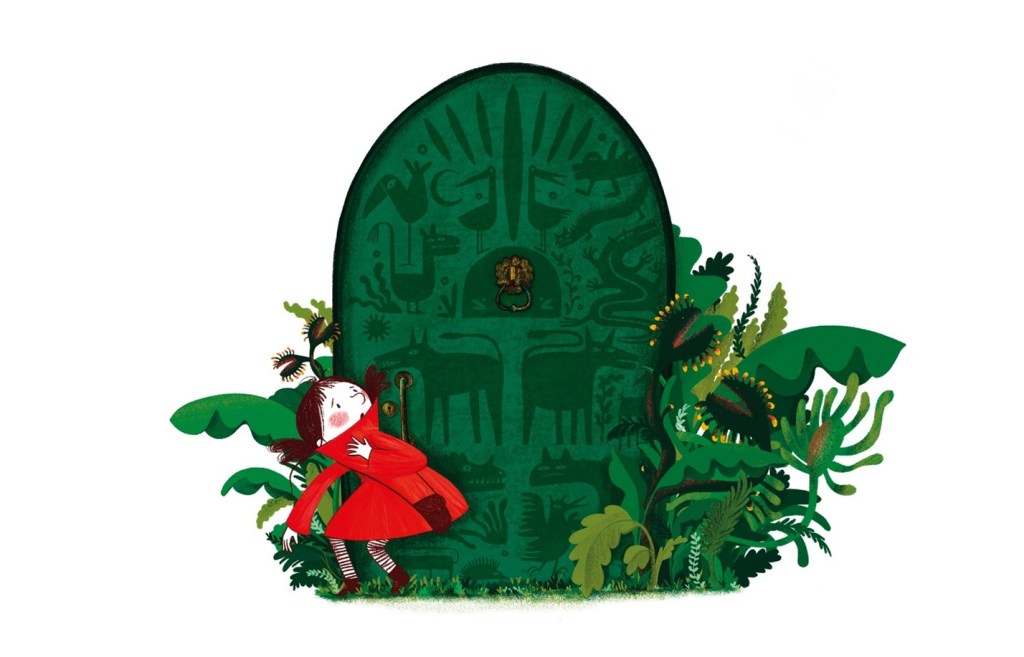
MR: Very little. The fantastic editor of the original book in Hebrew, Yotam Shwimmer, asked me to cut the text down to 350 words (I ended up cutting the Hebrew text to 315 words!). When the magnificent illustrator, Orit Magia, received the text, it was already pretty sparse.
DZ: There are so many ways to think about Emily and the doors she encounters—there are many relevant metaphors. Which do you think about and what do these doors mean for you? What do you hope readers get out of your book?
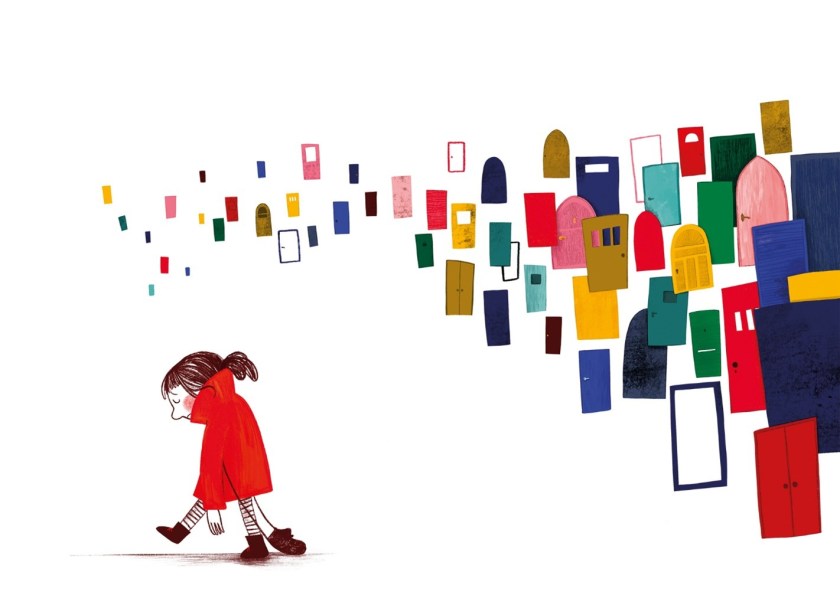
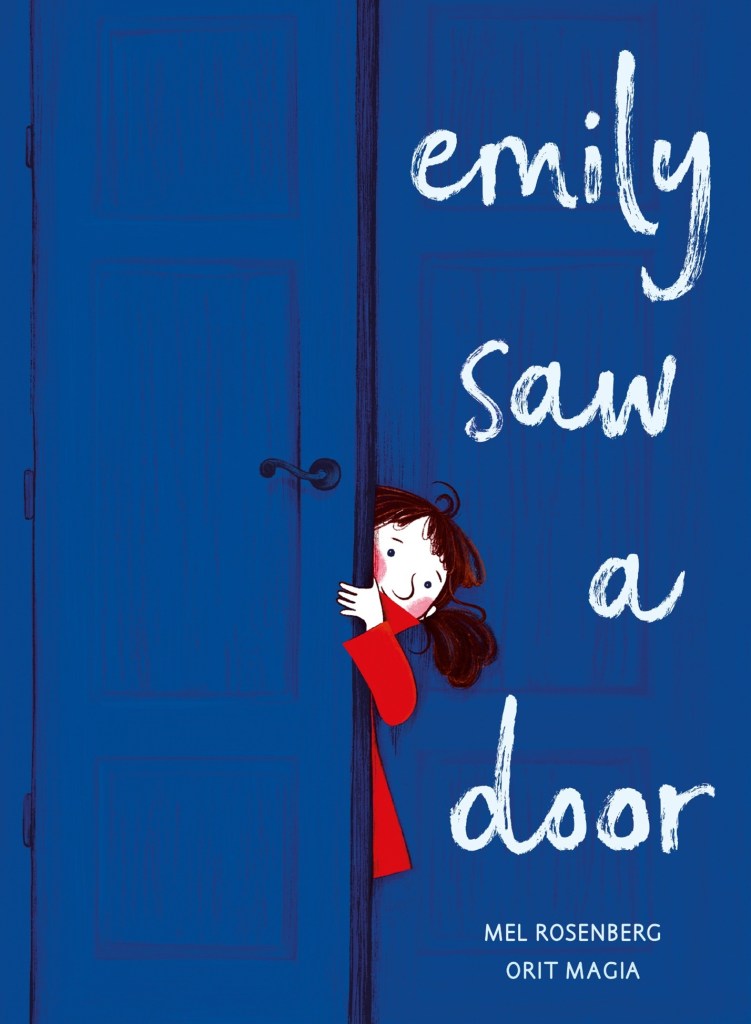
MR: Well, for me, for example, the blue door was an allusion to the antisemitism I experienced as a child in Ottawa (a wink to the joke, “That’s funny, you don’t look blueish”). The other doors came to me as I wrote and revised. At the beginning, all the doors rejected Emily, despite her best attempts at being accepted. But I subsequently realized that she was not just a sack to be punched, but a spunky young character with a mind of her own and a strong sense of values. So for example in the early drafts, Emily did her best to lie (in the door for liars), but wasn’t good enough at lying. But as the writing progressed, I realized that this was a door that she should reject as not being right for her. By the way, there is a private joke there in the 2+2. Did you get it?
DZ: Haha, I did get it! I won’t give a spoiler alert but readers, please feel free to reach out to me if you’d like a hint :-).
Publishers more and more are looking for foreign books to translate and bring to the U.S.—but I rarely have the opportunity to speak to such an author, and our readers would love to hear more about this! What was process like? Did you already have your agent first, and then she/they (two agents, right?) pitched this as a translation? Or, did your get the offer first and your agent(s) came on board? Who had the idea to translate and how did you connect with the publisher about it? Is it different than subbing to an editor? Did your agent negotiate all of the terms, or were there foreign rights agents involved? What kinds of terms are negotiated that are unique to foreign rights, if any?
MR: The story was originally written in my mother tongue, English. So the original book (in Hebrew) was itself a translation. Following publication of the book in Hebrew, some of the original English text had to be modified. So it went from English to Hebrew and back to English. I think that those language hops resulted in an improved text.
When the book came out in Hebrew, Orit helped create a mock-up pdf with the illustrations and the English text. I sent this around to a few people. I showed it to agent Liza Fleissig and she loved it. Together with her partner Ginger Harris, they shopped it to Annie Kelley at Random House Studio. Annie later told me that she loved the story and artwork and bought it in a day. Liza phoned me and told me to sit down. I was flabbergasted (in a good way). And that’s how Liza and Ginger became my agents (Liza Royce Associates (LRA).
Because I no longer owned the rights to the book (see further), all the negotiations were done by my wonderful Israeli publisher, Meira Firon, together with my new agents.
DZ: How is Israeli publishing different than American publishing? I believe it’s less common to have agents there, right?
MR: Yes. Because of the small market, advances are zero or practically zero. The author receives royalties, and the sales are typically not more than a thousand or two books, unless Sifriat Pijama (the Israeli equivalent of PJ Library) picks the book for distribution. They ended up picking our book, which meant an additional 50,000 books distributed to second grade children.
DZ: How did this work in terms of contract negotiations, and also conversations with your illustrator?
MR: The contract was standard, and seeing as this was my first traditionally-published book, I felt compelled to agree to most of the clauses. So for example, I was not able to keep the foreign rights.
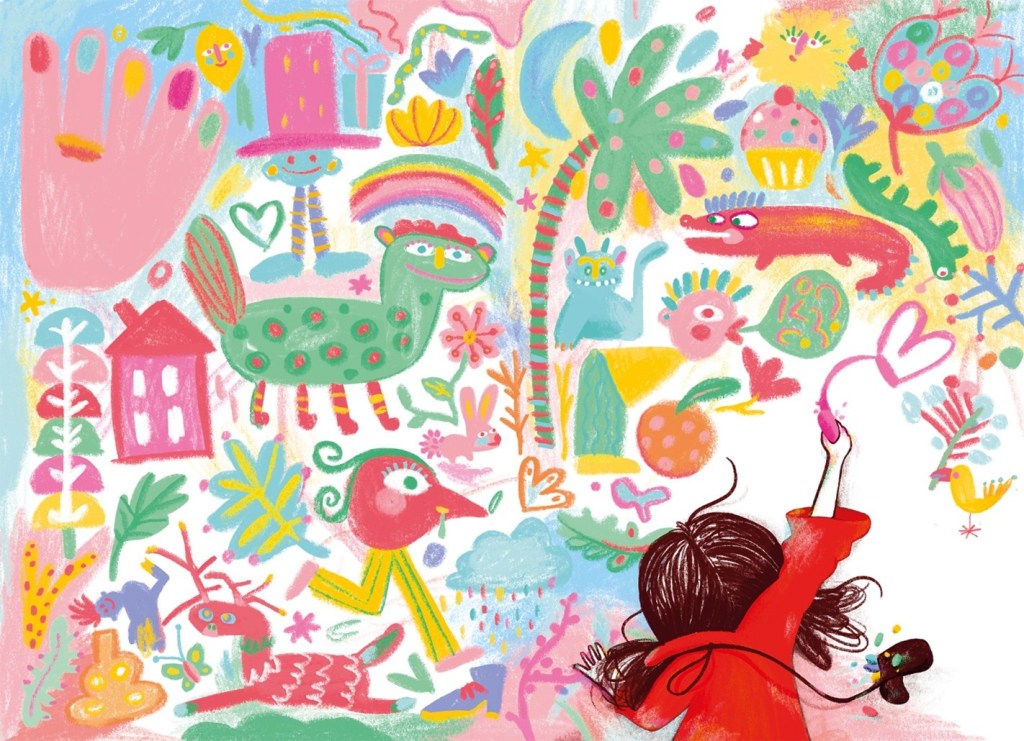
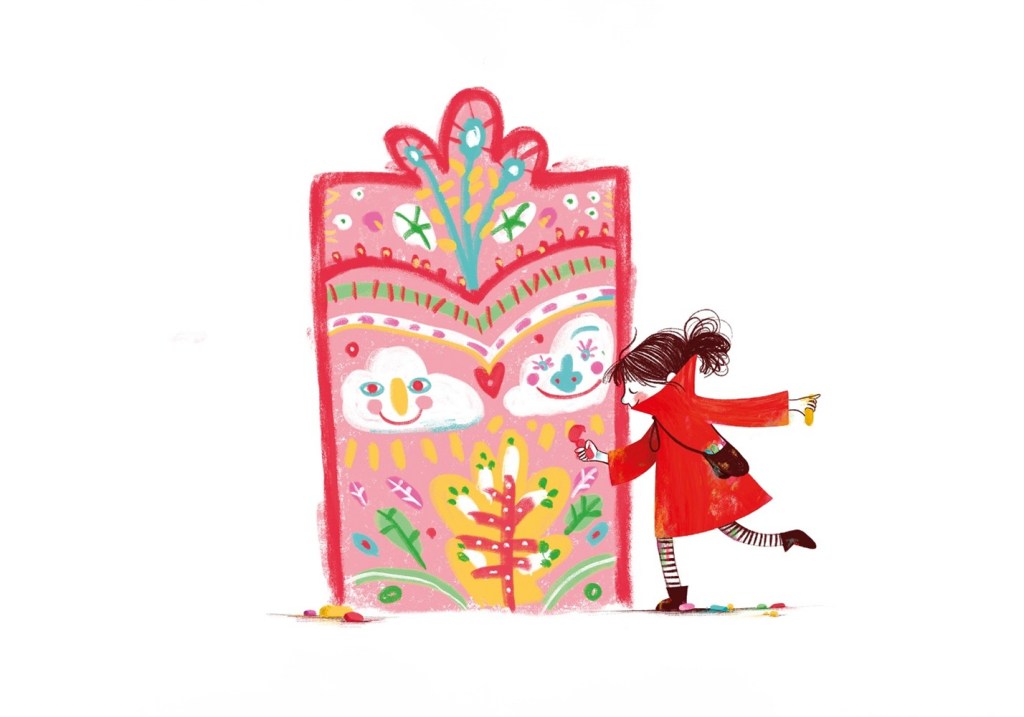
Yotam chose Orit Magia to do the illustrations. What can I say? A brilliant choice. As in the United States, I played a very minor role in the illustration process. I think this is the right way to do it. The illustrator has to have the liberty to assume ownership of the book as well. When this happens, magic happens.
DZ: Did you translate, or did someone else?
MR: As I said, the story was written in English. I tried to translate into Hebrew, but in the end, the publisher, Meira Firon, translated my vernacular Hebrew into proper Hebrew. Yotam also worked on the Hebrew text to get it just right. I would have preferred a few vernaculisms. For example, at the end of the story, the English version reads. “And it was.” In Hebrew you need to say, “And it was open.” I fought to keep it Americanized. I lost.
DZ: The coloring changed, right? From red and blue? What was the thought process there, and were other additional illustrative tweaks needed?
MR: The main change in the North American edition is the color change in the cover from orange to a striking blue with a script title that looks like white chalk. They substantially increased the size of the book as well. I love both these changes.
Of course the illustrations had to be turned around to compensate the change in direction of the book. The pictures were mostly reversed. This resulted in Emily being left-handed for a day or two. I do prefer her left-handed.
DZ: Please feel free to plug your next book here / what’s next for you! Both short-term and long-term, if you’d like.
MR: My next book in North America has just been announced, so I’m happy to mention it here. It’s called “We’re Being Discovered,” acquired for publication late in 2027 by Sarah Rockett at Tilbury House, illustrated by the wonderful Kaila Gee. “We’re Being Discovered” tells a humorous, fictionalized account of the 1676 discovery of bacteria-told from the perspective of bickering bacteria themselves.
DZ: Is there a question you wish I had asked? Please ask yourself here 😊—I’d love to also hear the answer!
MR: So Mel, the book launch was last week [in February] at the amazing Corner Bookstore in Manhattan. How did you feel?
It was surreal. My brother and his wife flew in from Toronto. Friends came from as far as Washington, braving the cold and snow. I read the story to the children and sang the “Emily” song that Jennifer Berne and I had co-written. So, very moving.
DZ: Please share any book signings or other American events you have planned—I know there are exciting things in the works!
MR: By the end of March, I think I will have done enough interviews as a guest promoting the book, and will be able to morph back into Mel the host, where I plan to go on interviewing authors, illustrators, agents, editors, etc. in my channel for the New Books Network. And help them promote their books. Great picture books are coming out all the time, and they all need our love and support.
Thank you, Mel!
*GIVEAWAY*
Mel is generously offering a 30 minute Ask Me Anything with this interview!
TO ENTER: please comment on this blog post. If you share on Instagram, Bluesky, or Facebook, you get another entry–just add to your comment to share both your handle (e.g. @SOMEAUTHOR) and where you’ve shared it. Please state which prize you would like.
We will select winners at random. Giveaway closes in one week.
More about Mel:
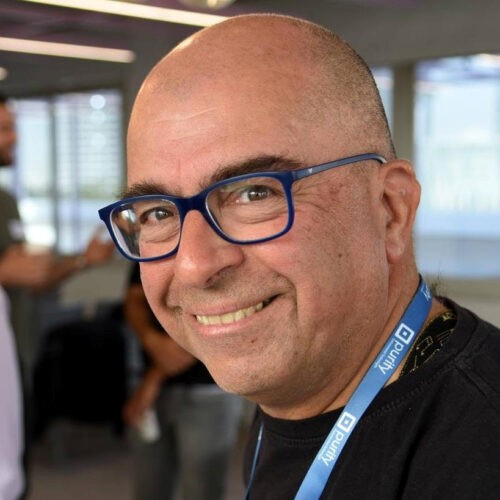
Mel Rosenberg is a Canadian-born author, scientist and inventor. He hosts the Children’s Literature channel of the New Books Network. Emily Saw a Door is his first North American picture book release. He is represented by Liza Royce Associates
Mel Rosenberg, Ph.D., Children’s Author
Co-founder, www.ourboox.com
Host, Children’s Literature Channel, NBN
linkedin profilehttps://linktr.ee/doctormel
To purchase from various vendors via the publisher, click here.
To purchase from Amazon, click here.

Orit Magia (illustrator) [https://www.instagram.com/oritmagia/reels/] is an acclaimed children’s books author and illustrator, as well as an industrial designer and co-owner of SHULAB- an international studio for design. She applies her multiple talents to visual storytelling, her works are praised for their masterful use of color and movement, as well as their minimalist expression in both words and images.
 WRITERS' RUMPUS
So happy for you, Mel. You stuck with the journey and reached an important goal. God bless.
LikeLiked by 1 person
So happy for you, Mel. You stuck to the journey and reached an important goal. God bless.
LikeLiked by 1 person
This looks like a unique and thought-provoking book. It seems fitting that Mel’s path to publication wasn’t completely straightforward: like Emily, he had to be persistent. (Sharing this on Bluesky. @janetfrencksheets.bsky.social)
LikeLiked by 1 person
I loved this fabulous interview! Thanks Mel and Danna for all the fascinating backstory about EMILY SAW A DOOR. I can’t wait to read it and discovery its mysteries and inside jokes.
LikeLiked by 1 person
🙂 It really is a beautiful book, both in Hebrew and in English!
LikeLike
Interesting interview! Congratulations to Mel on his wonderful picture book debut!
LikeLiked by 1 person
Thanks for reading, Marcia!!
LikeLike
What a wonderful interview by a writer who seems to have a wonderful way with words. It is interesting to read about the work involved in creating a picture book. I love the idea of this book. We encounter doors all our lives!
LikeLiked by 1 person
Congrats, Mel. It’s a beautiful book. I loved hearing about your writing journey. Great interview, Danna.
LikeLiked by 1 person
Thanks so much, Marty!! 🙂
LikeLike
Thank you, and absolutely!! 🙂 It’s such a perfect metaphor!
LikeLike