
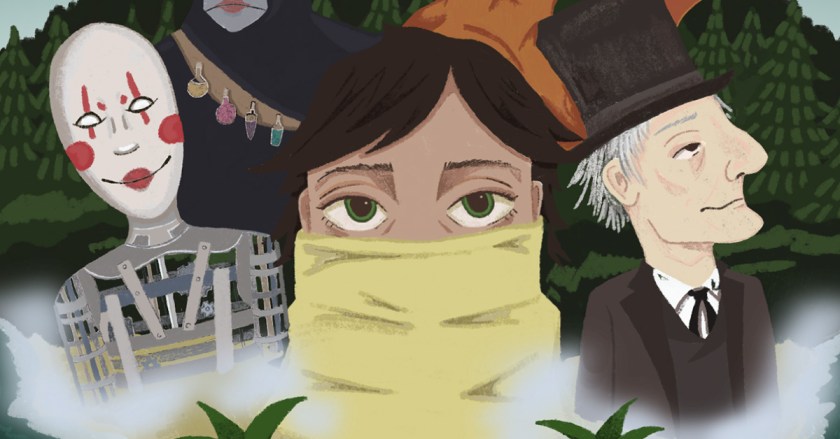
Guest Post by Eric Grissom
As a kid, my life was a bit of a whirlwind. My parents divorced when I was five, and the years that followed were filled with terrors, evil stepfathers, and lots and lots of moving. Despite the frequent packing, we remained in the same town, so I got to experience all the joys of feeling like an outsider without the hassle of changing zip codes. The pervading feeling of being an untethered boat, adrift on someone else’s river, hung over me like an old overcoat. It’s easy to look back and see how this lack of control and agency shaped my desire to create worlds — worlds in which I would make the rules and its people.
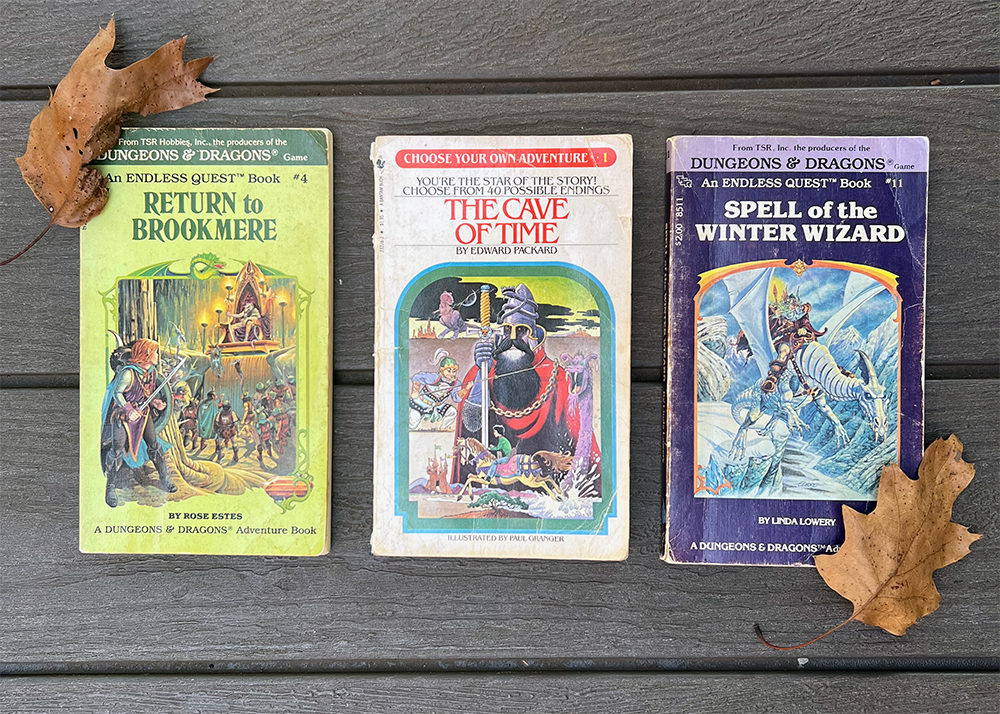
When I wasn’t making up my own, I was spending as much time as I could in the worlds of others. Fantasy stories and video games were a welcome escape from the doldrums of living with a man who would explode in rage if you drank orange juice outside the designated “Orange Juice Drinking Hours.” The Choose-Your-Own-Adventure format combined those two elements, stories and gaming, in a perfect elixir that cured most ailments, even if only temporarily. While I would enjoy the “Choose Your Own Adventure” series that defined that form of storytelling, particularly The Cave of Time by Edward Packard, it was the Dungeons & Dragons line of books, the Endless Quest series spearheaded by writer Rose Estes, that lifted me out of the darkness and transported me to lands I was happy to get lost in.

While I have been writing and making things up nearly my entire life, I didn’t seriously commit to the craft until 2009. In the time that has passed, I have concentrated my efforts on writing comics and graphic novels and have been fortunate enough to work with a variety of talented artists who have taken my ideas and brought them to life on the page. It was no wonder, then, that after writing a middle-grade fantasy adventure graphic novel called Goblin, a graphic novel that, at the time, was to be my last comic, I would turn to some form of gaming as a way to flesh out the world of the book. I spent some time writing and designing a tabletop role-playing adventure called Beware the Dark Sisterhood. Even though the result was under 30 pages, it was one of the most challenging things I had written. So when the next Goblin book was being made, I decided to do something different. Something inspired by the books that helped me as a middle grader. Plus, I figured it would be easier than creating another tabletop game. Right? Well, let’s say that’s a lesson I would learn over the course of 50,000 words.
Knowing where to start can sometimes be daunting for any new project, and that was certainly the case when crafting a piece of interactive fiction. You need to decide on what your story is about while also leaving that question open to a myriad of possibilities. It is not a matter of creating characters, giving them a goal, and presenting them with conflicts and growth. You still do these things, but you have to do them in a way in which the character’s character is not clearly defined. If how characters present themselves, act, think, and do what they do when challenged defines who they are, how do you write for them when those decisions will be made, not by your creation, but by the person turning the page? It was a challenge, to say the least. I also made a choice fairly early on that I would not define, in any meaningful way, the character’s gender or even name them. I wanted it to be fluid and open to the reader’s interpretation. Even now, I question this decision, for details like those can help the reader better empathize with a character. In the end, I think the trade-off was worth it.
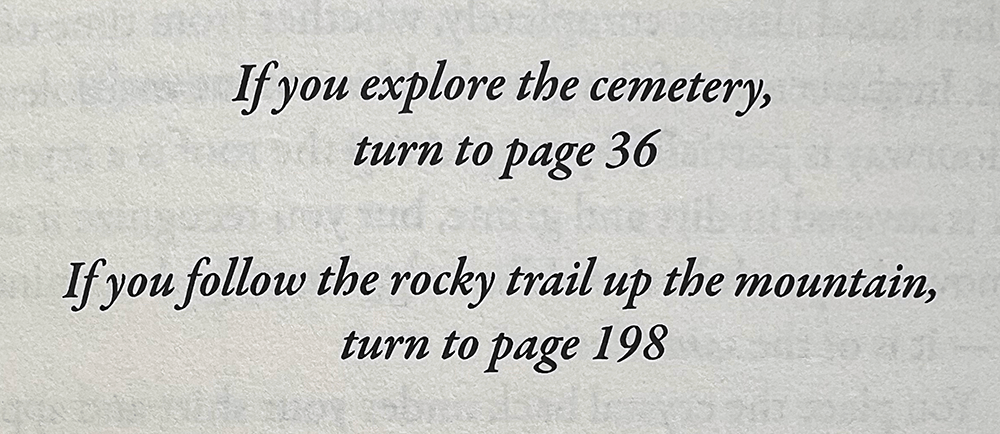
Once I had an idea of who the “hero” of the story would be, I landed on a basic premise: I would strand the reader on a mysterious island and task them with finding a way off. To do so, they must avoid and overcome a series of traps by a nefarious “Mad Magician.” With those elements in place, it was time to build the storylines, and that started with making a list of the endings: the good, the bad, and the ones in between. Once I knew where the reader would start and where they might end up, I could build the trails that would lead them there. In a way, an interactive novel is like a series of short stories woven together. Each path should feel like a complete thought, with a story that carries you through it. While some paths will meet and diverge, depending on how you arrived and where you were going, it all needed to make sense. The number of choices, too, is a powerful thing. I didn’t want each decision point always to be a binary one. Left or right. Up or down. So, I was sure to include three or more when I could. This, my friends, is when you wish you paid a little more attention in math when you got to exponents instead of drawing a dragon in the margin.
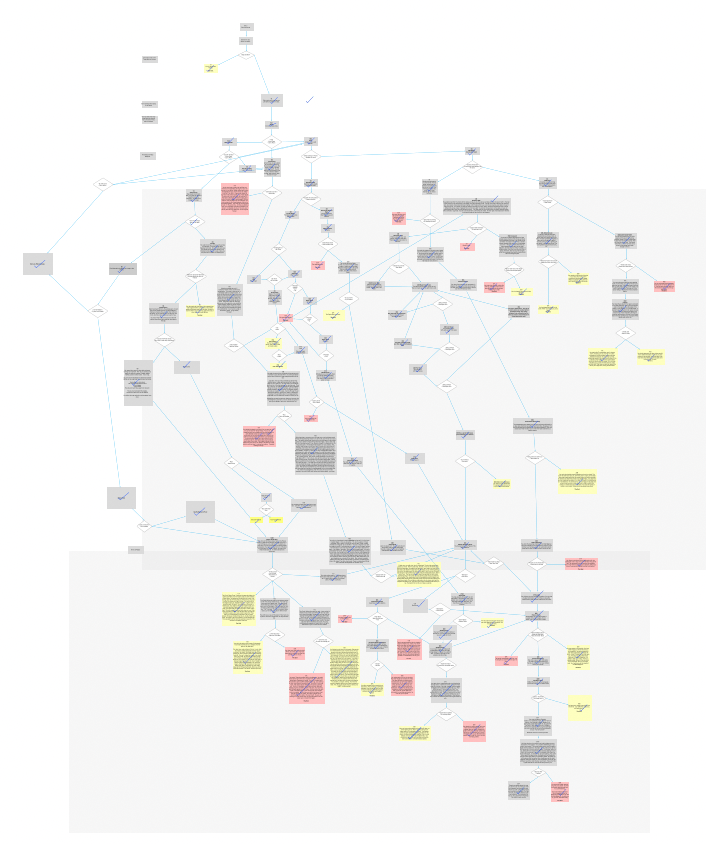
To maintain and tame this unruly beast, I kept a “murder board” style outline. A series of boxes that detailed high-level story beats interconnected with lines, like pieces of string, from one location or decision point to another. You have to be able to see it, the entire world, at once. You need to look at it all in some space outside of time. See every path. Every failure and success. All laid out before you. Doing a chart like this was imperative. Without it, I would most certainly still be trapped on that Island. You can start to write only after creating an outline like that. The most straightforward approach for me was to pick a path and follow it through to the end. When I would get there, I would backtrack to the last decision point and follow that path to the end. I did this and, ever so slowly, connected it all. When I finally had a book in some form worth reading, I gathered some very kind beta readers to run through it. They spotted plenty of things that worked and things that didn’t. The book is much better for it.
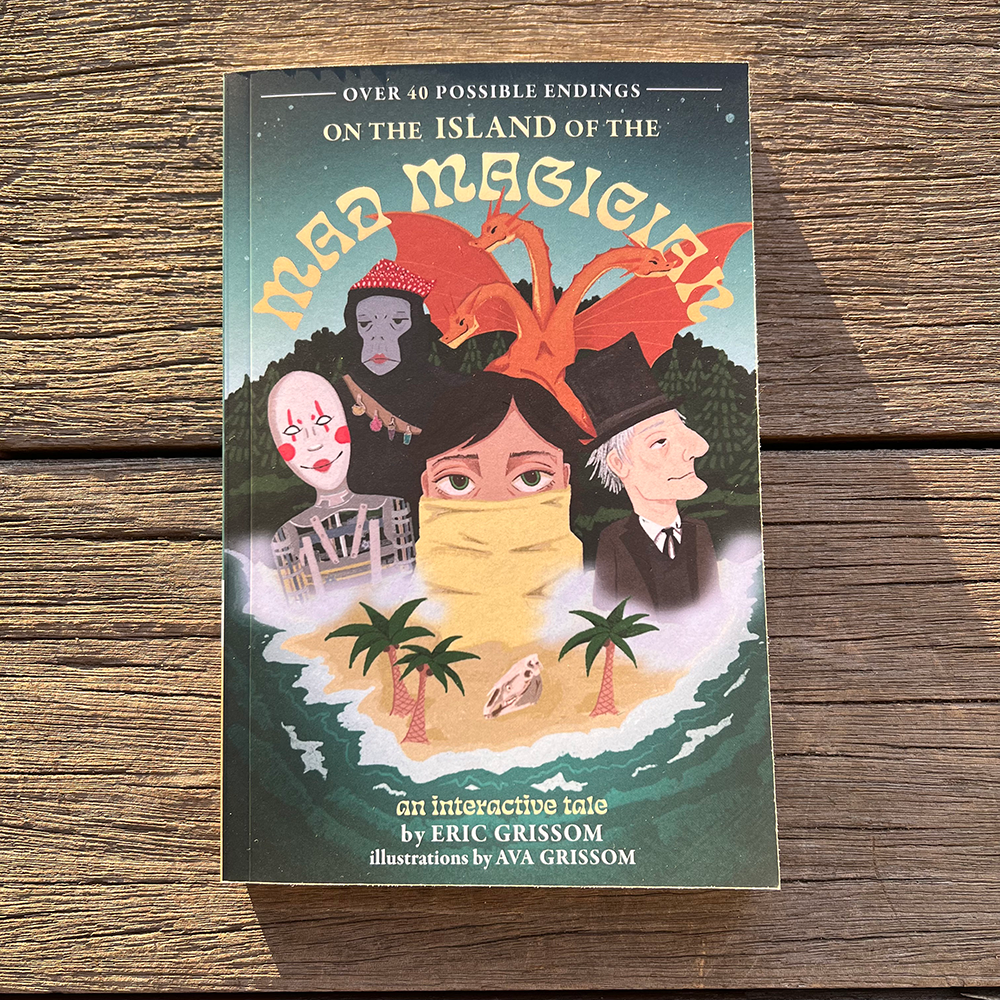
I published the book at the end of October 2023. The fantastic cover art, as well as a scattering of interior illustrations, was done by my daughter Ava. It’s available now on Amazon and other online retailers. Writing it was the most challenging story I’ve done. Until the next one, anyway.
About Me:
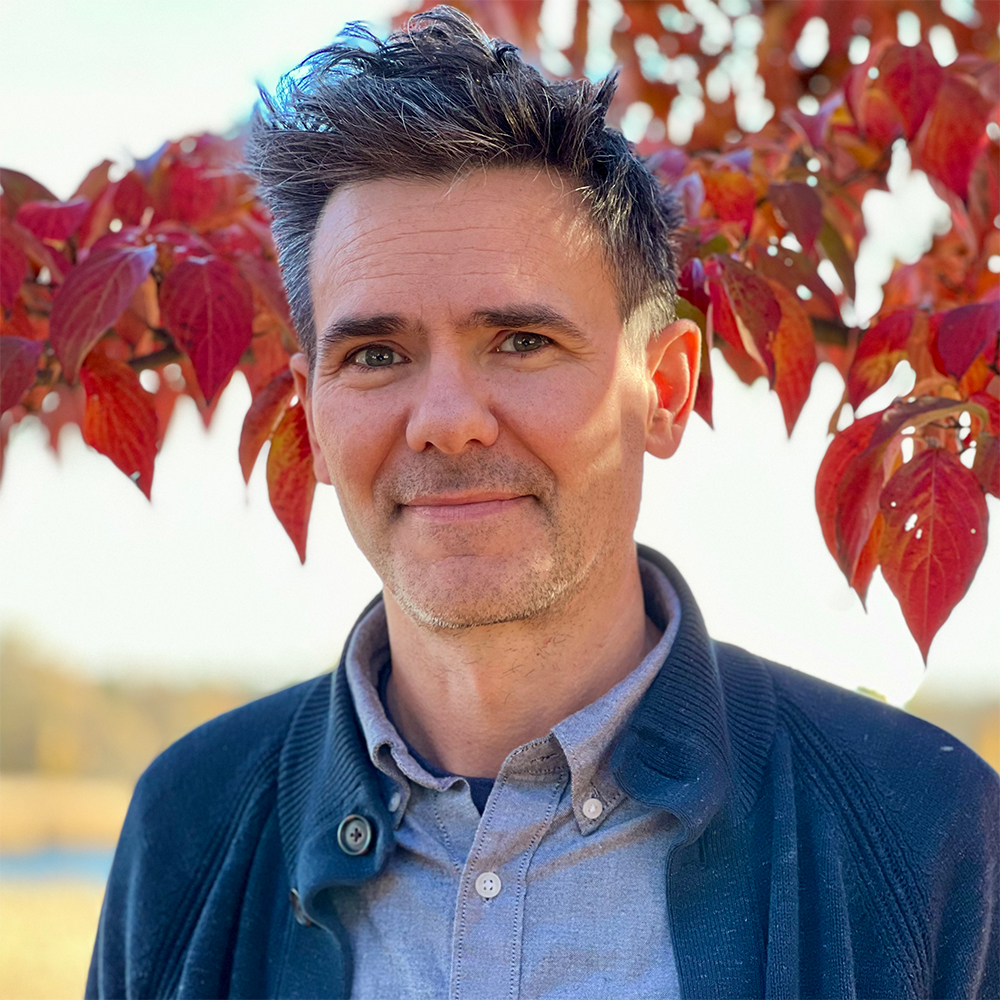
Eric Grissom is a writer whose works include the middle-grade fantasy adventure On the Island of the Mad Magician and the graphic novel series Goblin with artist Will Perkins. The first book, Goblin, is available now, and you can pre-order its sequel, The Wolf and the Well.
Eric lives in New Jersey with his wife, three children, two dogs, and several Halloween animatronics in various states of repair.
Website: https://www.ericgrissom.com/
RealmOfGoblin Website: https://www.realmofgoblin.com/
GoodReads: https://www.goodreads.com/author/list/6960935.Eric_Grissom
Instagram: https://www.instagram.com/egrissom/
TikTok: https://www.tiktok.com/@esgrissom
BlueSky: https://bsky.app/profile/ericgrissom.com
Threads: https://www.threads.net/@egrissom
Twitter: https://twitter.com/egrissom/
 WRITERS' RUMPUS
Adventure tales encourage children to explore their surroundings and embrace curiosity.
LikeLike
Eric, my sons and I are SO eager to read these books now. I plan to obtain them asap! Thank you for such a heartfelt, candid, and inspiring piece (truly). What a wonderful thing to find joy in your art and be able to make the world better with it.
LikeLike
Thank you! I am so happy you enjoyed the piece.
LikeLike