
Guest Post by Cedar Pruitt
Kids want to understand the world. Right away, as far as I can tell.
When our daughter was a baby, new to daycare, drinking my milk from a bottle was novel. She didn’t understand it. What did she do?

Our 4-month-old carefully turned that bottle around to see where the milk was coming from. There it was – the bottom. A whole bottle of milk, contained.
It must have seemed almost like magic, at first. But it was a magic that her baby brain wanted to understand.
I relate to this desire…just about every day. I want to take a closer look at the world around me and dig into the many mysteries that surround us. I have a question about nearly everything I see.
I’m writing from a café with a view of a train crossing, clouds gathering slowly overhead, and it makes me wonder about the system behind the stoplight, the beauty of falling leaves, the rumble of the engine, the art of forecasts.

Writing about the world helps me (begin to, try to, maybe, a little bit, start to) understand it. That’s the joy of nonfiction.
Of course, that’s the joy of fiction, too. Trying to say what’s gone unsaid, to bring into focus those things that are felt, to understand the magic.
As the world of children’s nonfiction has evolved, there is greater acceptance of it as a diverse medium with a broad spectrum of form and capacity to engage a wide age span. Nonfiction is shaking off the reputation of always being a denser, more serious cousin of fiction. Nonfiction, too, can be wild and free, like fiction. Think of it as an art form that allows writers and readers to learn about the world through play and exploration.
I’m a great fan of the statement from the National Council of Teachers of English (NCTE) about nonfiction. In 2023, they called for more of it in classrooms, and soon, writing: “With so much to offer young people as readers and thinkers, nonfiction should play a far more robust role in the reading and learning lives of young people in and out of school.”
The NCTE cited the power of nonfiction to do things like:
- Share the perspectives of historically marginalized people,
- Build the reader’s decoding skills,
- Cultivate an interest in reading and yes…
- Provide information – but in an endlessly fascinating context.
They write, “Reading nonfiction is not simply about taking in information. It is a deeply enriching aesthetic experience.”
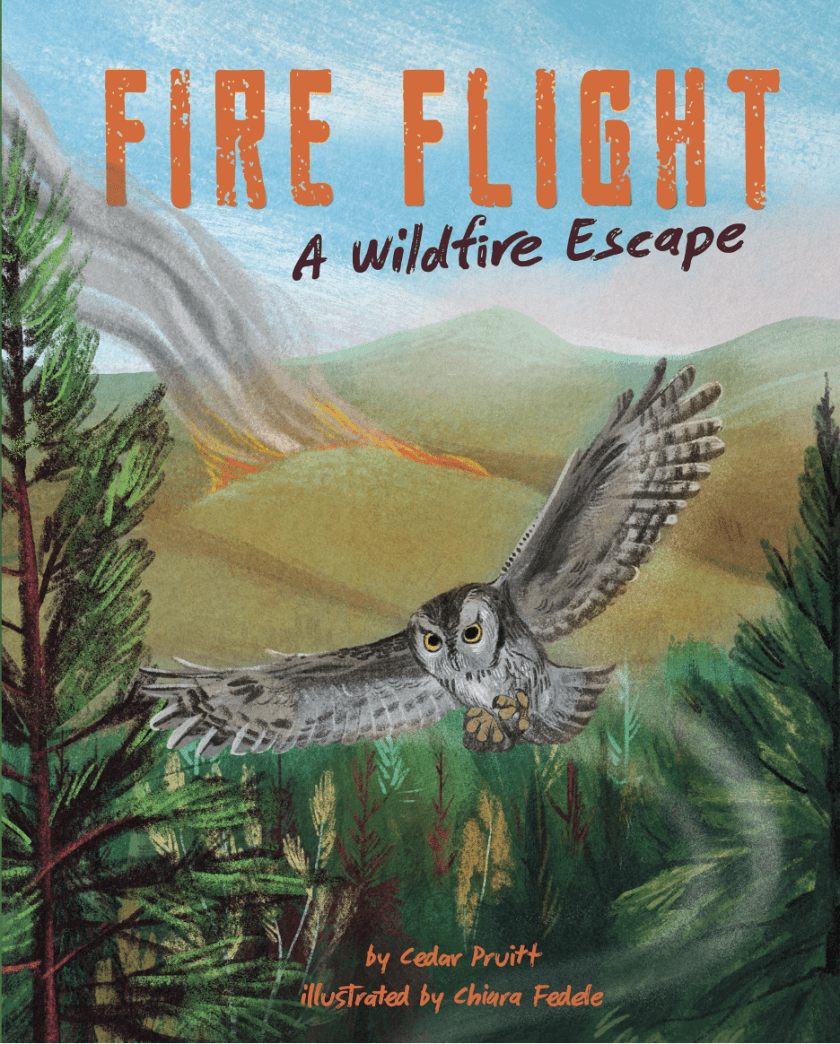
When I first read the news item that would become the inspiration for my debut picture book, FIRE FLIGHT, I was struck by the magic of the real-life story. An owl flew out of a California wildfire, through an open window of a firefighting helicopter, and landed in the co-pilot seat…where it stayed for several water drops. The pilot took an incredible picture which ran in newspapers around the globe, capturing hearts and imaginations.
By the time I sat down to explore this moment, I’d written so many fiction manuscripts that I could almost have written it as fiction. But I knew that I wanted to honor all that I couldn’t know in this story…by writing what I did know and sticking to the facts, while drawing on my own experience.
I couldn’t know how the owl felt. But I could imagine what it might feel like to be forced from your home.
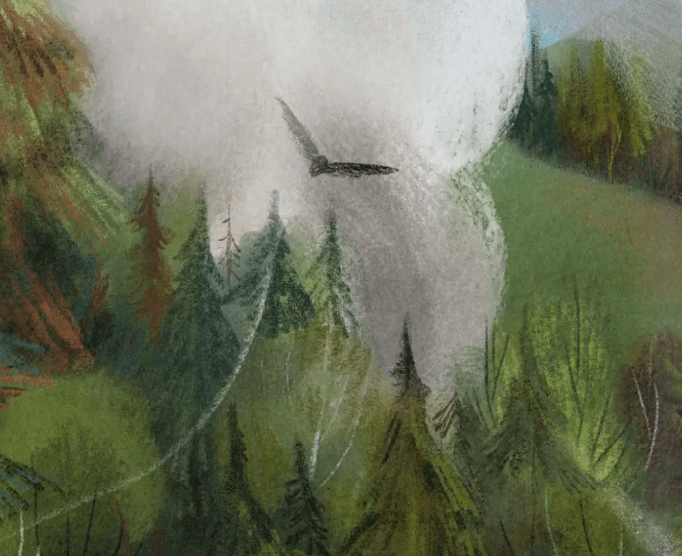
I couldn’t know what it would be like to fly over a forest fire and have an owl enter the cockpit and take a long look at you.
But I could imagine what it might feel like to feel fear and safety all at the same time.
Just as nonfiction can be rich with information, it can also be rich with exploration, perspective, and spare, lyrical vision.
In an Author’s Note at the end of FIRE FLIGHT, I offer reflections on both the story and on climate change, including kid-friendly actions that people can take. I hope it spurs more investigation, more exploring, more stories.
The extraordinary moments in the world—and there are so many—deserve our time, attention, and illustration. They call on us to explore, investigate, and try to understand.
I could turn the bottle around.
And so can you.
And by the way, what of that curious baby? She’s a teenager now and still taking every opportunity to try to understand how this world works.
And so am I!
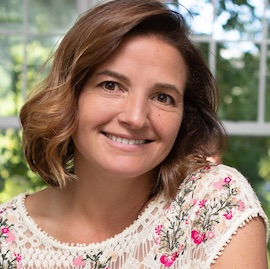
Cedar Pruitt is the author of the children’s books FIRE FLIGHT: A Wildfire Escape, about an owl’s real-life surprise ride in a firefighting helicopter, and the forthcoming WHAT MARCEL FOUND: The Incredible Discovery of the Lascaux Cave Paintings, illustrated by David Litchfield and releasing in 2026. Cedar Pruitt holds an Ed.M. from Harvard University and works as a consultant of Diversity, Equity, and Inclusion. She lives in Massachusetts with her inquisitive family. Find her at www.CedarPruitt.com
 WRITERS' RUMPUS
Cedar, I’m really happy to have your book in my collection! It’s such a wonderful story. Congratulations. I’d love to connect with you if you’re interested.
LikeLike
That would be great, Laura! Thanks for the support and for being a reader!
LikeLiked by 1 person
Nonfiction has come such a long way since I was a child. Love the many different ways it offers kids a chance to learn more and explore the world. Great post, Cedar.
LikeLiked by 1 person
It sure has! Even now, when I think about the nonfiction I had when I was growing up, versus the role it plays in my children’s lives (my son has a framed photo of him with Nathan Hale on his dresser!) – I’m amazed. And honestly, I think we’re just getting started. 🙂 Let’s keep exploring how many different perspectives there can be in this wild and interesting world!
LikeLike
I LOVE it! That curiosity and joy. And the owl! Awesome. Congrats!!
LikeLiked by 1 person
Thank you so very much, Angie!! Yes! Curiosity and joy are such intrinsic, important parts of childhood and I love it when they are reinforced – in any book or experience. I hope they last for life!
LikeLiked by 1 person
I love the idea for this book, Cedar! I can’t wait to read it. And I agree with Marcia that the cave painting story is a must-read! Thank you for coming on the blog 🙂
LikeLiked by 1 person
Thank you, Hilary! I really appreciate your support and kind words. I can’t wait for you to read either book! Let me know what you think.
LikeLike
Wow! a fascinating tale about the owl. And a very true perspective on non-fiction. Thank you,
LikeLiked by 1 person
Thanks, Marti! I’m so glad you liked it. This owl is truly unforgettable – I see it in the faces of my audience of elementary students!
LikeLike
Congratulations in making this news story into a picture book. I’m going to add it to my Goodreads and see if my library has a copy.
LikeLike
Thank you, Danielle! That’s wonderful to hear. It’s an incredible story and I’m so happy to be sharing the unforgettable details with everyone!
LikeLike
What a wonderful and beautiful book, congratulations!
LikeLike
Thank you so much, Karin!! Your kind words mean a lot to me.
LikeLike
Congratulations on this book and the next one–both sound fascinating!
LikeLike
Thanks, Marcia! Yes, I kept the joy, play and magic alive as I learned all about the forest in France in 1940 where four teenagers explored a hidden cave filled with world-changing art. I can’t wait to share it with the world!
LikeLiked by 1 person