
To preserve the art of your story, don’t edit until you have a full draft. Or a second, or even a third. Then, you are ready to take out your machete to carve and shape. Publishing gatekeepers will be more receptive to your manuscript if you have edited your work to the best of your ability.
Step one: Find a beta reader to evaluate the pacing, characters, consistency, and plot arc who will comment on their reactions. This could be someone from your critique group who is willing to read the entire manuscript, a friend, or a relative. Someone who will be honest with you. It is most helpful, if possible, to find someone who reads books for the age group your story targets. Some of what your reviewer shares with you may seem painful, but better to discover a weakness before the book is on an editor’s or agent’s desk.
A beta reader is a stand-in for the book lovers you hope will respond favorably to your published work.
Step two: Once you have considered the beta reader’s suggestions and incorporated the “big picture” changes necessary, it is time for fine-tuning. Here is some helpful advice from nybookeditors.com. That website lists ten tips that will help you polish your story.
Here are a few additional thoughts about the process.
Method One is editing your manuscript on screen using your digital writing assistant. Microsoft Word can check your spelling, offer synonyms, identify awkward sentences, do word counts, and more. Programs like Grammarly, Hemmingway, and Scrivener can suggest ways to tighten sentences, point out punctuation or sentence length issues, check the grammar and tone of your writing, and more.
Method Two, for those whose eyes tire while reading long text onscreen, is to print your Middle Grade or Young Adult manuscript and annotate it by hand. Some proofreader’s marks may be helpful as they are a shorthand for noting some of the changes you want to make.
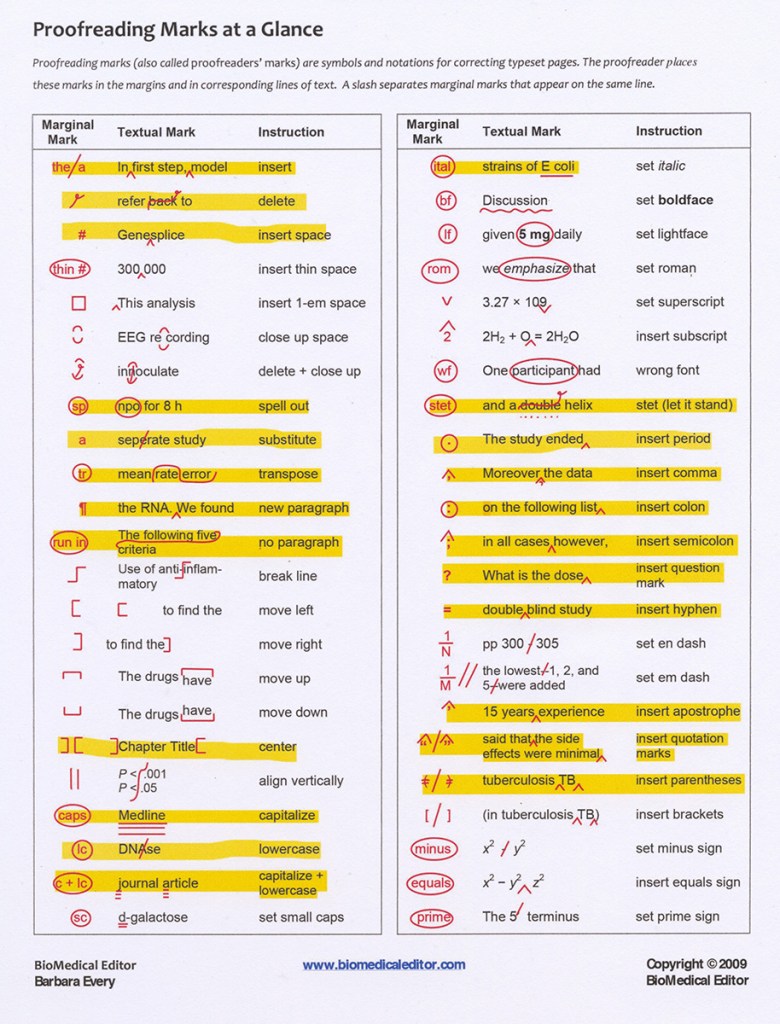
Here are the proofreading marks from the Chicago Manual of Style. I highlighted a few that may be especially useful. Let’s say that you want to delete a sentence. You draw a line through it, ending with a squiggle. Visually, this suggests, ‘I don’t need that bit, so let’s toss it’. What if you change your mind? Writing Stet in the margin next to the deleted sentence or word is an easy way to say ‘I changed my mind. Leave it in’.
Other things to look for
- Limit adverbs
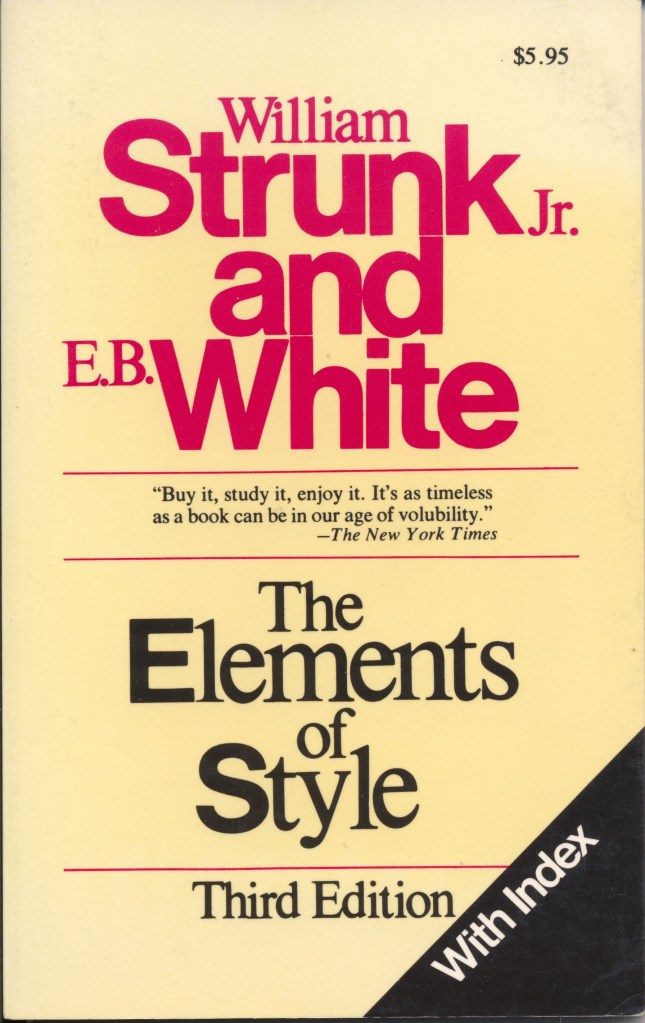
- Omit needless words (see The Elements of Style by Strunk and White!)
- “Avoid qualifiers (“Rather, very, little, pretty-these are the leeches that infest the pond of prose, sucking the blood of words.” Comment from The Elements of Style.)”Avoid qualifiers (“Rather, very, little, pretty-these are the leeches that infest the pond of prose, sucking the blood of words.” Comment from The Elements of Style.)
- Delete what does not move the story along
- Use the active voice
- Vary sentence and paragraph length to avoid monotony
- Eliminate redundancies
Your efforts toward refining your manuscript will yield clear benefits. The manuscript will be more saleable, you will have conveyed that your work philosophy is professional, and your writing skills will have improved by your attention to feedback from your reader and your program(s).
There is one extra bonus. You can submit your work feeling confident in your manuscript.
For information on how to format your manuscript properly for submission, check out Jen Malone’s terrific post here.
Or How Not to Format a Manuscript by Marianne Knowles.
 WRITERS' RUMPUS
I always pick up a good bit of advice or new resource from your posts, Joyce. Thanks.
LikeLike
You know, I’m sure I’ve read Elements of Style multiple times throughout my life, but I can’t remember it at all. Might be time for me to brush up on it.
LikeLike
Great Advice! Thanks so much for sharing.
LikeLike
Great advice – it scares me I have finished a massive proposal and missed a typo!
LikeLike