
It’s butterfly season here in Massachusetts, where I live. All of the beautiful monarch butterflies have come back up north to enjoy a few glorious months of warm weather and delicious milkweed, the one and only food they eat. When the weather starts to turn cooler in early fall, they’ll return south, then repeat this cycle, all over again.
Butterflies are so breathtaking and fascinating, aren’t they? There’s just something about their metamorphosis from caterpillar to winged wonder that captivates us humans … particularly children.

Every school year since I can remember, my own elementary school-aged children have studied the caterpillar-to-chrysalis-to-butterfly process with their teachers and classes. They make beautiful crafts and diagrams, as you can see (see inset)!
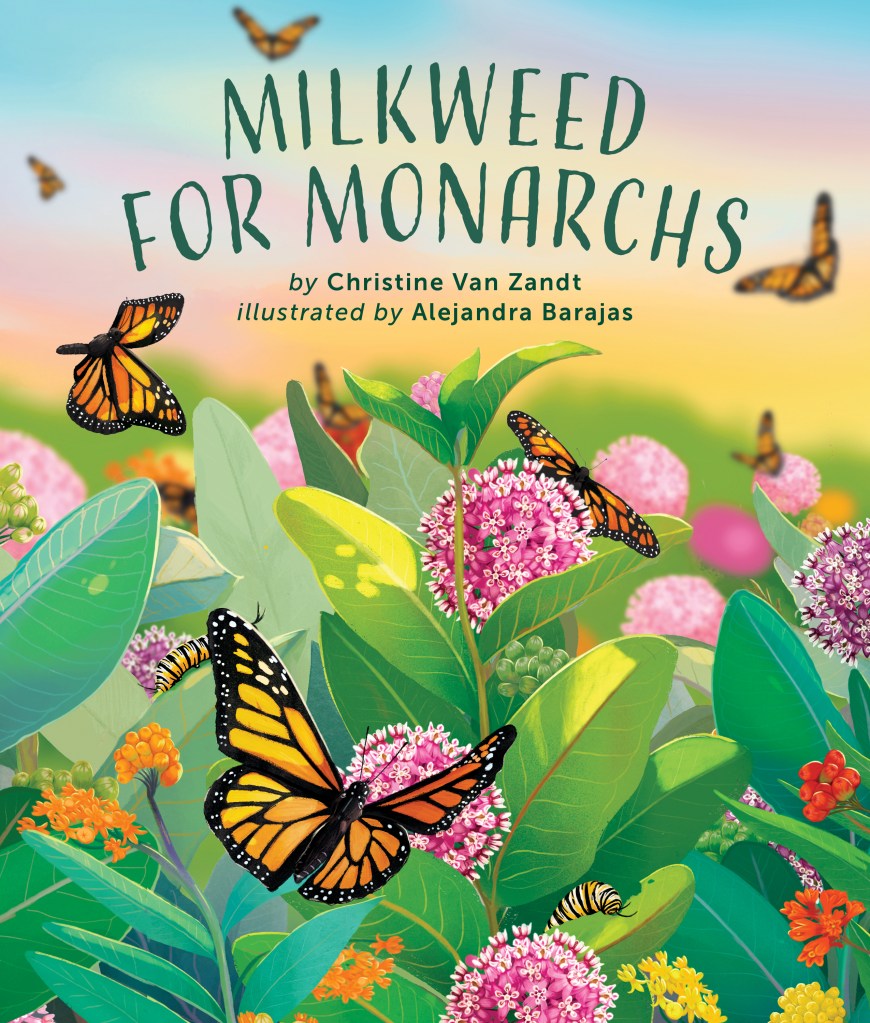
I can’t think of a better accompaniment to a science module, that also can be paired with poetry and language, than Christine Van Zandt’s Milkweed for Monarchs. Christine’s rhyming lyrical text and richly detailed sidebars pair perfectly with Alejandra Barajas’s vibrant nature illustrations. It’s poetry and science at their finest! Beaming Books has even provided a free Educator’s Guide to accompany it, on their website.
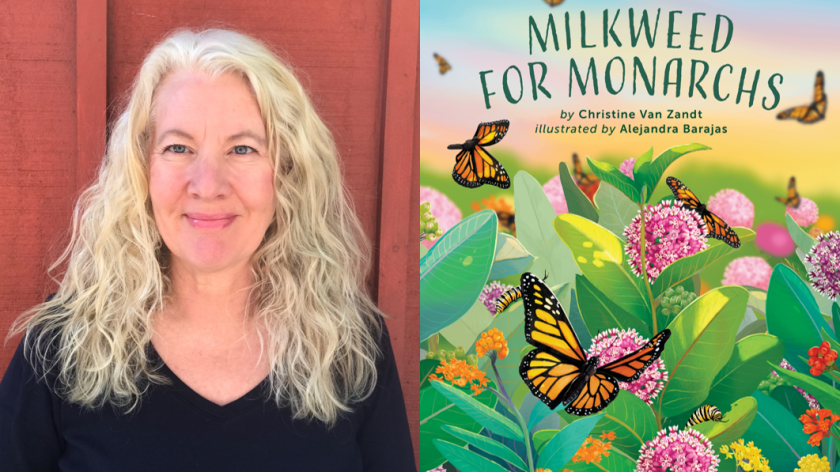
It was my great pleasure to meet Christine through some literacy and philanthropy work we did earlier this year, and I’m so excited to have her here with me on the blog today.
Hilary Margitich: Welcome, Christine! I absolutely love your new book … and really, all of your writing. Thank you so much for being here with me today.
Christine Van Zandt: Thank you for having me!
HM: Christine, I read in your Author’s Note that you became very inspired to write this book while at home with your daughter in 2020, during the pandemic. There’s also a dedication you made to a certain monarch caterpillar named Houdini. (Shout-out to Houdini!) What can you tell us about Houdini and the idea seed of this story?
CVZ: During the pandemic, we spent a lot of time in the yard and bought our first milkweed plant, thinking it somehow helped butterflies. We came to learn that milkweed is necessary for monarchs because it’s the only plant their caterpillars can eat.
The plant we brought home had eggs on it and, soon, we had lots of adorable little caterpillars—then, one day, they were all gone except for the one we named Houdini because he seemingly vanished then reappeared.
When I researched who may have eaten our caterpillars (probably a raccoon or bird), I learned that western monarchs have a survival rate of less than 5% in the wild and that their overall population has dipped to near extinction.
I grew up visiting the California coast each winter to see trees cloaked with monarch butterflies overwintering there. Those days are gone. Their population was once in the millions; in 2020, fewer than 2,000 butterflies were counted. The decline is due to many factors but a critical one is that there are not enough milkweed plants for monarchs to complete their life cycle.
All this info set me off on this path of volunteering for organizations such as Xerces and spreading the word to help encourage home gardeners and schools to plant milkweed.

HM: Your book has so much to offer children. It teaches them about important biological processes, lyrical language and poetic form, and important and timely environmental issues affecting not only monarchs, but the rest of the ecosystem. Besides these important angles, is there an overlying message you’d like your young readers to take away from this important book?
CVZ: I’d like readers of all ages to think about how our actions affect our environment. For kids, that can mean not bringing home that caterpillar they find because it may depend on a specific plant. Adults can add more native plants to their gardens and discontinue the use of chemicals. Spraying for “bad” bugs can kill all bugs and we need insects as pollinators; they are also part of the food chain so if one animal goes extinct, that creates a far-reaching effect.
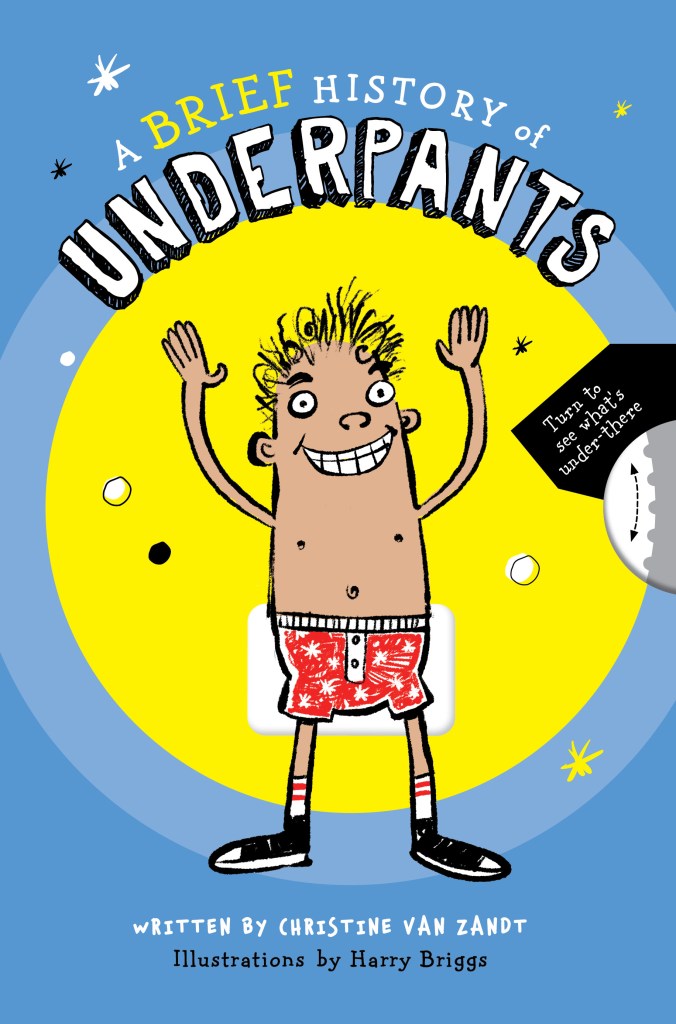
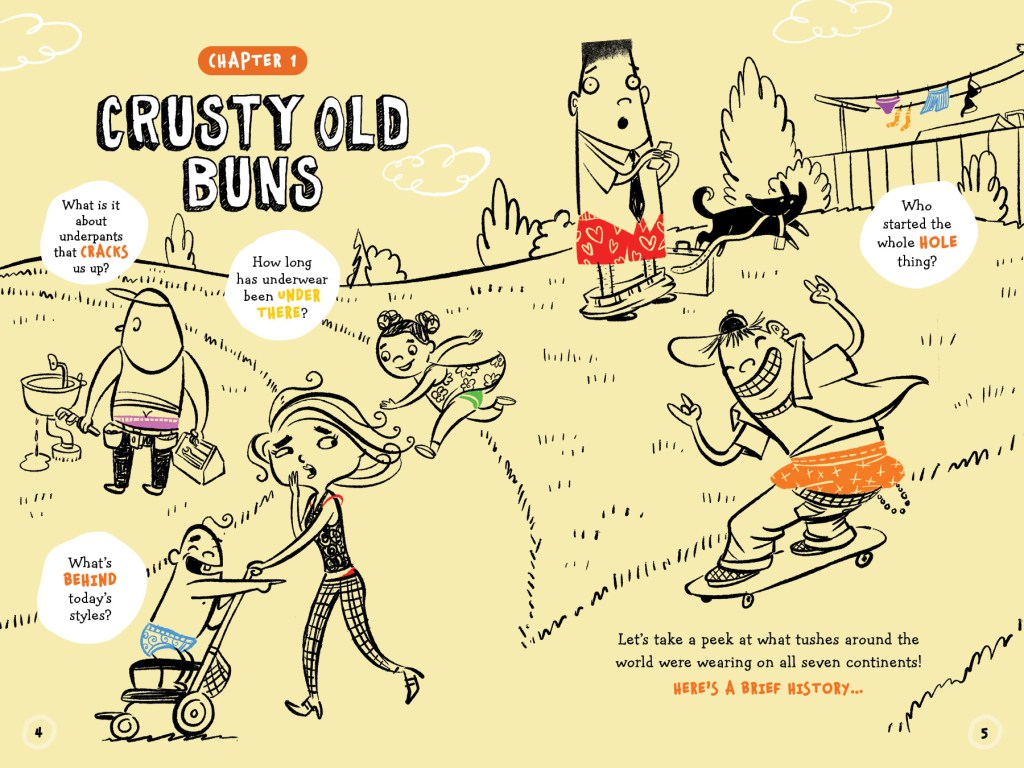
HM: I’m a big fan of your other nonfiction children’s book, A Brief History of Underpants. And not just because it has a turn-the-wheel feature of different styles of underwear through the ages (although that helps)! It’s super funny and interesting, with several short (shall I say brief?) chapters for emerging readers who love learning about history.
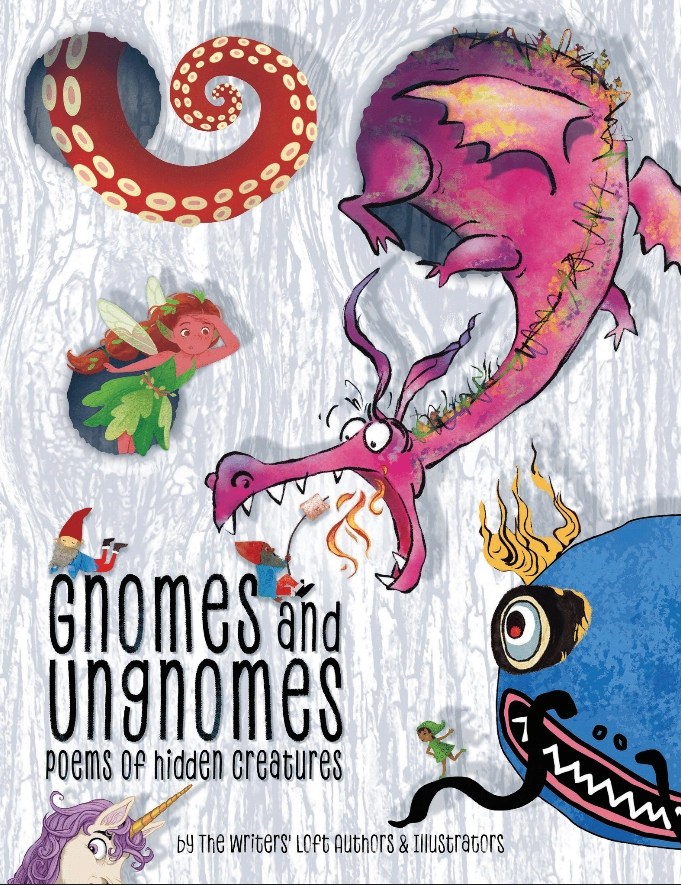
It’s very different in style from Milkweed for Monarchs, and the lyrical poems you’ve published in the Gnomes and Ungnomes: Poems of Hidden Creatures anthology for children. I think this speaks to the wide range of your writing skills. How do you usually determine what format you’re going to use for a book? Do you figure this out at idea conception, or is it something that you play around with as you’re writing?
CVZ: That’s so nice to hear! I enjoy trying different things and am thankful that I’ve been able to get various styles of stories published.
I don’t always know which format works best when I start. For example, with Milkweed, I wrote early versions of the manuscript in prose and verse, as fiction and nonfiction. Each time, I assessed what worked, what didn’t. And I trusted feedback from my critique partners to guide me.
Going in different directions like this works for me; I don’t mind setting something aside if it’s not working out. I figure it was a good exercise and then I move on.
HM: Christine, have you always wanted to write books for children? Was there a pivotal moment for you that led you down this path?
CVZ: I have always written in one form or another, starting with diaries and journals as a kid, then moving onto short stories as a teen. I love picture books. When I was getting my master’s in English lit, I reconnected with picture books by specializing in children’s literature. Once I became a mom and read tons of books to our daughter, I decided to take a stab at writing a picture book myself.
HM: I’d imagine we have many aspiring kidlit authors reading this, who look at your beautiful books and dream of having their own. What would be one or two pieces of advice you would give to them? Maybe something you learned along the way which really helped you?
CVZ: It helps me to always be reading, learning about the craft of writing, and workshopping with my critique group.

HM: What do you do to practice self-care in your writing life? And what stokes your creative fire?
CVZ: I let myself get stuck. Right now, there are ideas I want to write but they’re not coming to me. And that’s okay.
Interacting with the world stokes my creative fire.
HM: Christine, can you tell us anything about what you’re working on next?
CVZ: I can’t tell you exactly what I’m working on but what’s being announced next will hopefully be a lot of fun for readers!
HM: Thank you so much for being here with me today, Christine. I hope everyone will pick up your books for the children in their lives, or even for themselves. They are wonderful additions to any classroom or home library!
CVZ: It warms my heart to hear that you enjoy my stories, and I appreciate this opportunity to connect with you and your readers.
Christine is offering a copy of her new book Milkweed for Monarchs with accompanying stickers and bookmark to a lucky reader! To enter, comment on this post. If you share on social media, please mention that in your comment and you’ll get another entry. Giveaway closes in one week. US only.

Christine Van Zandt is a freelance editor, writer, and award-winning author. Her nonfiction picture books include A BRIEF HISTORY OF UNDERPANTS (becker&mayer! kids, 2021) and, MILKWEED FOR MONARCHS (Beaming Books, 2024). She lives in Los Angeles, California, with her family. You can find her at christinevanzandt.com, X/Twitter, LinkedIn, Facebook, Instagram, and Bluesky.
 WRITERS' RUMPUS
We have milkweed growing wild along the road edges here. I’ve never been able to get any to grow in our own yard. But saving these beautiful creatures is so so important. Hooray for this book with its message for kids – and adults, too!
LikeLiked by 1 person
Great interview! Thank you for sharing your inspiring journey – love that you dabble in multiple writing techniques and formats. Milkweed For Monarchs is such an important concept to teach little ones, and the illustrations look beautiful! I’m looking forward to reading it.
LikeLiked by 1 person
Thank you, Lindsay!
LikeLike
Butterflies are so beautiful and i am saddened to learn there are so few left. Living in an apartment is not conducive to planting milkweed so I wonder what I can do to help save the butterflies? Your book sounds fascinating and I’m excited to learn more about butterflies when I read it.
LikeLiked by 1 person
I knew the Monarch Butterflies were decreasing in population, but I didn’t realize by how much! I remember as a child finding these butterflies covering an entire patch of forest and just standing there in awe. I’m so excited to read your beautiful book and share it with my mom who loves these creatures. I shard this post on tumblr.
LikeLiked by 1 person
I have never seen a large grouping of them in real life–that must have been amazing to see, Danielle! Thank you for sharing our post!
LikeLike
Love monarchs – this is a well told and informative book.
LikeLiked by 1 person
Thank you, Hilary and Christine, for your interview and peek behind the scenes at your writing process. I am fortunate to have seen Monarch butterflies in Marysville, WA (“Butterfly USA”) and in Virginia Beach, VA. My dear friend in Virginia raises Monarch caterpillars with generous feedings of milkweed and in protected mesh housings to become butterflies for release. I would love to win a copy of your lovely book to gift to her.
LikeLiked by 1 person
You’re welcome, Michelle. And wow, I love that! She’s definitely doing her part of help their survival!
LikeLike
This looks like such a fabulous and important book. Thanks for the interview. I also shared on Twitter.
LikeLiked by 1 person
You’re welcome, Rose! And thank you for sharing it.
LikeLike
Congratulations to Christine and Alejandra ! Christine’s latest book looks absolutely gorgeous and what a great cover. I’m so into butterflies and it seems each year they become more special to me. Thanks for sharing and for the giveaway opportunity. I’ll post about it on X, too.
LikeLiked by 1 person
You’re welcome, Marcia! Thank you for sharing it.
LikeLike
I love butterflies and I love going to the local nature park where they release monarchs over the summer. I can’t wait to read this book!
I will be sharing this interview on social media so others can learn about your beautiful books.
Congratulations, Christine!
LikeLiked by 1 person
Thank you for sharing it, Srividhya! I think you will love this book.
LikeLike
Love this topic, and the rhyming approach looks great. I’ve planted my milkweed — now, to wait. (Ha, unintentional rhyme, there.)
LikeLiked by 1 person
Maybe we’ve inspired a new rhyming picture book on this topic?? Thanks, Ilona!
LikeLiked by 1 person