
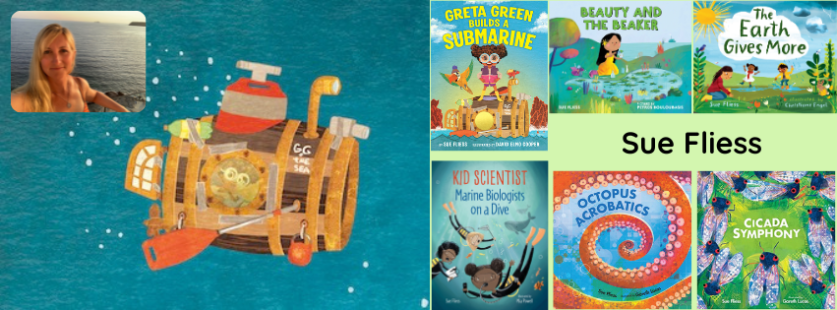
René Bartos: I am so excited to be able to chat with author Sue Fliess today! Welcome to Writers’ Rumpus, Sue! I am honored to talk to such an accomplished author. You are an award-winning, bestselling author of 60 wonderful books, including many nature and science books, with more on the way! In reading your bio, I am amazed by the depth and breadth of your work. Your books have sold over 1 million copies worldwide and have been translated into many languages, have won numerous awards and starred reviews, and have been named to prominent lists. And your reach extends to your books being utilized for school curricula and museum and educational programs including the Smithsonian’s National Air and Space Museum. Today, in anticipation of Earth Day 2026 and to highlight the importance of connecting kids to nature, we are going GREEN, focusing on books with nature and environmental themes in celebration of your latest release on March 3rd 2026, Greta Green Builds a Submarine, illustrated by David Elmo Cooper. This picture book is a delightful story with amazing backmatter, sure to be a favorite of kids everywhere as well as librarians, teachers, and caregivers. Congrats and happy book birthday!
Sue, will you tell us a little about your journey into the kidlit world?
Sue Fliess: I always loved writing, and as a kid, I would write poems for my family, or about my dog, etc. As I got older I journaled and wrote more poetry. In college, I loved writing creative stories and after I graduated I continued, but never thought about making writing my job. I held jobs in marketing, PR, and event planning but it wasn’t until I had my first son, and was reading him tons of picture books that it occurred to me that this could be a type of writing I could try. I was so lucky to live across the street from the public library’s children’s librarian who pointed me in the right direction and gave me lots of good advice. Then I took a class, like a children’s lit 101 type class, and decided I would give it a go. It took almost 4 years of submitting and getting rejected, but I finally sold my first book, Shoes for Me! which published in 2011. Fun fact: that fabulous editor is also my editor for Greta Green Builds a Submarine!
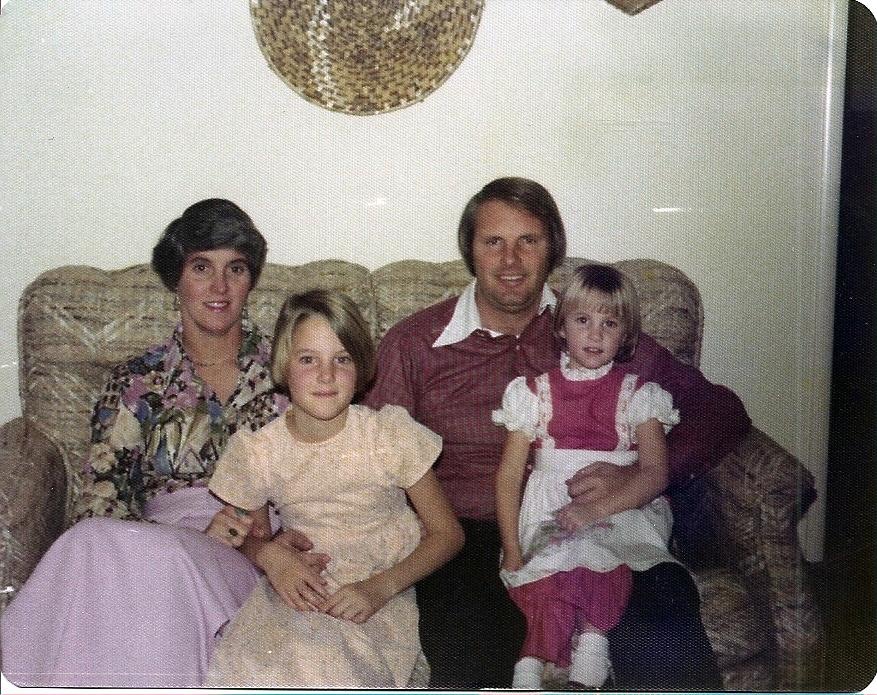
Left photo: Sue Fliess (right) with her mom and dad and older sister Christine
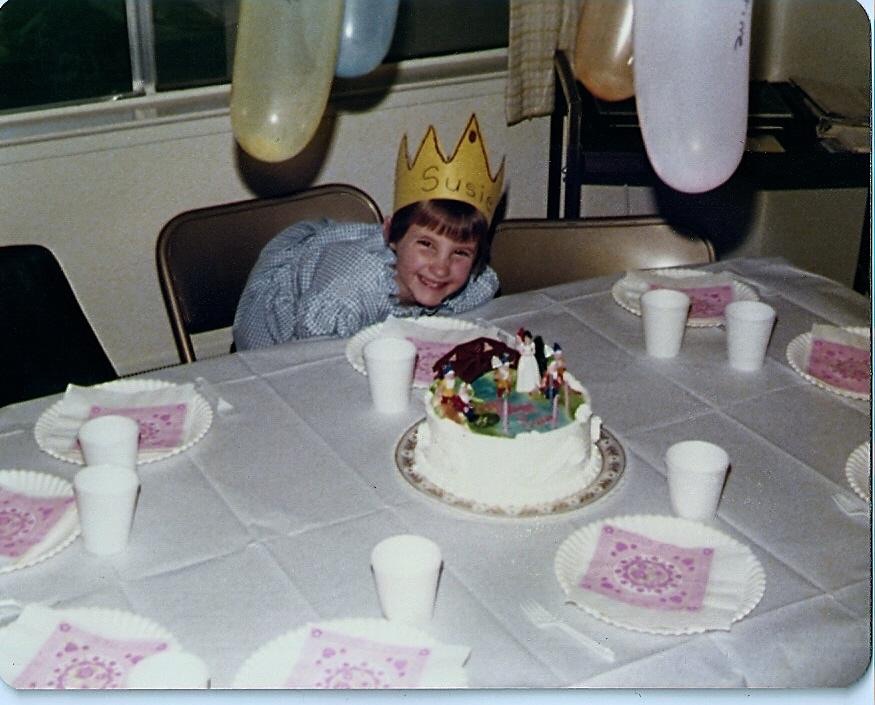
Right photo: Sue (then Susie) celebrating her birthday with a fairytale-themed cake
RB: Love this! And what a great reminder about the importance of libraries and librarians! They need our support now more than ever.
So let’s talk more about your newest release, Greta Green Builds a Submarine, illustrated by David Elmo Cooper. I adore this book. And it is out just in time for us to share with kids for Earth Day 2026. I noted that you dedicated it to your ocean-loving niece. I have an ocean-loving niece too! I will never forget the look of pure joy on her face when we spotted a whale on a trip to Acadia National Park. Reading the story of Greta’s adventures brought that image back to me…the joy and wonder kids feel when they make nature connections. Was there a specific spark or event that inspired this story? And what do you hope readers take away from the story?
SF: I think more than just a moment or spark, I am simply in a lifelong love affair with the sea. Countless hours playing in the ocean with my parents and sister, reading in a chair at the edge of the water, feeling the sun on my skin…somehow being at the ocean is life-giving. The salty air, the sound of the waves, holding up shells against our ears or just scanning the shoreline for interesting shells and sea glass–it’s all magical. I wanted to create a character that loves the ocean as much as I do!
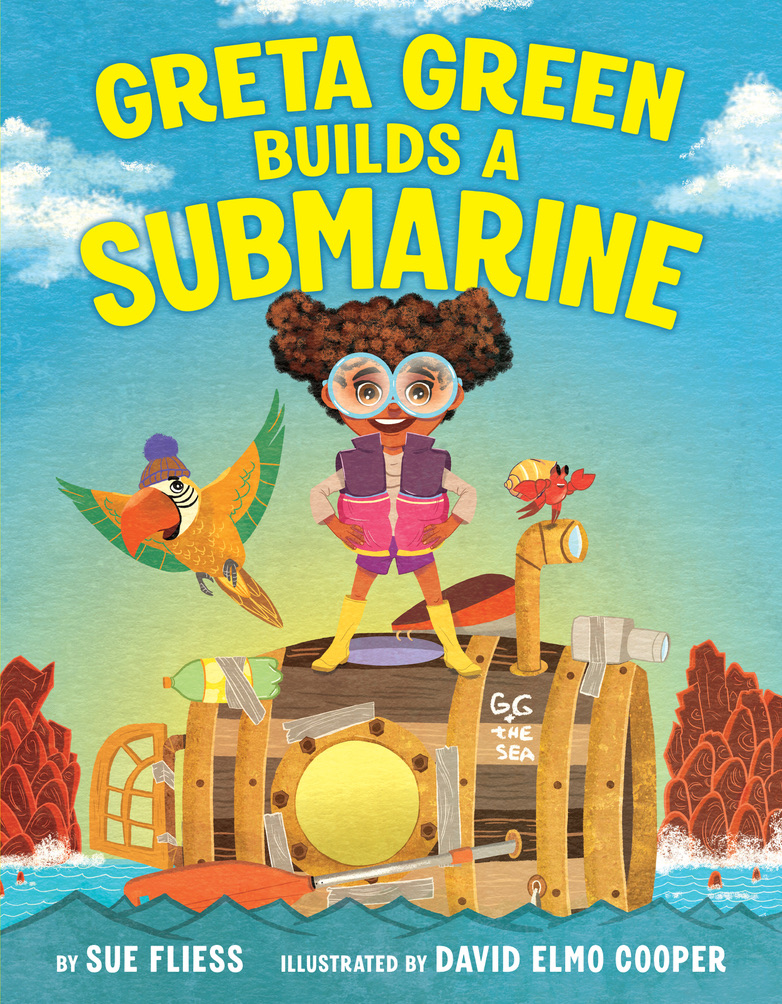
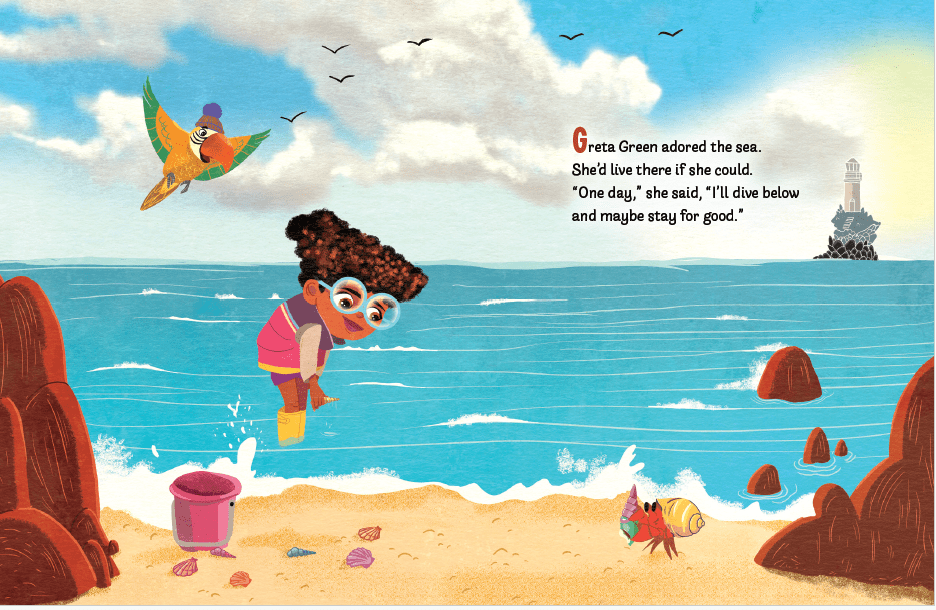
RB: That love for the ocean comes through! And your parents were fostering nature connections and family time in nature for you and your sister. Wonderful! One of my favorite elements in Greta Green Builds a Submarine is your use of ocean-themed words throughout the story. When I am writing on a specific theme (music, birds, etc.) I sometimes write out as many words I can think of related to the topic, and then I work to add these to my manuscript. Do you do this? Or did these just come to you organically as you developed the story?
SF: I am a list-maker for sure! I think for this story, though, it was a bit more organic. I was focused on getting the story down first, but as I was writing, if there was a sea-worthy verb or noun or way to describe something, I’d try it out. I’ve made lists of words or phrases for other manuscripts for sure, though. When I wrote How to Be a Pirate, I made a list of all the pirate-related words I could and tapped into them like a glossary. And for my Octopus Acrobatics book, I wanted to make sure I included all the great verbs that octopuses do when disguising themselves. I think I succeeded!
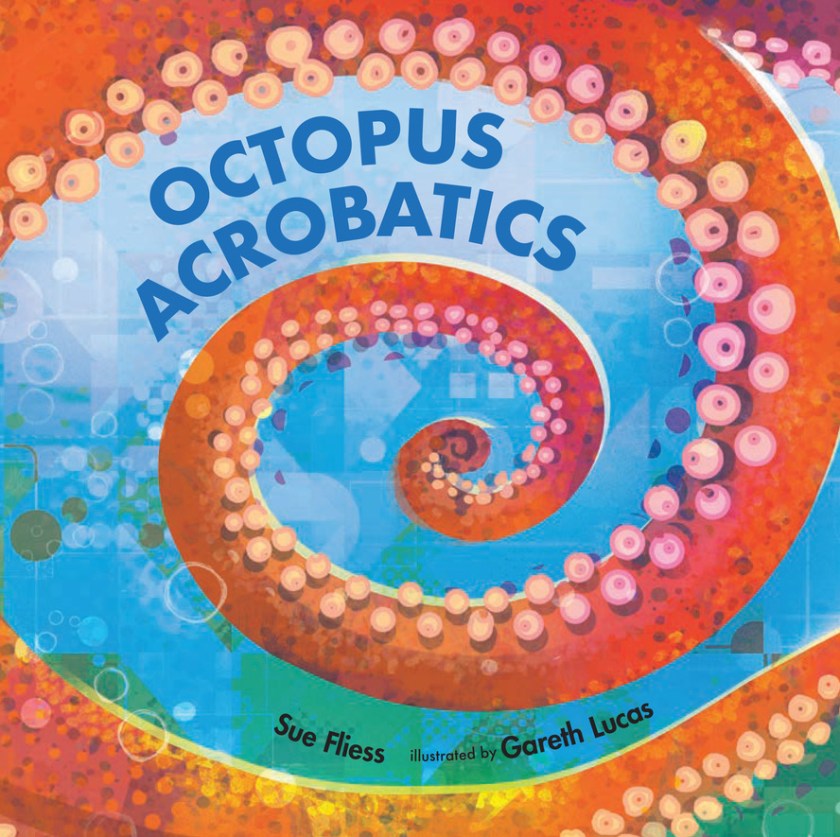
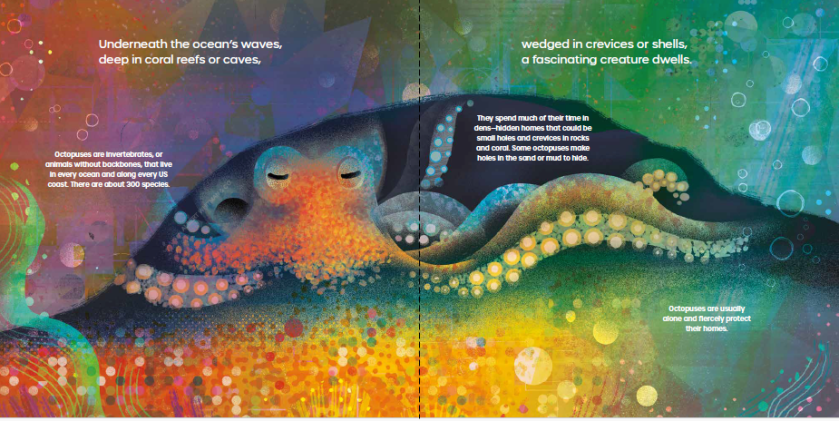
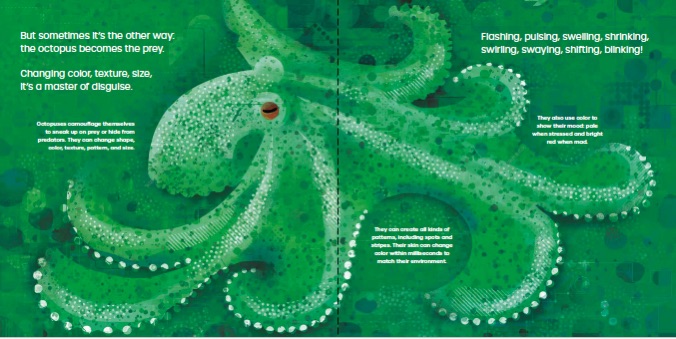
RB: Yes! Octopus Acrobatics is a gorgeous book filled with vivid verbs. Color, animal disguise, action: you definitely have a talent for engaging kids and tapping into their curiosity. And what kid doesn’t love pirates? I love how those ocean themes come through and you continue to engage kids with new books. You have a knack for kid-friendly elements that make your stories fun and whimsical. I noticed Greta Green has her trusty bird and hermit crab that travel along and help as she embarks on her ocean adventure. Is there a story behind these cute sidekicks?
SF: While I wanted her to have a ‘crew,’ this is really where the beauty of the illustrator’s imagination comes in. David created fun, colorful, engaging, and as you say, whimsical, characters as Greta’s sidekicks and sub-mates. I kind of loved that a bird was one of them because a bird like that would never have the chance to dive into the deep ocean otherwise–maybe he’d always dreamed of doing that too!
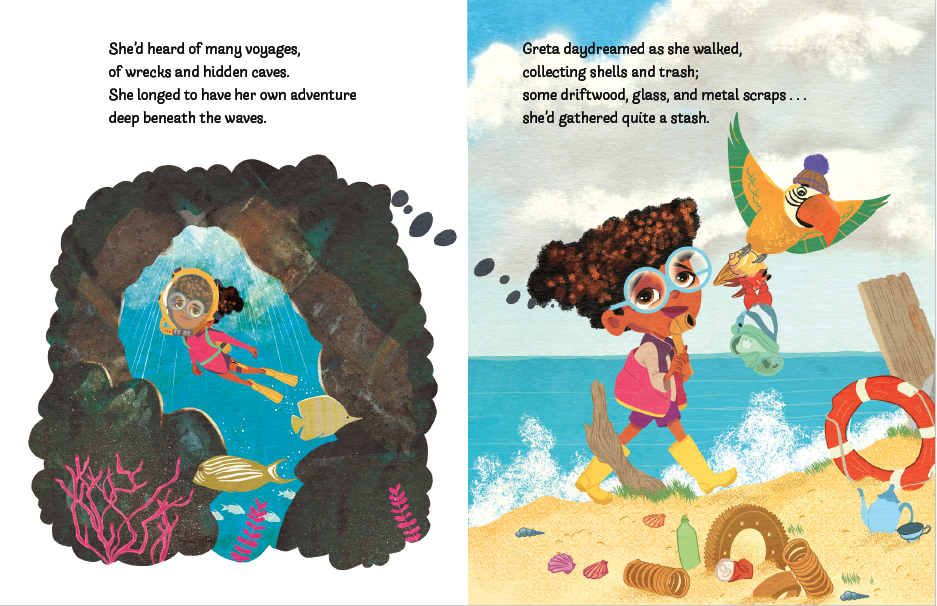
RB: What a wonderful example of how the creativity of author and illustrator come together in the making of a picture book. The magic! I also love the backmatter about female pioneers of the sea, submersibles and submarines, and information about shipwrecks throughout history. It is so important to empower young women to envision careers in STEM. Did you have all of this backmatter fully developed at the time of submission to editors?
SF: I did. I think the idea of adding backmatter to my fictional stories started with my Magical Creatures and Crafts series, because they were holiday-related, and I thought it would be fun and useful to include information on the holiday itself. Then when I was writing Sadie Sprocket Builds a Rocket, even though it’s a fictional story of a girl who builds a rocket to be the first to Mars, I did a lot of research on Mars and women in space, so I selfishly didn’t want all that research to go to waste! I added it to that story and now that seems to be a working formula for future books. The publisher/editor can decide if they want to include it or not, but it’s there. And what they don’t include, I usually try to share during author visits to schools.
RB: This is a great point. I sense your curiosity for how things work and desire to know more are strengths for your ability to create great backmatter.
As a developmental pediatrician, I am aware of a growing concern among health professionals and caregivers about youth with climate anxiety or more broadly, ecoanxiety. There is a need for books about the environment that have hopeful and empowering messages that give kids agency. I see this as a strength in your books. How do you approach writing about the environment in a way that does not come across as a lesson or message of doom and gloom? What advice do you have for other authors?
SF: First of all, thank you for giving me that word–ecoanxiety. I have a lot of this! It is difficult sometimes not to scream it into my books, if that makes sense. I feel such urgency for our planet’s health, but of course, we can’t project this anxiety onto young readers; we can only make them aware and hope that we are encouraging rather than scaring. So I try to think of kid-friendly ways readers could relate to helping and things they could do themselves in their day to day lives, then work that into the text. Maybe they read a passage and say, ‘oh, I can do that too’ or maybe it makes them feel proud because they are already doing some of those things, so they feel they are part of the solution. I don’t want kids to feel like they are responsible for cleaning up the messes that grown-ups have made, even if that is the case down the road.
RB: I agree! We adults can also help out by doing our part to protect the earth and engaging kids in ways that give them agency. Listening to their concerns and ideas empowers them. I am a firm believer in the power of books that foster nature connections for children. You have written many books with nature themes. One of my favorites is Cicada Symphony. This book doesn’t have an environmental message, per se, but helps foster spending time outdoors, which can help decrease time using screens…a common parent and caregiver concern. The sense of wonder and awe that comes from exploring nature is important for children.
SF: Absolutely. When I talk to kids about how I wrote this book, I emphasize that I spend a lot of time outdoors, and in this particular case, my husband and I walk our dog every day, multiple times. It was during these walks that we encountered the huge broods of cicadas, and seeing them up close and interacting with them (holding, observing, listening) was what inspired me to write a story about them. I focus a lot on how experiences can be the inspiration for stories and that was the case here. I also talk about how cicadas spend the majority of their lives underground until they emerge, so everyone should be careful when digging near trees. Even if it’s to plant a flower bed, they should be careful not to disrupt any life below the surface.
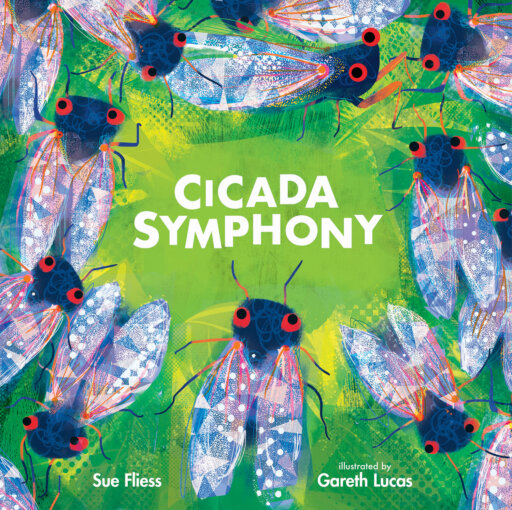
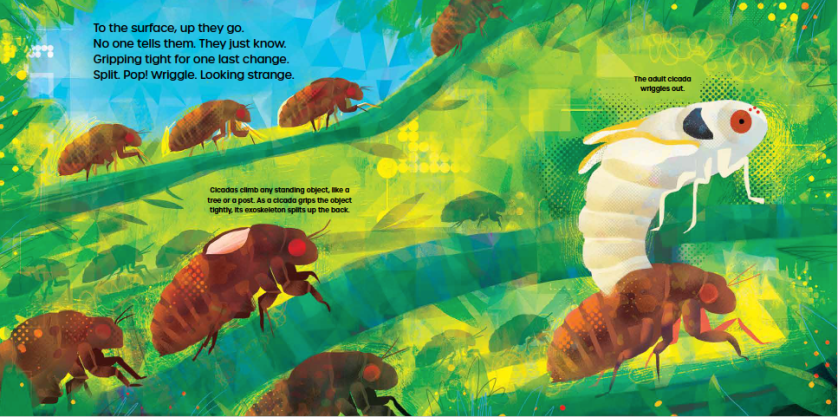
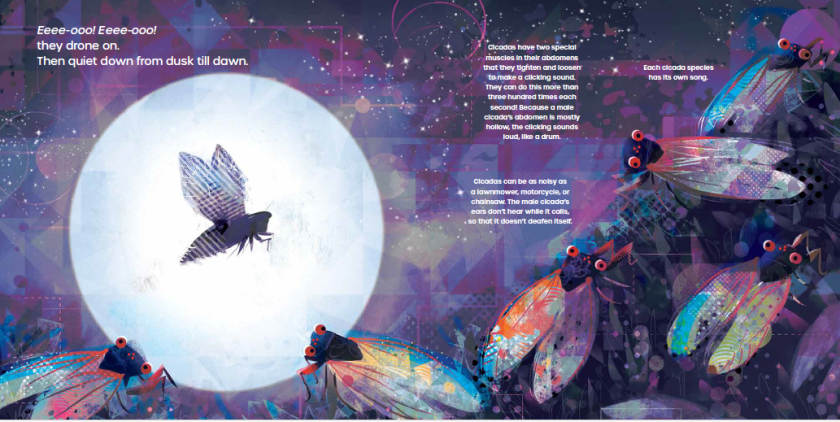
RB: Great reminder that inspiration from time in nature can be found in many places. Sometimes folks think they have to go on a grand adventure, but there can be incredible opportunities to explore nature nearby. And I think books that introduce us to nature have a lasting impact. I remember favorites from my youth that I shared with my own children and that still inspire my writing today. How about you? What books have inspired your nature writing?
SF: I couldn’t agree more. Some favorite books that inspired my writing include Charlotte’s Web, Where the Red Fern Grows, Island of the Blue Dolphins, Put Me in the Zoo, Ferdinand, and Sylvester and the Magic Pebble. I have two boys (now young men) and we read lots of insect, animal, and science books as well as all those big books of weird animal facts. Some that come to mind are, How Much is a Million? and Everybody Poops, but then other fun fictional stories with natural settings like Scaredy Squirrel, Bats at the Beach, and The Gruffalo. That said, I do often get ideas from grand adventures too! After we returned from Costa Rica for vacation and I was writing the Kid Scientist series, I decided to set the insect experts book in Costa Rica, because it was so full of amazing insects. We travel a lot, as a family, or just as a couple, and I’m always looking for what could be my next story.
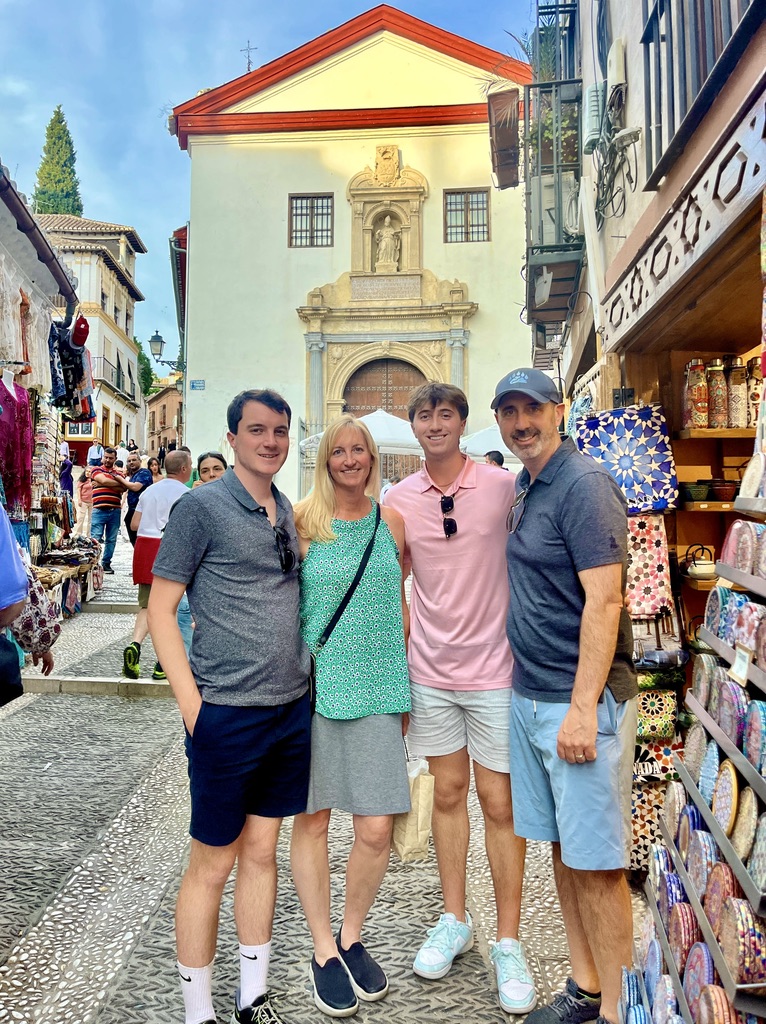
RB: Love those story examples! And the memories of shared reading with your children. I can’t resist throwing in my pediatric pitch about shared reading from the start being important to help kids thrive.
Several of your children’s books are written in rhyme. Do you know when you are going to use rhyme vs. prose at the beginning? Do some stories come naturally to you in rhyme? And do you sometimes try a version in prose and in rhyme to decide?
SF: All of the above! I usually come up with the story idea first, or the title and know there is a story to be written, then decide if it would be better told in rhyme or prose. Sometimes, I will hear the first line or two of a story in my head and it rhymes. Or not. On many occasions, I have started a book in prose only to get extremely frustrated, try it in rhyme, and decide it is better in rhyme. I am better at writing rhyme than prose, but I always make sure the story is there first, before I start down either path.
RB: Excellent insights on craft! I can relate to the frustration for sure…all part of the journey in kidlit. Story first is great advice. Any recommendations for writers who want to write in rhyme but often hear it is hard to get rhyming books published? Any classes/courses or resources to share?
SF: Check out as many of the best books written in rhyme that you can. I am a stickler for meter and have a musical background, so rhyming comes naturally to me. But if it does not come naturally to you, you may struggle. Yes, you can learn how to do it, but don’t force it because you *think* it should be told in rhyme. Get the story down first and then decide if rhyme is the best way. Once you’ve written it, have someone read it out loud to you, cold, and see where they trip up on the meter. Those are the spots you need to revisit. In rhyming stories, it’s all about where the stresses fall. The best rhyming stories let you forget you are reading in rhyme.
RB: Yes, a musical background is a plus. I agree, having someone else read the manuscript out loud really helps find the trouble spots.
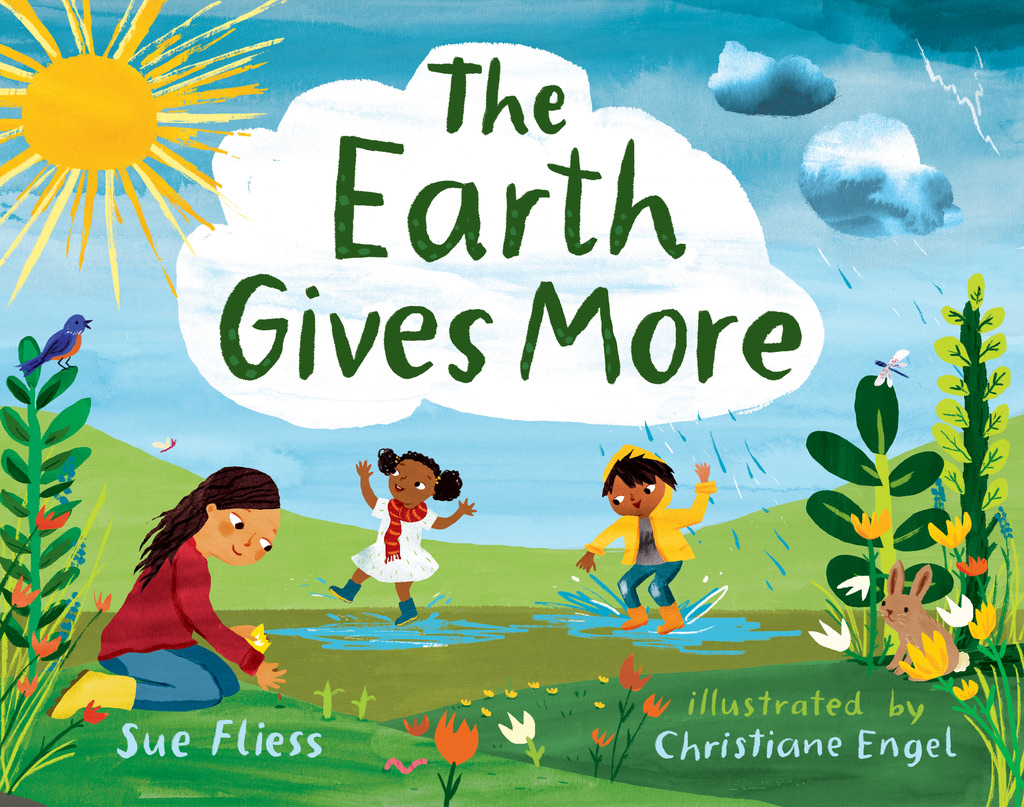
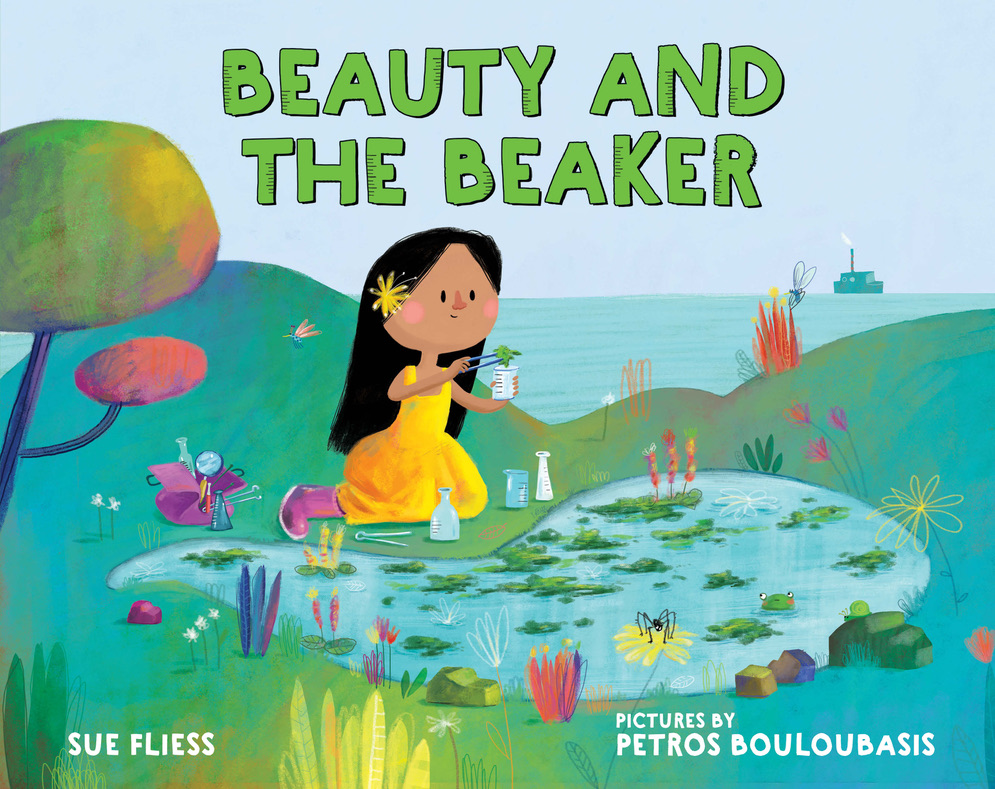
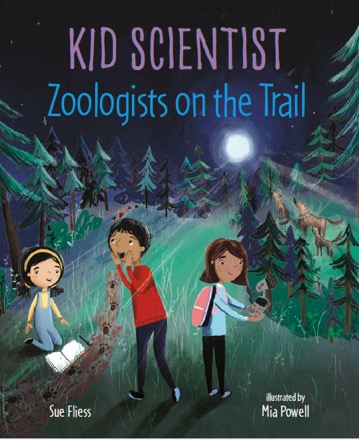
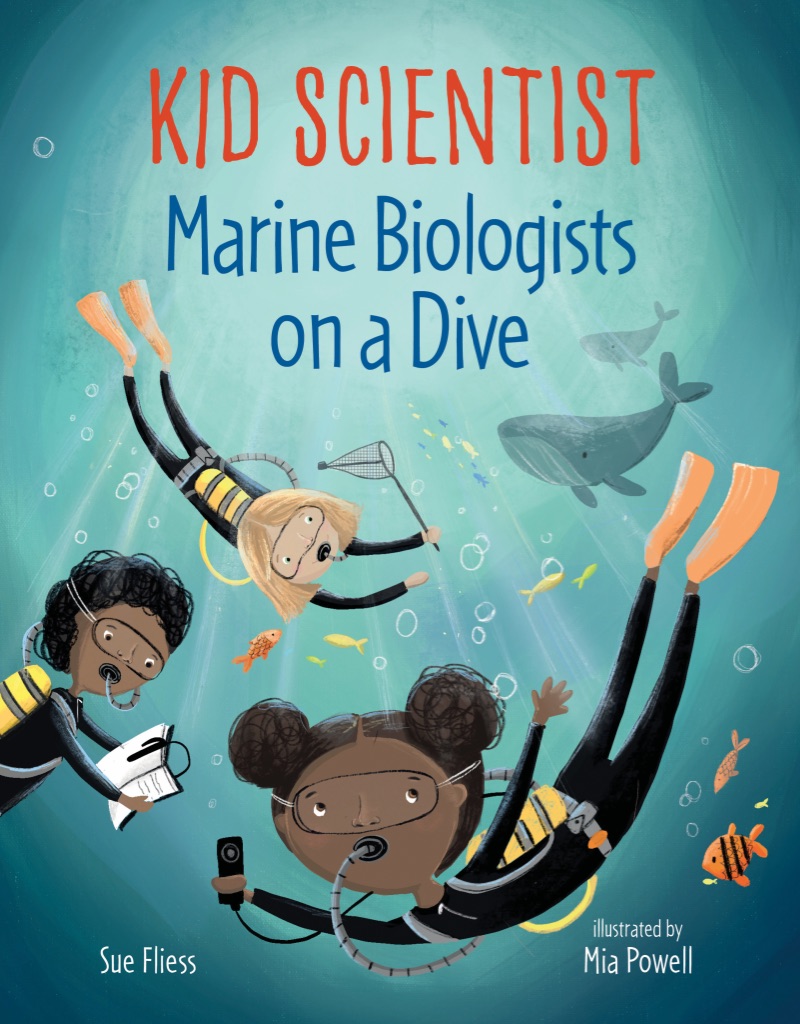
Sue, let’s discuss more of your books as we explore “green” themes today. You have written many amazing books on science and nature, including the lyrical and lovely award-winning The Earth Gives More. And a few other examples are Beauty and the Beaker and your Kid Scientist series including Kid Scientist: Marine Biologists on a Dive and Kid Scientist: Zoologists on the Trail. Would you share more about these and the story sparks with us?
SF: The spark for The Earth Gives More was that I wanted to write a love letter to the planet, but needed to find my way in. I remember thinking about writing out all the wonderful things the Earth offers, or gives us, and came up with the line: Still, the Earth gives more. From there, I thought about how to structure it and decided to go through the seasons, and keep that line as a repeating phrase.
Beauty and the Beaker started out with the title Beauty and the Beach, and I wanted it to be about a girl who loved the ocean. I was searching for the science angle when a fellow writer emailed me this title idea. From there, I researched what Beauty could collect in her beaker and after much research and consulting with a friend who is a scientist and now a librarian, came up with algae – Beauty would collect algae and turn it into biofuel. That’s a big concept to put into a picture book, but I was determined to pull it off.
The Kid Scientist series was my publisher’s idea, but I got to choose the topics. The first one was Marine Biologists on a Dive – surprise! An ocean book! Haha. I love dolphins and whales, so decided that the main character was going to be studying whales, and the group of scientists also free a whale calf from a fishing net. Zoologists on The Trail is about the rewilding of Yellowstone and the reintroduction of gray olves. The kids use an environmentally safe and cruelty free method to track the wolves called bioacoustics, rather than replacing the tracking collars on the wolves that have stopped working. These collars can sometimes put the wolves in danger when replacing them. My love of the natural world really does drive a lot of the content I write, and thinking about all my books as they pertain to this interview has underscored that even more for me.
RB: You have written many award-winning books about many fascinating topics for kids to explore. This is a strength I see in reviewing your body of work, the depth and breadth of topics to engage a wide audience, including those who will introduce the books to kids. The kidlit market can be tough. Do you have any strategies or words of wisdom to boost our creative spirits?
SF: I really just try to write the best book I can write each time, whether it’s fiction or nonfiction, and hope it finds its reader! Write from the heart, not to win awards. If your writing is true and honest, awards may come. But know that not all award-winning books are the ones kids choose to check out over and over. So, just write the best book you can.
RB: Yes! Stories with heart. And a great reminder that if you tell a story that calls to you and write the best book that you can, it will reach a child somewhere and make a difference for that child. That’s what it is all about. Could you share with us a little about your writing process? Do you have any helpful tips for kidlit writers?
SF: Find other writers to share your writing with–to poke holes and champion your story. Read books in the genre you wish to publish, and work on your craft. Go to conferences and meet the players. Don’t give up! Lots of talent never gets out there because of fear or rejection. It’s slow and subjective, but the children’s book industry is rewarding and worth it.
RB: Sue, thank you so much for sharing your work and your kidlit journey with us. You are such an inspiration. What is next for you? We can’t wait to see more of your work!
SF: This summer my 60th book will publish – it’s a 65-page activity book based on my Magical Creatures and Crafts book series–mazes, crossword puzzles, word searches, spot the difference and more! I have 4 books coming out in 2027, and at least one slated for 2028, so I invite everyone to visit my website and sign up for my newsletter to stay abreast of everything I’m doing!
RB: Thank you so much Sue. We look forward to enjoying more of your work!
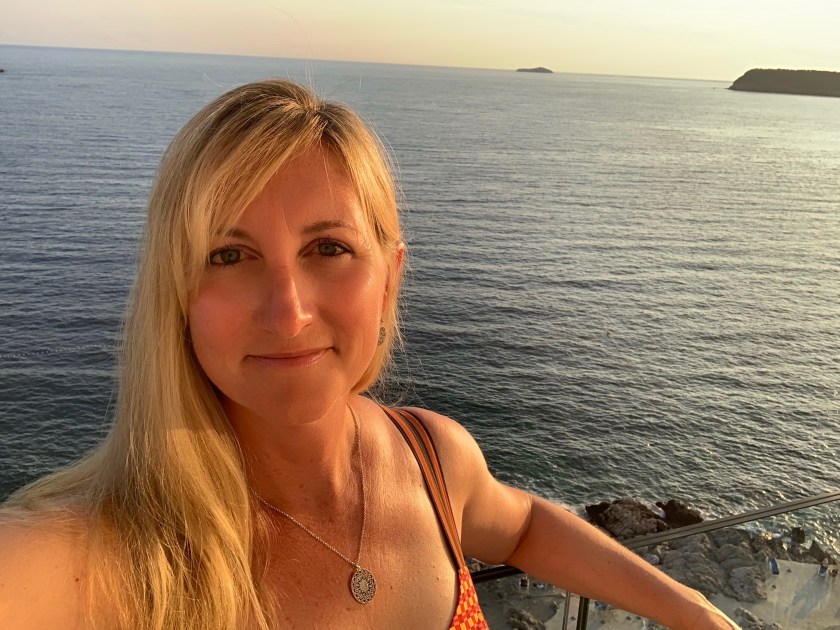
Sue Fliess is the award-winning, bestselling author of over 60 children’s books including Greta Green Builds a Submarine, So Many Books! co-authored with Ann Marie Stephens, Sadie Sprocket Builds a Rocket, Octopus Acrobatics, Cicada Symphony, How to Teach a Monster (part of the Magical Creatures and Crafts series), Beauty and the Beaker, Flash and Gleam, the Beatrice Bly’s Rules for Spies series, the Kid Scientist series, and many Little Golden Books. Her books have sold over 1 million copies worldwide and have been translated into many languages. Fliess has also written for Walt Disney. Her books have been selected to the Junior Library Guild and named to prominent lists including ALA Notable, Bank Street College Best Children’s Book, Virginia Readers’ Choice, Texas 2×2, CCBC Choices, Capitol Choices, Chicago Public Library, Orange Blossom Nonfiction, A Mighty Girl. Her books have also received a Blueberry Honor Award, Green Earth Book Award honors, earned starred reviews, and have been used in school curricula and museum educational programs including the Smithsonian’s National Air and Space Museum. Fliess’s titles have been featured on Reading Rainbow Live and chosen for Dolly Parton’s Imagination Library in the US and Australia. She speaks at elementary schools, universities, and conferences, and lives with her family and a silly yellow lab in Virginia. Visit her at www.suefliess.com and on Instagram // Bluesky // YouTube // Facebook
 WRITERS' RUMPUS
Great interview, Rene! I want to check out some of these wonderful books by Sue now 🙂
LikeLike
This is such a great interview. Loved the books!
LikeLike
Thanks Cathy!
LikeLike
What a wonderful interview! Both questions and answers are filled with so many fantastic details about writing and Sue’s books, in particular. I love the cover of the newest one, Greta Green Builds a Submarine. Congratulations and best wishes to Sue for her continued success!
LikeLiked by 1 person
Thanks Marcia! I am glad you enjoyed the post. It was fun getting to know Sue and learning more about her books!
LikeLike
What great contributions to kids’ environmental books. I love the Octopus!
LikeLiked by 1 person
Thanks Robin. I am glad you enjoyed the post. Yes, the octopus interior spreads as well as others from Sue’s books were so amazing I had trouble deciding which ones to use!
LikeLike
An inspiring interview and excellent books! Thank you.
LikeLiked by 1 person
Thanks so much. Agree! Sue’s kidlit journey and body of work is inspiring!
LikeLike
I love these books. What a great way to get children interested in the environment.
LikeLiked by 1 person
Thank you Darlene. Agree! I love books that connect kids to nature. Sue’s books are delightful. It was challenging to pick just a few to highlight as she has so many!
LikeLiked by 1 person