
Guest Post by Derek Reid
I’ve always dealt in the truth and glory of the real universe.
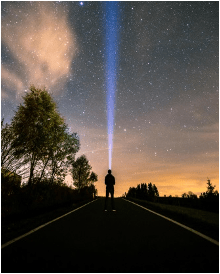
When I was five or six years old, I remember standing outside at night and asking my older brother what all the tiny points of light in the sky were. Stars, obviously. But then he added something that changed everything for me.
He said they were other suns, just like our own. Whoa. Mind = blown!
I’m not sure how I’d never realized that, or why it hadn’t come up in school – maybe because I was only five or six – but the concept hit me like a bag of bricks. The night sky suddenly became magical. Each dot wasn’t just a star. It was a place. A system. Maybe even a source of life. That moment, that realization filled me with wonder and sparked a lasting fascination with space.
I’ve made quite a few TV shows about space, where my instinct has always been not to lecture or overwhelm, but to make viewers feel small and amazed in the best possible way. As it turns out, a lot of the same skills I learned from years of nonfiction filmmaking – chief among them, the skill of knowing how to engage an audience – translated surprisingly well to children’s book writing.
I’m partial to Mars, the Moon, and other places in our solar system as settings for my works. These places fascinate me because they’re real. They come with real constraints: gravity, distance, harsh environments, limited resources. They’re also well within reach. As a creator, I’ve always dealt in the truth and glory of the real universe. As a children’s book writer, I do the same… I just sprinkle in a little magic space dust.
They’re grab-your-pencil-and-make-things-happen kind of books.
I don’t write traditional chapter books. And even though I consider myself something of a junior astronomer, I don’t write anything that feels like science class homework. I write storified puzzle books for kids who want to live in space someday. If you’ve never heard of a storified puzzle book, it might be because I just invented the term. (Or did I hear it somewhere? Hmmm… a mystery for another day.)
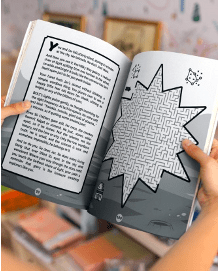
A storified puzzle book blends the joy of reading with the thrill of puzzle-solving. Each story chapter ends with a puzzle challenge that unlocks the next part of the plot, meaning the story literally won’t budge unless you do. They aren’t sit-and-read kind of books. They’re grab-your-pencil-and-make-things-happen kind of books.
This approach transforms traditional activity books into something more immersive. It invites readers to think critically, solve problems, and care about the outcome, because their actions are what move the story forward. It’s not just about finishing a puzzle. In my books in particular, it’s about saving a colony, navigating an asteroid field, or uncovering the secrets of an alien world. Now that’s engagement!
The reader won’t just understand the story, they’ll inhabit it.
In a proper storified puzzle book, the two halves – narrative and activity – shouldn’t exist independently. They must be intertwined in the most essential way, where each puzzle you’re solving feels like a natural extension of the story. The puzzles are not bonuses or distractions, they’re as indispensable as the characters. The plot needs them to make the whole contraption run.
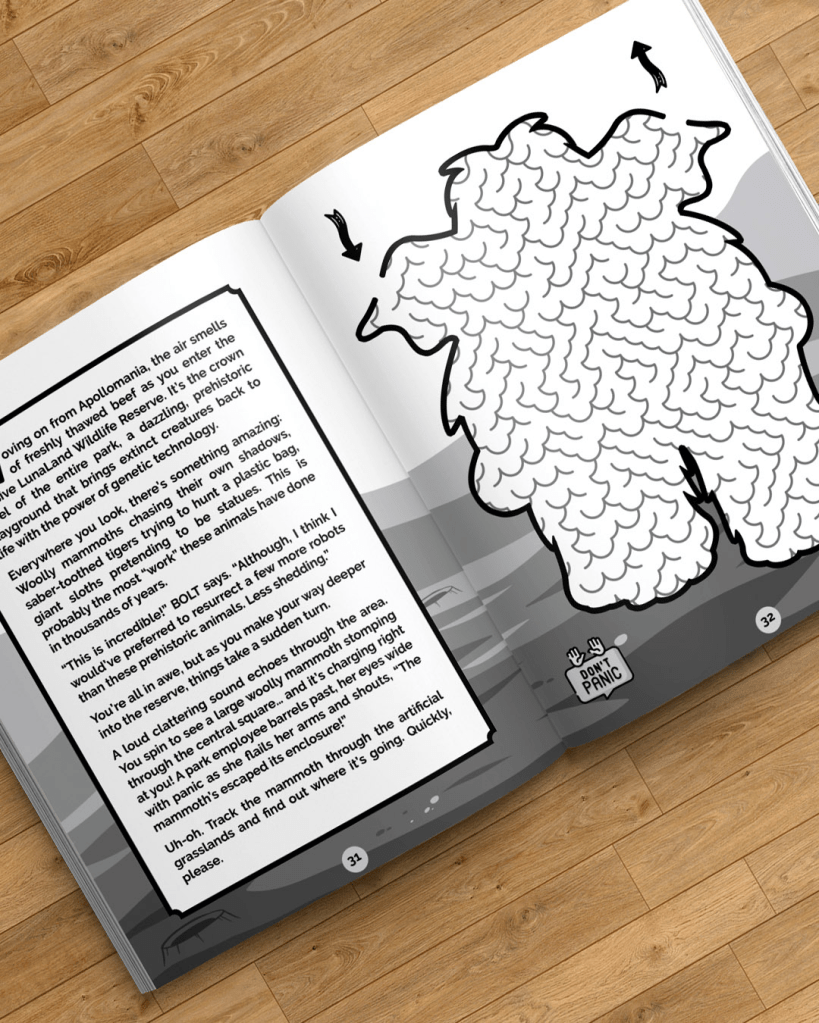
If you’re a wordsmith with passion, the stories come naturally, of course. And if you have basic design skills, the puzzles aren’t terribly difficult to render. The real challenge – the part I sweated over the most and the place where the gold lives – is in the middle ground where they meet. That small, delicate moment where the reader stops reading text and starts interacting with the page. If that shift feels awkward or artificial, the spell will break. If it feels natural, the reader won’t just understand the story, they’ll inhabit it. Which is huge.
So I spent a lot of time obsessing over that tiny handoff. How does tension in the story naturally lead into action on the page? How do you make the puzzle feel like the next logical beat, not an interruption? How do you make the reader earn their progress through the adventure? Answer those questions, and you fundamentally change the relationship between book lover and book. Which is also huge.
The thing about wonder is that it doesn’t belong to any one age group.
Storified puzzle books create a special bond between reader and story. (BTW, using the broad term “reader” to describe someone who participates in and navigates their way through my kind of tome seems insufficient. They’re more like “storyplayers” or “puzzleventurers.” But I digress.) Instead of watching a character solve problems, they actively participate in the problem itself. Along the way, imagination, logic, spatial reasoning, memory, persistence, and creativity all become part of the experience, which culminates in a rare feeling of agency. By the end, readers don’t feel like they simply finished a story. They feel like their own actions moved it forward and made the whole thing possible.
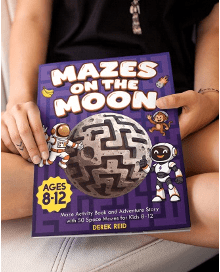
When a child solves a difficult puzzle, something important happens. They succeed. And success builds confidence. They think, “If I can do this, maybe I can do other hard things too.” The world – heck, the whole darn universe – desperately needs curious, creative, problem-solving people. Giving kids a place to practice those skills, even in a fictional setting, feels meaningful to me.
I like to think the future will be better than today, full of limitless possibility and endless wonder. I articulate this through my depictions of cities on the Moon, colonies on Mars, spaceships in orbit around other stars, and all sorts of similar things. I don’t consider such musings speculative. They’re just my adult brain still processing the amazement and wonder I felt when my older brother revealed the truth about all those tiny points of light in the sky.
The thing about wonder is that it doesn’t belong to any one age group. That feeling of looking up and realizing you’re part of something enormous applies just as much to kids as it does to grown-ups. If anything, kids are better at it. They haven’t trained themselves out of awe yet.
My storified puzzle books – as slight as they are, just a few stars in a galaxy of entertainment – are how I add wonder, agency, and optimism to the world. And invite kids not just to read about the future, but to step into it.
About Derek Reid

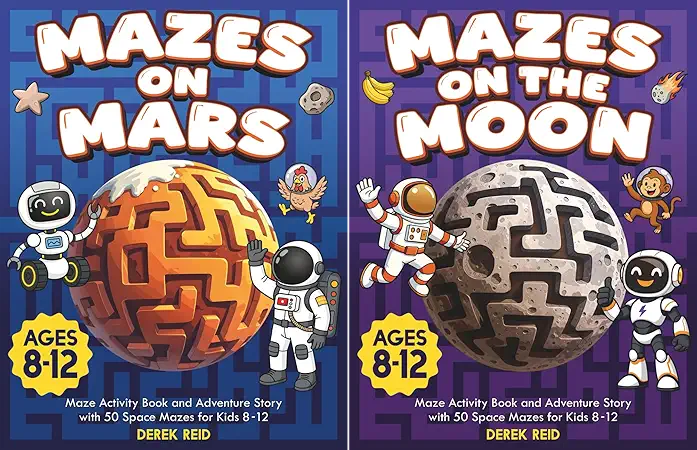
Derek is a proud stargazer and creator of the award-winning documentary TV series “Sky Candy,” from which his story-powered puzzle books for kids draw their heavenly inspiration. He is the author of “Mazes on Mars” and “Mazes on the Moon,” both part of the Space Explorers Activity Book Series available on Amazon stores planet wide. When he’s not writing or making TV shows, he can be found on the bike trails during the day, or under the stars at the drive-in movie theater at night. He lives in Toronto, Canada with his amazing wife and two rascally cats who, fingers crossed, hope to become the world’s first catstronauts. You can learn more at skycandyastronomy.com.
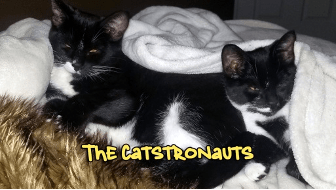


Thanks for sharing your fun books and good luck to your catstronauts!
LikeLiked by 1 person
Thanks for your inspiring words, Marcia. I really do hope those cats of mine find their way off this rock one day.
LikeLike
Storified! Cool concept. I bet kids love these.
LikeLiked by 1 person
Thanks Ilona! Yes, the feedback I’ve received from kids has been tremendous. A lot of them really love the mix of stories, puzzles, and space. Some parents have been quite enthusiastic in their reviews, saying my books got their kids off screens, made them feel like real astronauts, made them laugh, etc..
LikeLiked by 1 person
I so very much enjoyed your description of a storified puzzle book. I can only surmise how much I will enjoy your actual stories. And I love puzzles.
LikeLiked by 1 person
Thank you, Marti. So glad you enjoyed my post! And yes, the puzzles in my books are plenty challenging enough for all ages.
LikeLike