
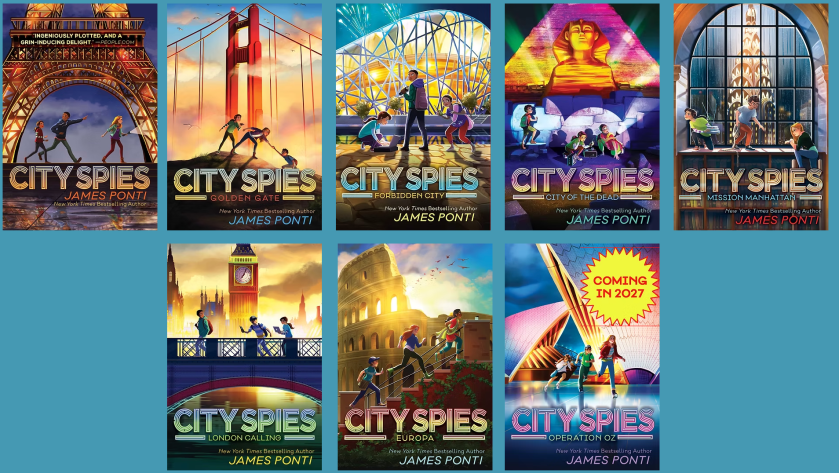
Guest Post by James Ponti
Hi! My name’s James Ponti, and I write Middle Grade book series such as City Spies and The Sherlock Society. I’m excited to share some pointers with you, but only with a major caveat. I know a bunch of writers and we all do it differently. I’m not talking plotting vs. pantsing, but radically different approaches. With that in mind, please pick and choose what works for you and ignore what doesn’t. Now, on with the tips.
WHO YOU ARE IS WHAT YOU WRITE
I grew up at the beach. I was raised by a single mother. I went to film school. I spent three summers telling jokes dressed as Davy Crockett at Disney World. I worked in television for thirty years. This isn’t just a poorly written biography. It’s a list of key elements in my writing process.
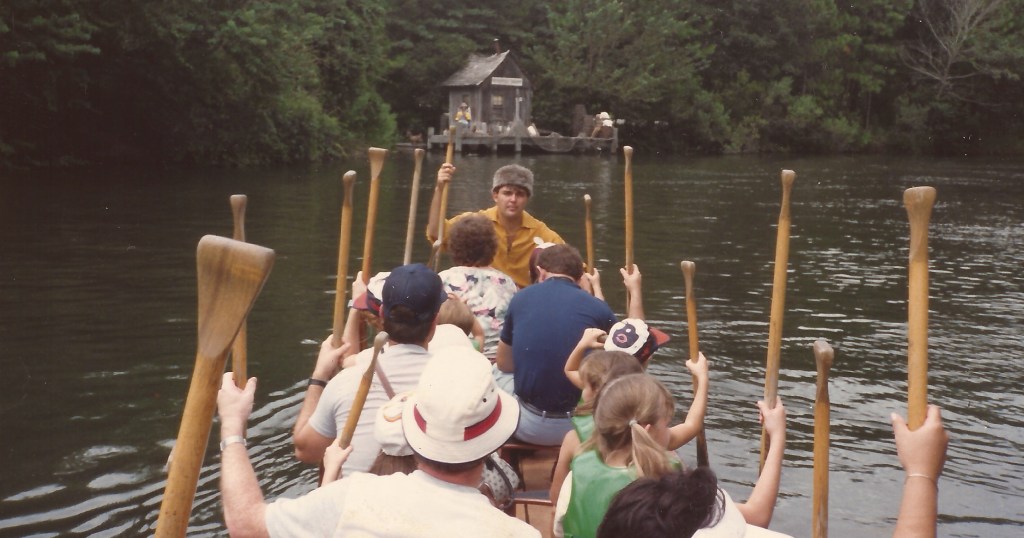
The beach gave birth to my laidback creative environment. I got my work ethic from my mother. My screenwriting degree directly informs my sense of structure and dialogue. Being Davy Crockett taught me how to construct and deconstruct jokes. And television showed me what elements are essential for building a series. The list goes on and on.
What’s the tip? USE YOUR ENTIRE LIFE IN YOUR WRITING. You’re best served if you develop a style and process that is tailor-made for you. You can do this by incorporating your life experiences (even the baggage) into your craft. This not only gives your writing its distinct voice (which is essential), but also lets you use the strongest and most organic instruments in your creative toolbox.
WHAT WE CAN LEARN FROM LIVESTOCK
When I worked at the History Channel, a Texas cattleman told me all about the importance of hybrid vigor, which is the concept of crossbreeding to maximize genetic diversity. For him, it led to stout, strong cattle. For me, it (hopefully) leads to lean, effective storytelling. Let me explain.
I write genre fiction, but I don’t write a single genre. I typically overlay the elements of four different ones. I mix mystery (which provides structure), adventure (which propels plot), comedy (to create tone), and add a secret serving of family drama (which gives weight and connection). If done properly, the story is more potent and less predictable. Additionally, if the reader is trying to solve the mystery, getting swept away by the adventure, and laughing at the jokes, I can surprise them with effective emotional dynamics that catch them unaware. I think this mix is what makes my books my books.
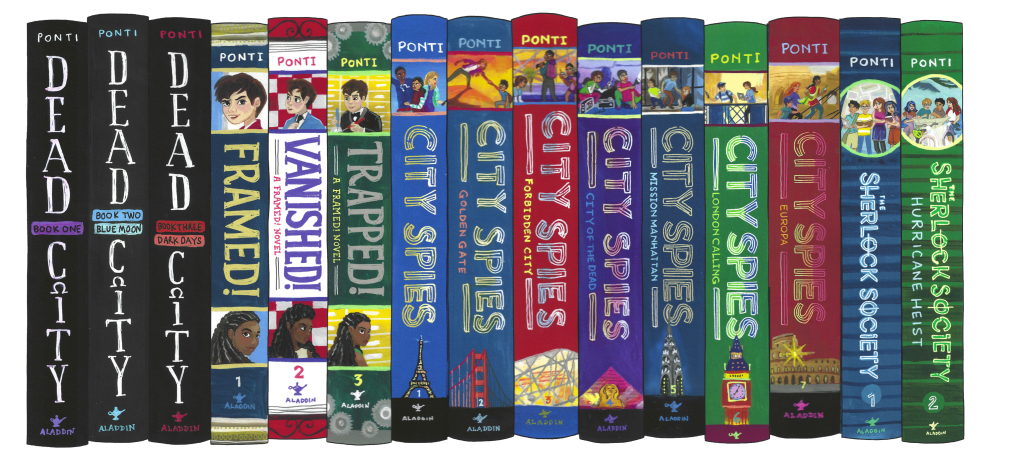
Copyright to Jane Mount. My books up to Art Attack.
NICKELODEON WAS MORE THAN BUCKETS OF SLIME
In the 90s, when they were first defining the kids’ content space, Disney was for families and Nickelodeon was for kids. That distinction was a significant difference during a time when I wrote for both. When I worked at Nick, we had a handbook titled “How to Nickelodeon.” It was a guide as to what made the brand unique. (Implicit in this was, “…and different from Disney.”) It was brilliant in its simplicity and filled with wisdom I use regularly.
On one page there was a photo of a happy, smiling boy. On the next was a photo taken with a fisheye lens of the same boy making a goofy expression. It was literally in your face and extreme. The caption said something to the effect of, “This is who we are.” I think about that boy, when I’m trying to figure out what makes my books different than others. The smiling boy was great, but predictable. The goofy boy was amazing and also seemed more authentic.
Another page listed rules and the first was that the word “fun” was prohibited. If you tell kids something is going to be fun, they know you’re lying. It should just be fun without the pronouncement. Show don’t tell. It was part of a deeper philosophy which was to look up to kids. They are smart and inquisitive and resent it when you talk down to them.
Carry this ethos in your writing. Don’t pander. Don’t overexplain. Understand that, because of their age, they have different cultural touchstones and fewer life experiences, but none of those equate with “less than.” I write long books with complex plots and I’ve never had a kid complain that they’re too hard. Part of that is because they’re fair, which brings me to the next tip.
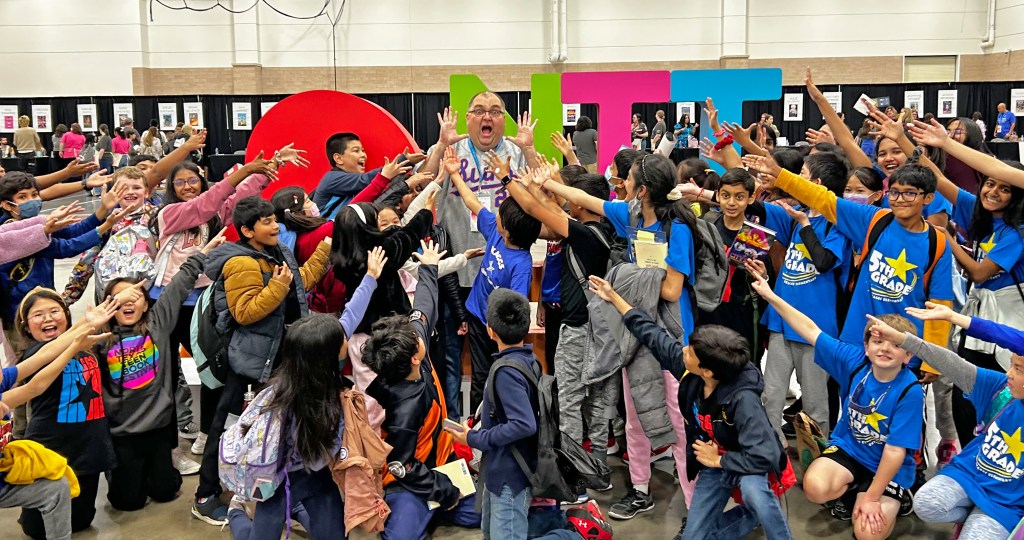
With young readers at the North Texas Teen Book Festival
THE CONTRACT OF FAIRNESS
Fairness is a vitally important concept to young people in their lives and in their reading. This is especially true in mysteries. Mystery readers want to solve alongside the characters. That means, you have to give them all the clues so they have a fair shot at doing it. No sudden facts magically arriving at the last moment. No cultural references that help your solver but mean nothing to your reader. (The character is the same age as the reader, therefore his or her cultural awareness should be like theirs and not yours.)
This is all part of the implicit contract that exists between reader and writer. Two transgressions forbidden by that contract are superhuman deduction skills and coincidence. If, at the end, the only way the mystery is solved is because your “detective” has the ability to identify 127 different flavors of chewing gum and can use that skill to identify the culprit, you have cheated and broken the fairness contract. (And likely lost the reader forever.) If your plot and solution hinge on coincidence, you have shown that you are a writer who doesn’t care enough to put in the work and therefore given the reader ample reason not to care about it either.
YOU CAN’T GROW CROPS IN YOUR FRONT YARD
But you don’t need forty acres to plant a rose garden. The Contract of Fairness is between you and the reader. The Contract of Scope is between you and your manuscript. I think it’s essential to fully understand the scale and stakes within a series to maintain consistency. My first television gig was writing for The Adventures of Superboy. DC had hard and fast rule: Superman saves the world, Superboy saves the city. That told me everything I needed to know.
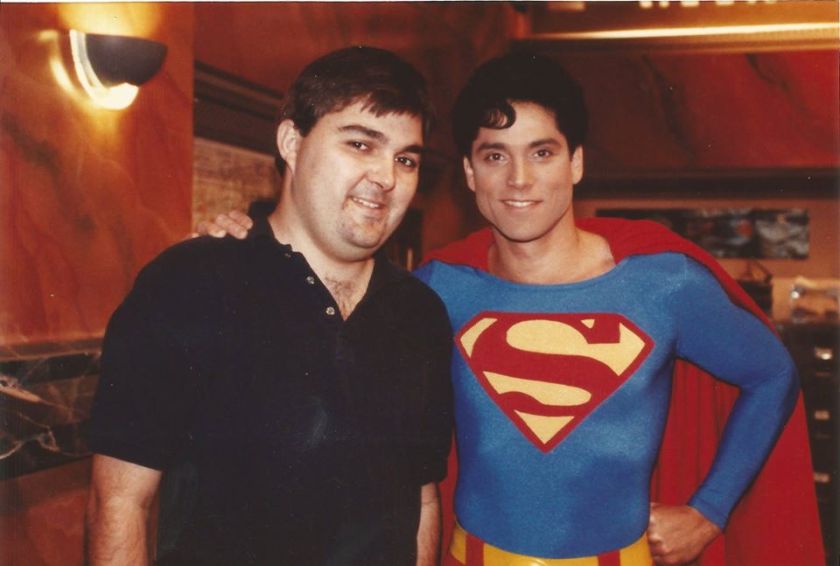
My series have similar elements of mystery, adventure, and problem solving, but they have distinct differences that are sacrosanct. The City Spies jet around the world trying to prevent something from happening, while the members of the Sherlock Society drive around South Florida trying to figure out what has happened. The stakes for the City Spies are larger and those for the Sherlock Society are more personal. Understanding these differences help me as I develop my plots. It also helps them to ring true and authentic for the readers.
GET OFF YOUR BUTT
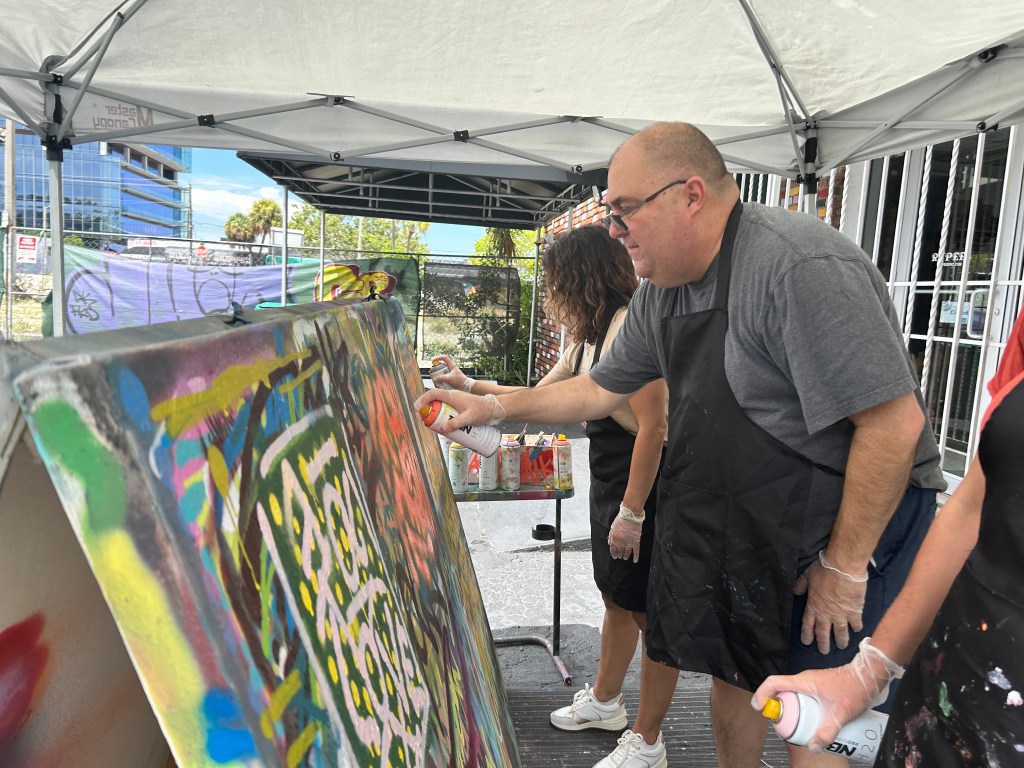
The hope is that our books transport the readers and take them someplace new (but also familiar). Sometimes that means you have to physically go there yourself. For the City Spies, this has sent me to locations across Europe and the United States. But it doesn’t have to be that far-reaching (or expensive). My current manuscript features a food truck, so I’m going to visit a couple and talk to the people who work inside them. Art Attack is about a graffiti artist, so I took graffiti lessons. This isn’t just about portraying something accurately, it’s a way to discover second level elements that help your manuscript come to life.
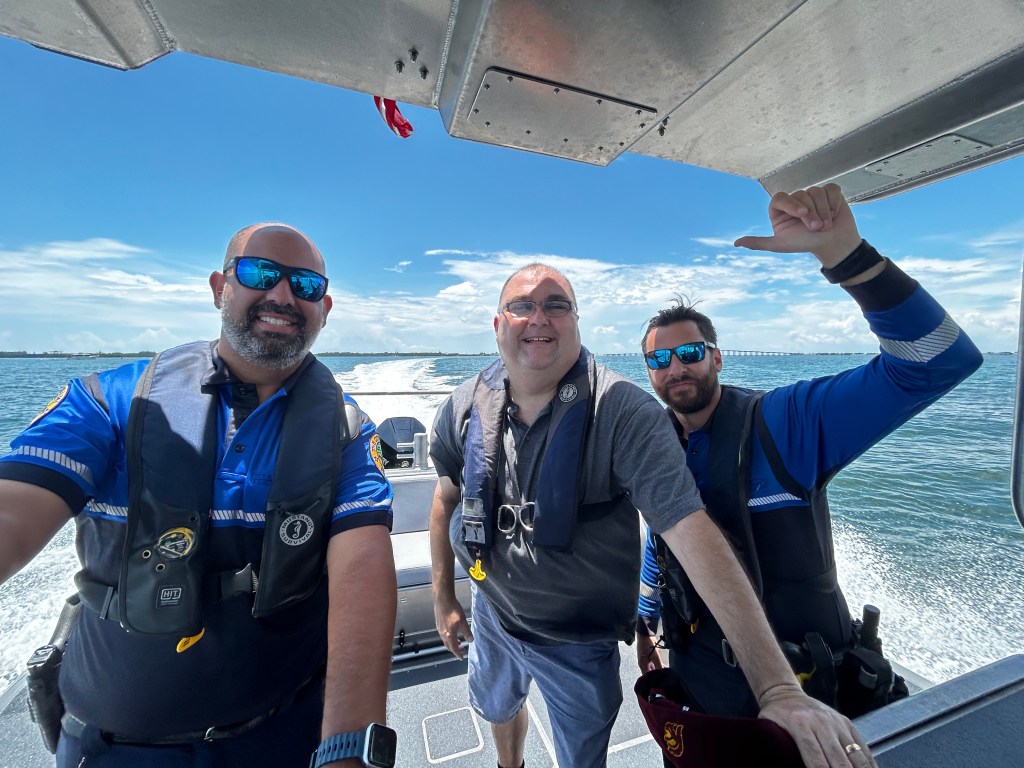
The Sherlock Society opens with a marine patrol rescue on Biscayne Bay. I reached out to the Miami Police Department to ask if I could visit the marine patrol office to see how it was different than all the police precincts I’d seen on television. They not only let me do that, but they gave me and my friend Christina Diaz Gonzalez a ride on their SWAT boat racing across Biscayne Bay. (Christina is a great friend, fantastic writer, and my resource for all things Miami.) The ride gave me all the sensory elements – the smells, the feel, the way you have to hold onto something to keep from sliding back – that I couldn’t have gotten from reading. It also showed me what you could see when, so I could maintain accuracy. These all informed the descriptions to make it seem real.
That same day, Christina took me into Little Havana. In the first draft of The Sherlock Society, there was a chapter set at Versailles, a famous local restaurant. It worked but was kind of predictable because Versailles is well-known and featured in a lot of other media. It was kind of cliched and trope-y. She suggested we visit Mary’s Café, which is both a laundromat and a ventanita, (a Miami-specific type of Cuban cafe that provides sidewalk service through a window). When I walked inside and smelled the unlike-anything-else aroma of laundry detergent blended with fresh-baked Cuban bread, I knew I found a better location. It was intrinsically Miami and I could’ve only found it by going there.
WHERE DO YOU PUT THE CAMERA
When I produced documentaries and travel shows, I had to scout locations to figure out where to shoot beauties, b-roll, and interviews. I was always on the lookout for the perfect images that told the story visually and added a richness to the storytelling. When I found those locations, the key decision was figuring out where to put the camera. Whenever possible, I do the same thing for my books.
A key scene in City Spies takes place at the Edinburgh train station, so when I walked through the actual train station, I looked for the best locations I would use if I was shooting a movie, because I knew they would also be the best locations for the book. I took plenty of pictures and, as I wrote, I used the photos to help tell me tell the story.
This works for me because of my background in television. (Remember tip number 1: Use Your Entire Life in Your Writing.) But it also works because young readers are incredibly visually literate and using film imagery in the text helps them “see” the story. Which brings me to my final tip:
YOU ARE FREE TO IGNORE THE TIPS (MINE AND EVERYBODY ELSE’S)
Tips and suggestions can help but they can also get in the way. Writing is messy and from that quagmire emerge great and beautiful works of creativity. The single most important rule of writing is that “Only you can write what you write.” That’s what makes it special because inherently it is unique. Nothing gives me more satisfaction than the thought that, “What I write may be good or may be bad, but it is entirely mine.” If you truly embrace that, you’re capable of amazing and wonderful things. Good luck!
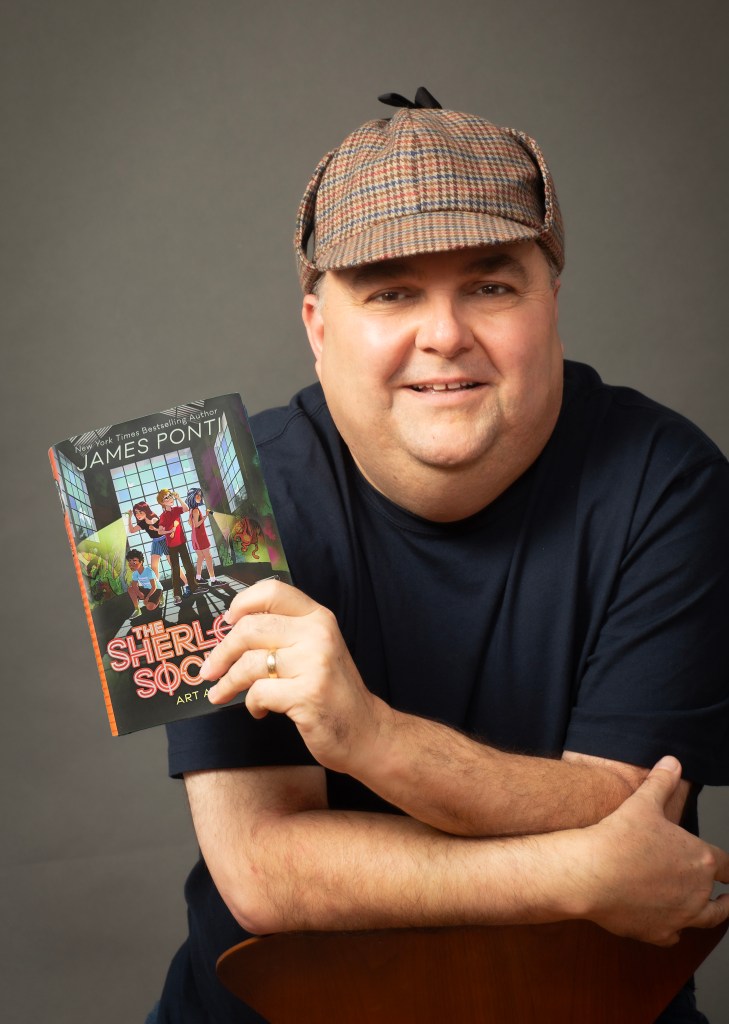
My bio: (Borrowed from my website, https://www.jamesponti.com/)
James Ponti writes about found families and missing treasure, secret agents and seventh graders.
He’s the award-winning, bestselling author of four middle grade book series that feature a signature blend of mystery, adventure, humor, and heart.
His books have been translated into sixteen languages, named to more than seventy state award lists, and optioned by Hollywood.
A longtime television writer and producer, his books have sold more than one million copies.


The “fairness” concept is one I was only half conscious of, but it makes total sense. Thanks for saving me from some possible plot trip-ups!
LikeLike
I love how you include different genre’s as different dimensions of your books. Thank you!
LikeLike
Thank you for the fabulous tips, James–all very interesting and useful. Congratulations and best wishes for your continued success!
LikeLike
Excellent post, James! I enjoyed reading it and came away with valuable information.
LikeLike
Fabulous post! So many tips. I love the “use your entire life.” That’s gives me lots of things to pull from. Also, I have several grandsons in the age range of your books. We are going to try them! Best wishes on your writing!
LikeLike
Fantastic post! Thank you, James, for taking the time to share your valuable tips. I appreciate how you described blending the elements of mystery, adventure, and humor with emotional dynamics. That describes my goal for my book, and I was excited to see it spelled out so eloquently. I loved all your own specific adventures you detailed as well. I hope are paths cross someday in our literary circles so I can thank you in person.
LikeLike
Excellent post! Thank you for visitng Writers’ Rumpus and sharing your insight and may I add obvious enthusiasm for the writing process.
LikeLike
What a brilliant post! Fantastic tips which I will certainly take into writing my own stories! I’ll definitely be reading some of James’s books, as I’d like to learn how to weave a bit of mystery into my MG WIP too.
LikeLike
Thank you for the helpful tips. I found the Nickelodeon perspective and that even one image can be such a strong motivational base really inspiring. My kids (and their friends) love City Spies!
LikeLike