
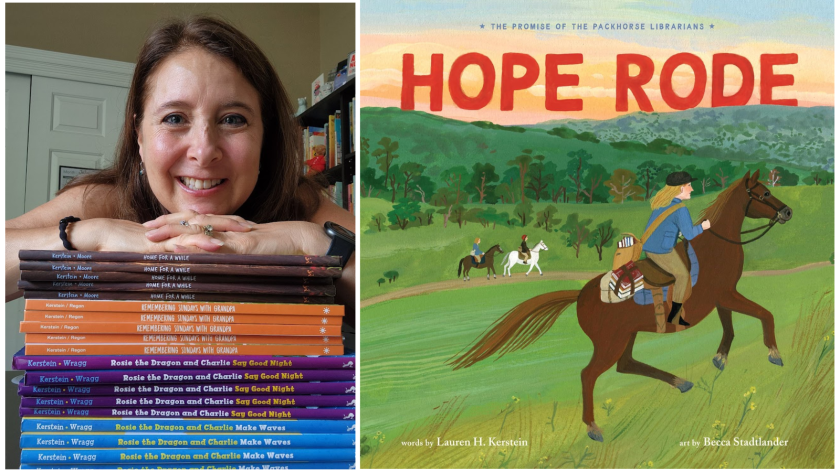
Guest Post by Lauren H. Kerstein
I am beyond thrilled to be here. I’ve long enjoyed reading Writers’ Rumpus posts and am excited to share a bit of my journey researching and writing nonfiction.
Hope Rode is a nonfiction ode to the courageous librarians who rode horses and mules to deliver books to rural communities in Kentucky. Writing this book was a labor of love and about a challenge that included a million revisions. But throughout the process, research was my foundation and my guide.
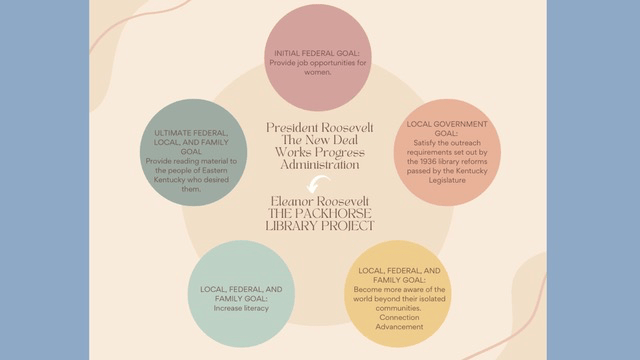
Not only did my research include:
Reading every book and article about the packhorse librarians I could find.
Watching videos about this incredible program.
Interviewing people who either had knowledge of the program and/or of Kentucky.
Interviewing even more people who could answer the new questions that arose.
Examining primary photos and artifacts.
Listening to interviews with ACTUAL packhorse librarians.
And diving into rabbit holes online—
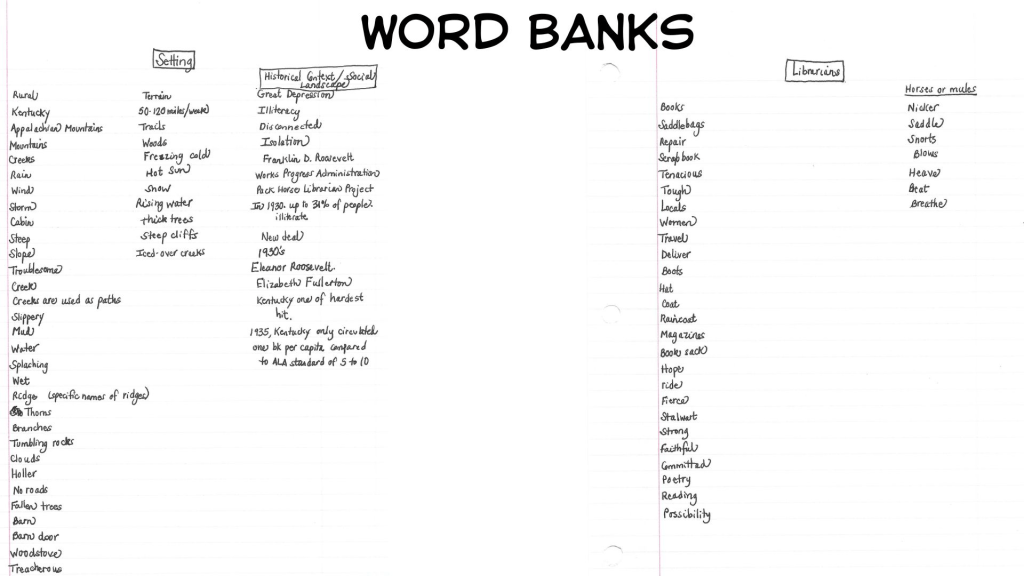
It also included wrapping my brain around the historical context. I drew diagrams and crafted word banks. I wanted to be sure every single word I chose not only satisfied the ear, but also reflected history.
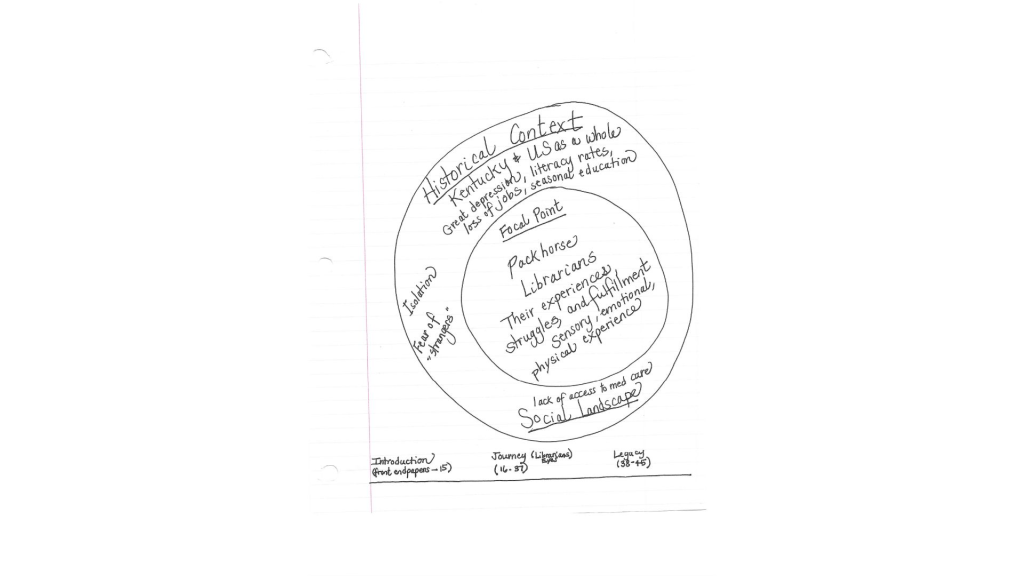
But it wasn’t always smooth sailing.
After hundreds of pages of notes and many, many interviews, I could not find an answer to the following question:
Was the BIPoC community included in the Packhorse Library Project?
I hit dead end after dead end. And then … I found a picture and I thought I had my answer.
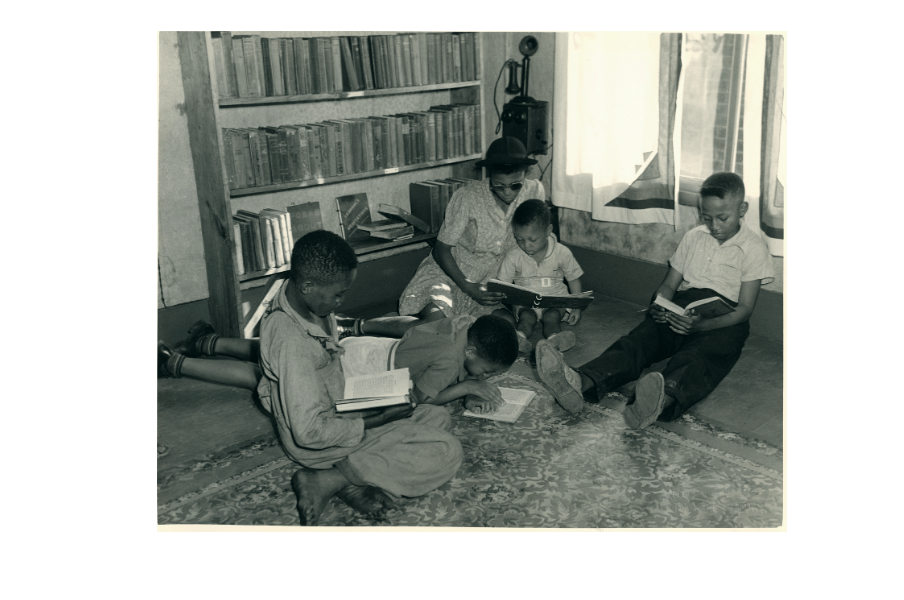
I was so relieved as I wanted as much diversity in the illustrations as possible. I wanted everyone to feel seen.
But something nagged at me. Why was there only one picture? Why couldn’t experts verify whether or not the BIPoC community was involved? I wanted more information so that I could ensure my nonfiction book was accurate. I didn’t want to suggest the BiPoC community was involved, if in fact, they were excluded.
So, I kept digging.
Enter Reinette F. Jones, an outreach/research/reference librarian in Special Collections at the University of Kentucky. Her research focuses on all things connected to African Americans in and from Kentucky. She told me the picture I found was actually from a Library Extension Program NOT the packhorse library program.
“Yes,” she said, “libraries were and are incredibly important to the African American community. But “no,” she wouldn’t include any librarians of color in the packhorse program. It wasn’t historically accurate.
“IT WASN’T HISTORICALLY ACCURATE.”
I was devastated.
I was faced with an excruciating choice. How could I help everyone feel seen if so many people were excluded from the program?
The following guideposts helped me decide how to reflect the research in my writing.
Nonfiction: I wanted to ensure my nonfiction book was just that … NONFICTION.
Facts: Facts have become more amorphous than I’d like in today’s world. I wanted to ensure my book included FACTUAL information that I’d cross-checked with reputable sources.
Backmatter: I could use my backmatter as a place to address the BIPoC community and librarians in a clear and concise way.
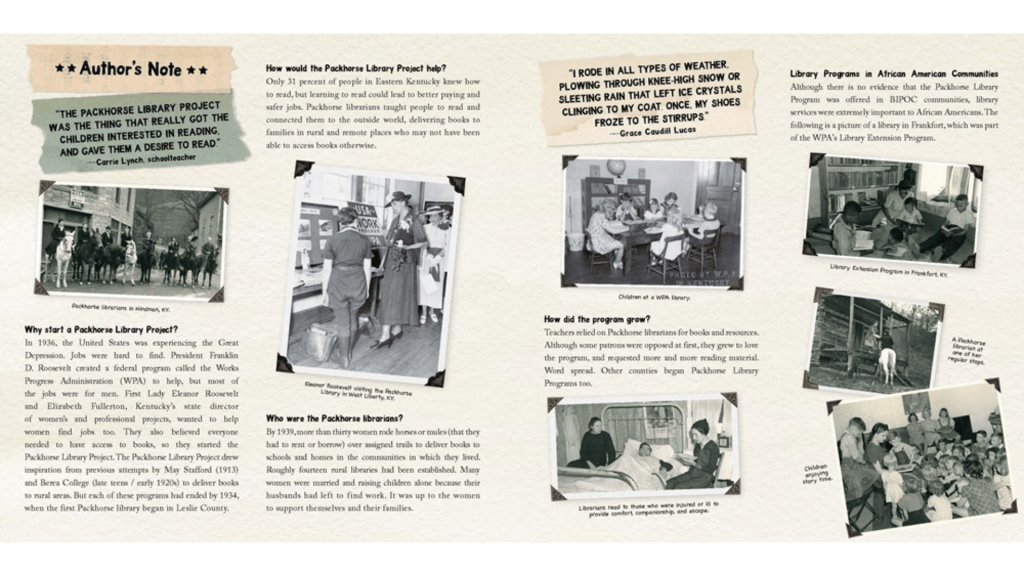
Author Visits: I would have the opportunity to discuss this research dilemma with students in the classroom, not only to share my journey, but also to ensure each and every student felt seen.
Reality: The reality is that there are far too many heartbreaks in our history. Segregation. Racism. Discrimination. Hatred. Mistrust. The list goes on and on. If I were to suggest people of color were included in the packhorse library program, I would be contributing to misinformation, not highlighting the fact that these heartbreaks led to exclusion and lack of access.
The research spoke for itself and the writing had to follow.
We, as nonfiction creators, are arbiters of truth. When we write, we must avoid making assumptions. We must dig into the research with an excavator, not a shovel, so that we can create a story that shines with beauty, truth, and the care that it deserves.
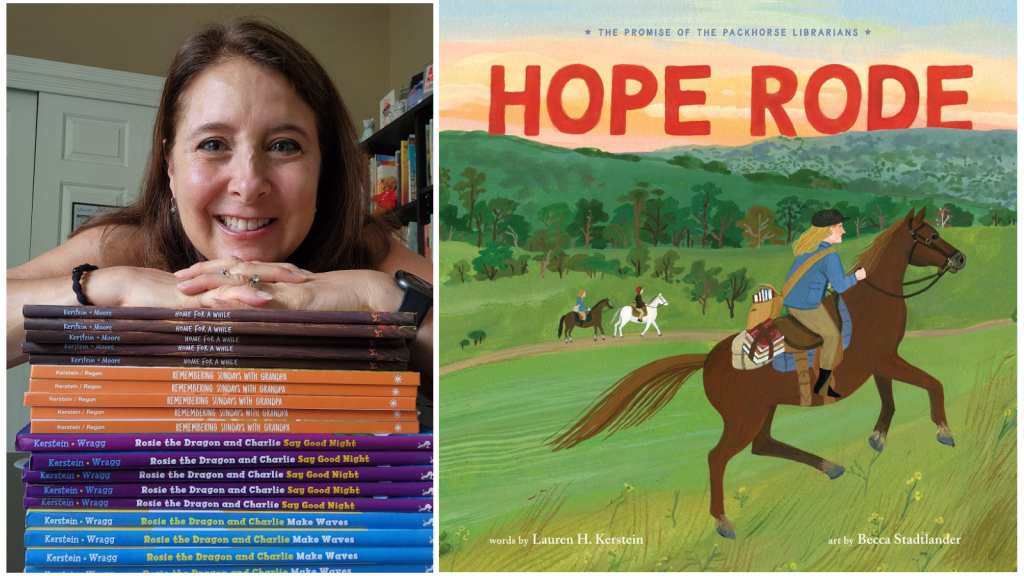
Lauren is an award-winning author, psychotherapist, creative coach, screenwriter, and NYT-bestselling ghostwriter. She is the author of the Rosie the Dragon and Charlie picture book series, Home for A While, Remembering Sundays with Grandpa, and Hope Rode. Lauren also writes board books and young adult novels. Additionally, she writes books in her field and just released a book about emotion regulation. Lauren is one of the founders of #ReVISIONweek, a judge with Rate Your Story, and is a long-time member of 12×12 and SCBWI. Her writing goals are simple. Read voraciously. Embrace feedback. Grow each day. Work hard. Be passionate. Write courageously. Touch children’s hearts.


I enjoyed learning your process in researching this beautiful book. Congratulations!
LikeLike
I really enjoyed this post! So many great insights, and I especially loved the way you included your handwritten notes. I never thought of creating a word bank for my topic. Kudos to you for your commitment to getting it right. Clearly a labor of love. Thanks for sharing!
LikeLike
Thank you for sharing your historical journey.
LikeLike
Thank you, Adaela!
LikeLike
I love Hope Road! Thank you for sharing your research process and the choices you needed to make. So glad you told this story.
LikeLike
Thank you so much, Claire! I appreciate your support!
LikeLike
Wonderful post! Thanks for sharing, Lauren!
LikeLike
Thank you, Cathy!
LikeLike
Love this: “I wanted to be sure every single word I chose not only satisfied the ear, but also reflected history.”
LikeLike
Thank you, Bianca! You are the best cheerleader and friend!
LikeLike
I loved zooming in to see these word banks, and it’s a good reminder to break out the lined paper and hand-write in the early stages. Thanks for sharing!
LikeLike
Yes, Louise, handwriting is such an important part of my process. I feel like it grounds me.
LikeLike
Thank you Lauren for your informative post. Yes, staying true to the historical details can be heartbreaking and hard, but I agree it’s important to remain truthful. And always respectful.
LikeLike
Well said, Kate!
LikeLike