
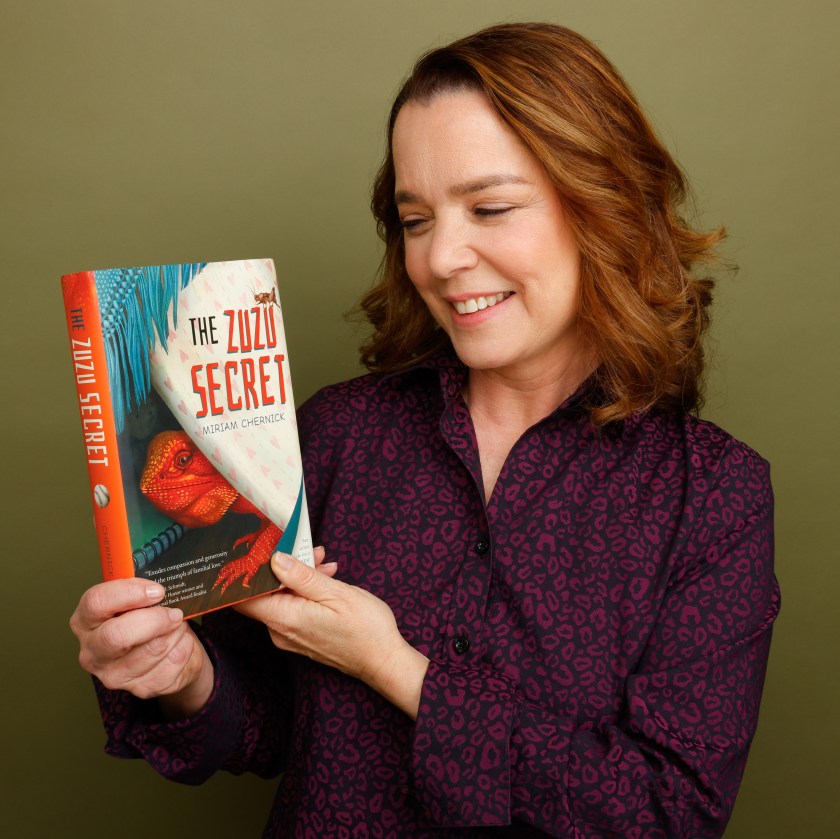
I dove into Miriam Chernick’s The Zuzu Secret with great excitement and anticipation–and was not disappointed. As a molecular biologist and geneticist who has taught about various diseases, I’m particularly passionate to read stories about people with rare diseases and raising awareness. And, as a published children’s author who advocates for disability rights, I was so excited to see representation of Prader-Willi syndrome. Miriam really delivered! I was immediately drawn to the dual POV and both main characters’ distinct voices. Both were flawed, lovable, and entirely relatable. Abe, the male main character who has Prader Willi, was inspired by Miriam’s own brother, Daniel.
After feeling bonded both to Abe and even Daniel thanks to Miriam’s thorough back matter and acknowledgments (I always read every word and love it when an author leaves this kind of treasure trove!) I was especially heartbroken in May to hear that Daniel had passed away suddenly. As a reader, I feel comforted that Daniel was able to experience the publication journey and success, and that he lives on forever in this beautiful book.
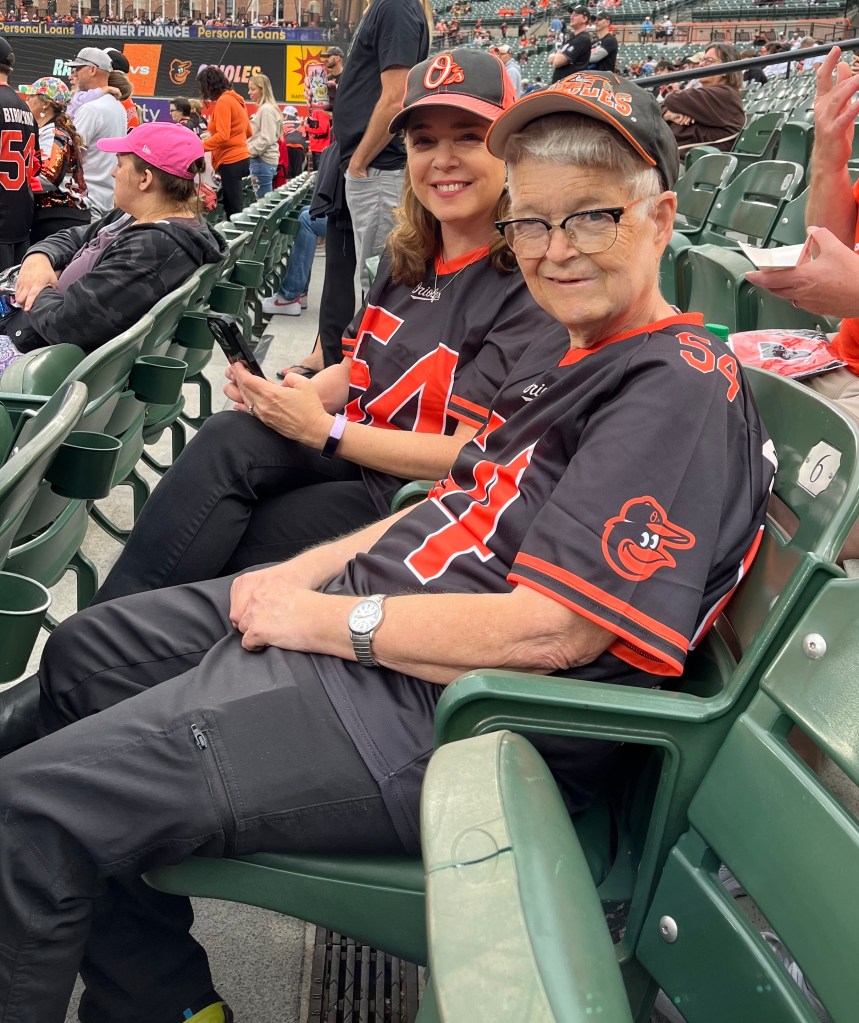
As we say in Hebrew, zichrono levracha: may his memory be a blessing. May we all show more kindness and love in Daniel’s memory, and may we all work harder to make the world a more accessible and welcoming place.
Let’s dive into this interview, which was written before this sad news.
DZ: Can you tell us about your writing journey? I know you did your MFA at the amazing VCFA—I know so many awesome writers from there!! When did you start writing? You mention Mary Quattlebaum’s writing class in your acknowledgements, and her guidance and introduction to VCFA—where was this class and what made you take it?
MC: I experienced the horror of 9/11 close-up because at the time I lived in downtown Manhattan and was home on maternity leave. Due to the trauma of that day and the scattering of our neighborhood friends, my family relocated from NYC to the suburbs of D.C. where, having left my job, I had more time to spend with my kids. I started to tell them my own stories—with limited success. Thumbs down from my audience! Humbled, I found The Writers Center in Bethesda, Maryland, and signed up for a class on writing for children taught by Mary Quattlebaum, a gifted teacher and author of more than thirty children’s books. After reading my submission—a story about a girl who rescues a pigeon in NYC—Mary encouraged me to keep writing. And I did! I wrote articles for kids and adults, reviewed children’s theater productions, published a kids’ guide to Washington, D.C., and in 2023, I sold The Zuzu Secret.
DZ: What was your MFA experience like? Not all writers have MFAs, and as one who doesn’t, I have some MFA-envy 😊. I always wonder what it’s like! Of course, I imagine you met brilliant students and faculty. How did your graduate program shape your writing?
MC: My Vermont College of Fine Arts MFA experience was inspiring and rewarding for three reasons. First, the rigorous program required a scholarly level of reading and studying books, which helped me write at a deeper level. Second, I was surrounded by talented teachers and mentors who were patient and kind. Third, I made friends with other students with whom I’ve stayed in contact. Writing can be lonely, so I never take for granted that my VCFA colleagues are there for me. Overall, the program was demanding, but I committed to doing my best and learned a lot in the process.
DZ: This is your debut middle grade, right? Can you share how long it took you to write the original manuscript, when you queried your agent (before or after this manuscript was done?) and what your writing community/feedback support looks like?
MC: I was revising a YA novel when the Covid shutdown started in April 2020. But, with my kids being home and my disabled brother, Daniel, coming to live with us, I could not focus on that story. Instead, originally as a form of therapy, I began to write down the details of my experience caring for my brother and my stress around keeping him safe during the pandemic. Within the year, my “notes” turned into the shell of a novel in two voices.
Regarding my agent, I signed with Ginger Knowlton at Curtis Brown Ltd. after the manuscript was complete and after I’d met Karen Boss at an SCBWI conference in Charlotte, N.C. In Ginger, I found a wonderful partner and advocate. She’s super smart about the business and generously shared her deep industry knowledge, for which I am grateful. Ginger retired earlier this year, so I’m now represented by James Farrell, also at Curtis Brown. James is another smart agent with whom I’ve had some excellent conversations. I’m excited for this new chapter!
DZ: I loved reading your acknowledgments, where you explained how this story was birthed during Covid when your brother came to live with you because he was designated high-risk in his residence. You also explained how you found your real Zuzu! As a reader, I always wonder about the inspiration for books, and I always read the entire back matter. I was so pleased that you shared so many details about your brother, Prader-Willi syndrome, the story behind your story, baseball, and your acknowledgements! What made you decide to explain all of these aspects?
MC: As a substitute teacher, I’m often in classrooms and kids are curious to learn where authors’ ideas come from. So, I wanted to tell my readers that much of this story, though fictional, is based on real life experiences. I was deeply affected when I learned that my neighbor had found a bearded dragon “dumped” outside. Months later, after writing Josie’s character as an animal-lover, the idea for her to find a beardie on the street felt just right. Meanwhile, my brother Daniel’s passion for the Baltimore Orioles inspired the same in Abe.
DZ: Since so much of this story is true, which parts of the story are not true? For example, did you have experiences where your brother walked out of the house or where you had to search for him? (This happened several times in The Zuzu Secret and I felt so anxious as a reader!!) Was this an issue when your brother lived with you as an adult? Sometimes, my heart broke for Josie. Did you experience this same kind of responsibility as a kid?
MC: Abe’s leaving the house to look for food along with his other unusual behaviors are based on my own experiences with a sibling born with Prader-Willi syndrome. The food-seeking stems from an insatiable hunger called hyperphagia, which is one of this disease’s most life-limiting symptoms. When my brother lived with my family during COVID, there was someone around 24/7, which prevented him from sneaking out of the house.
Parts of the story that are totally fictional include the car accident, Josie’s “job”, and Abe’s relationship with Manny Machado.
As a child, no, I did not feel parentified, but my oldest sister did She often felt the weight of responsibility for our brother and for her three younger sisters, too.
DZ: Is there a real-life Bixby? I loved him!! He was such a great friend and had an interesting backstory—he felt so real, organically complicated, and a real gem of a human.
MC: It’s fascinating to me how many readers have specifically mentioned Bixby as a sympathetic character. There is no real-life Bixby. However, as a person, he is very clear in my mind. And, because he’s been so popular with readers, I may include him in a future story. Stay tuned!
DZ: I loved reading Abe’s POV. Did you write both his and Josie’s POVs simultaneously, or did you write out one POV and one character’s arc and then fill in the other? Abe has such an interesting POV to me—I found myself loving his exuberance for baseball and also impressed by how he picked up on some of the emotions or challenges of other characters around him. Was it tough to write his POV?
MC: Abe’s chapters came out first and relatively easily. During the pandemic, his manner of speaking in clipped sentences and his repeated use of the same expressions played like an earworm in my head. They helped me tell his story in his unique voice.
I was happy you noticed Abe’s sensitivity to the emotions of those around him. This is a common trait for many people born with PWS and for my brother, in particular. Josie’s voice, by contrast, was much harder for me to pin down. Because she represents a mix of different people, it took many more revisions to settle on her voice and story arc.
DZ: Representation in kidlit of characters with disability is far too infrequent. I’m a geneticist by training, so I’m familiar with PWS. However, I know that many people are not. This book does such an important service for the kidlit world. Are there other books with characters who have PWS? (I haven’t found any!!) Did you read other books featuring characters with disabilities as mentor texts? You mention a few writing classes and programs—which do you most recommend for our authors?
MC: As far as I know, there are no other published novels for kids, or adults, with a character with PWS. This is not surprising given that it’s a rare disease affecting only 20,000 people in the United States. However, over the last few years, awareness of this and other rare diseases has increased thanks to organizations like the Prader Willi Syndrome Association. Through the PWSA, I learned to advocate for new, better legislation in support of the disabled community, for increased funding for scientific research, and for greater speed-to-market of experimental therapies.
In terms of mentor texts, I used many and have listed a few of them here (in alphabetical order by author last name):
A Boy Called Bat by Elana K. Arnold
Seaglass Summer by Anjali Banerjee
Rosie Loves Jack by Mel Darbon
The Curious Incident of the Dog in the Nighttime by Mark Haddon
Fish in a Tree by Lynda Mallaly Hunt
The House in the Cerulean Sea, by T.J. Klune
Marcelo in the Real World by Franisco Stork
As for writing programs, I’m partial to the classes offered by Whale Rock Workshops. I’ve learned so much from the outstanding writing teachers affiliated with Whale Rock. I’ve also attended classes and workshops through SCBWI, The Writing Barn, and, local to D.C., The Writer’s Center.
DZ: You wrote that you worked with Karen Boss—she’s amazing and so sharp! What kind of feedback did you receive, and what was the editing process like?
MC: Karen was wonderful to work with. Since this was my debut, I had many questions which she took the time to answer in detail. Throughout the editorial process, our communication was smooth. In fact, it was—I dare say—fun to work together ironing out my manuscript’s kinks.
Of note is that Karen shared a schedule with me and stuck to it. Having reasonable and achievable deadlines all the way to the book’s launch date kept me motivated to do my best work—stress-free.
Patti Gauch, former longtime Editorial Director at Philomel Books says to “edit with a feather” or risk taking the soul out of a story. Karen edited my story with a feather. She nurtured my story’s soul.
DZ: The printing of this book is exquisite!!!! The inside of the cover is a poster, the cover art is vivid and beautiful, and the book pages are the thickest and loveliest I have experienced in a while. I know that authors are not typically involved in such decisions, but do you know anything about any of these decisions? Were you involved in, for example, decisions around the cover art, or the decision to create the poster art?
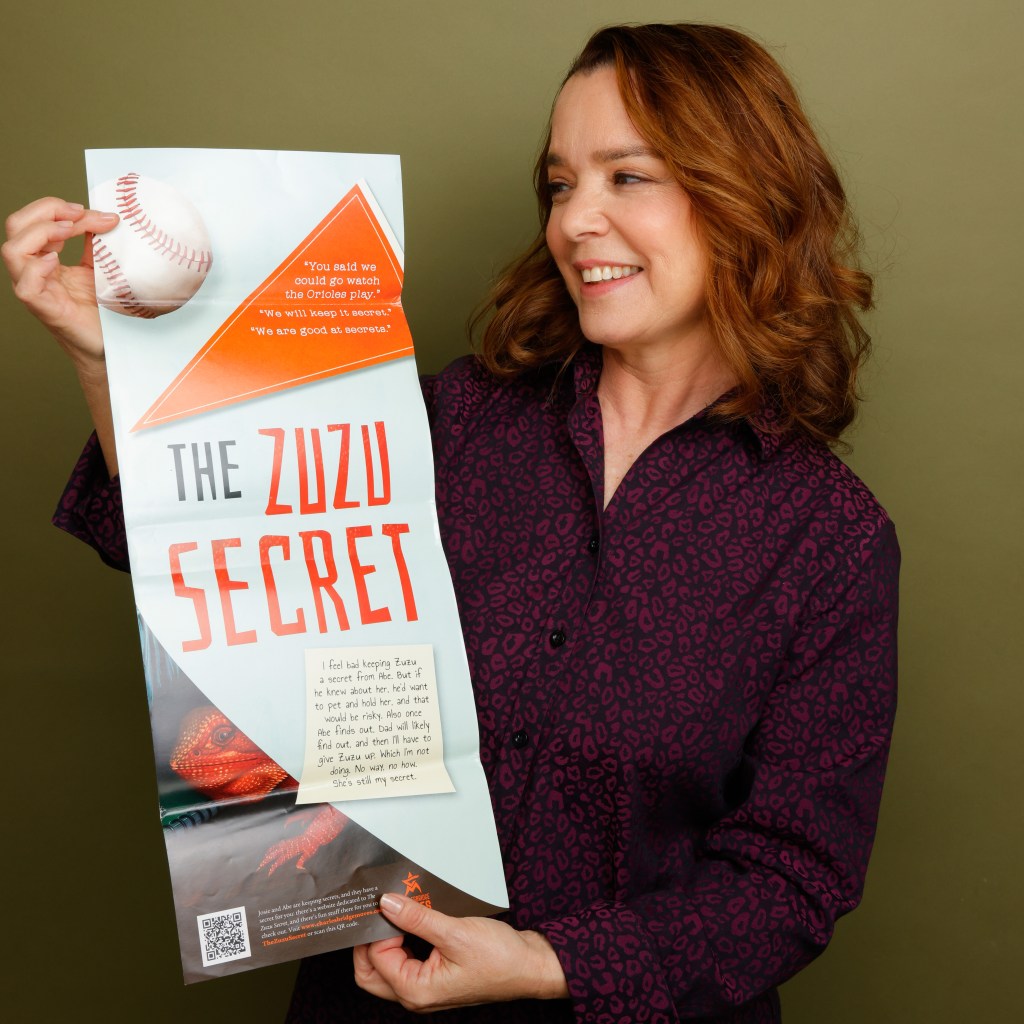
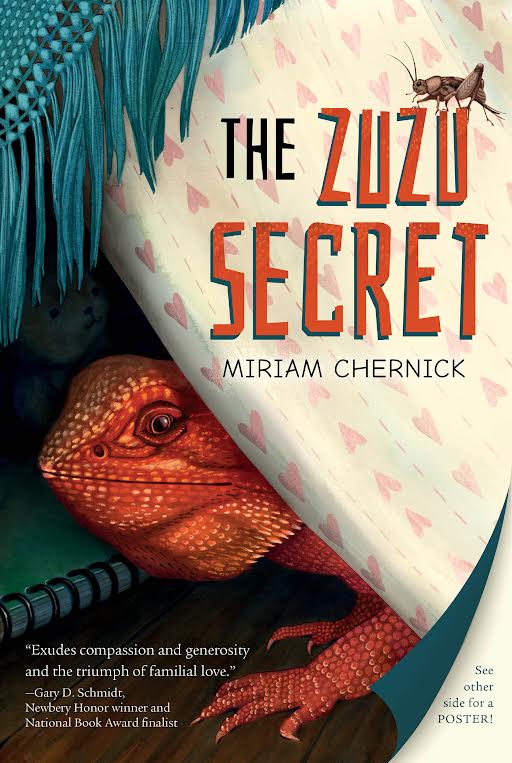
MC: You are right to acknowledge the superior quality of the paper and the attention to detail given to the physical book by Charlesbridge Publishing. I was included in the process of choosing the cover artist, Amanda Calatzis, who shares my love of animals and created a stunning, accurate drawing of a bearded dragon hiding under Josie’s bed. Credit for the rest of the art—the raised lettering and point gloss on the bearded dragon cover scales, the poster on the inside, the boards with their own subtle scales and Zuzu’s head peeking out to eye a cricket, the important question on the back, and the clever opposition of blue and orange on the outside and inside bindings of the book—goes entirely to the creative team at Charlesbridge.
DZ: Is there anything else you wish to share?
MC: In May 2026, soon after I started writing my responses to these questions, Daniel passed away suddenly. While the last few months have been hard, as I’ve adjusted to life without him, The Zuzu Secret has taken on additional meaning. It now serves as a memorial to my brother.
Award-winning author Gary Schmidt says that “art helps us grow into our humanity.” I can only hope that this story—a window into the struggles of a disabled young person and his family—will help my readers to grow in this way.
Thank you, Miriam!
More About Miriam:
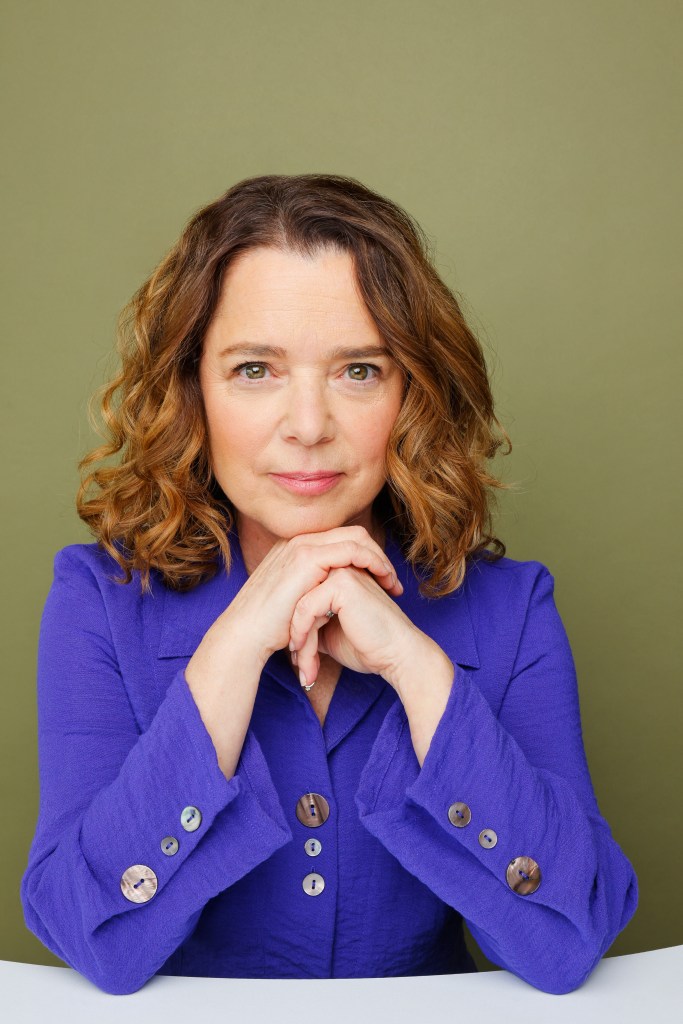
Miriam Chernick is a children’s book author and a substitute teacher in her home state of Maryland. The balance of her time is spent parenting three young adults and advocating on behalf of people born with Prader-Willi Syndrome, a rare disease. Before becoming a writer and educator, Miriam worked for a Fortune 500 company in product marketing in New York and in Tokyo. She’s earned a bachelor’s degree and two master’s degrees—one from Yale University in Asian Studies and one from the Vermont College of Fine Arts in Writing for Children and Young Adults. Miriam loves music, animals and plants, Wheel of Fortune and—on most days—Wordle.
Let’s talk! You can reach Miriam through her website: Miriam@MiriamChernick.com. And you can order her book from one of these bookseller options: linktr.ee/miriam.chernick
 WRITERS' RUMPUS
Miriam, so sorry for your loss. May Daniel’s memory be for a blessing. I look forward to reading what sounds like a very moving, emotional and personal story. I’m sure it will have a tremendous impact on readers. Danna – another wonderful, engaging interview! You always ask great questions.
LikeLike
What a beautiful interview with Miriam. As a therapist, I am somewhat familiar with PWS and having a daughter with disabilities, I am very aware of the need for disability advocacy. Thank you for writing this informative, creative novel, and from the POV of two characters. I agree that there are still way too few books for children with genuine disabled characters. Currently, I have two MG ms with disabled characters, one I’m shopping around to no avail yet (MC is neurodivergent). I remain hopeful though.
LikeLike